

Injury / Injury Prevention
Weight Loss and Hip Fracture Risk
In the January issue of IDEA Fitness Journal (2014; 12 [1], 11), we reported on the significant increase in osteoporotic fractures among men in recent years. A new report shows that losing weight may increase hip fracture risk.

Prehabilitation Strengthening Exercises for Knee and Hip Arthroplasty
Fitness professionals may work in concert with a physical therapist to encourage a client to engage in “prehab” to maintain or enhance his strength preoperatively for knee or hip arthroplasty. (Shakoor et al. 2010). Pain is often a limiting factor, and it may be difficult for the client to participate in even the most basic daily activities. Below are a few suggested exercises.
KNEE ARTHROPLASTY
Isometric quadriceps sets. Lie on back with legs extended. Tighten quads and push knee into mat/surface. Hold 10 seconds. Do 10 repetitions, 5 times per day.

Frightening Bone Health Statistics Among Men
Osteoporosis is typically thought of as a “woman’s disease.” But a recent report published by the International Osteoporosis Foundation warns that, in certain circumstances, men may be at greater risk than women for potentially fatal bone health–related maladies.

The Mental Aspects of Chronic Pain
As a fitness or wellness professional, you understand better than anyone that the cells in our bodies adapt to the stresses that are placed on them. This is why you are able to help people experience the won- derful benefits of building muscle, reduc- ing body fat and improving overall fitness and wellness as part of a healthy lifestyle.

Downhill Skiing: Increase Performance, Prevent Injury and Attract New Clients
Skiing is a thrilling sport, providing majestic views of the mountains and a vigorous workout. If you haven’t seen the Disney cartoon starring Goofy, you must! Go to video.disney.com and type “the art of skiing” into the search box. After you have had a good laugh at Goofy’s antics on the slopes, come back here and find out how to create a strong foundation for attracting and training downhill skiers.
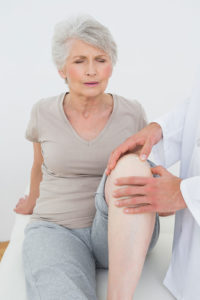
Total Joint Replacement: Knee and Hip
Mr. Brown is a 68-year-old retired postal worker who stays active with golf and tennis, but he complains of severe pain and swelling in his left knee, which he cannot straighten completely. The pain limits his ability to do the things he loves, but he is otherwise comfortable during daily activities. Based on X-rays and a clinical exam, Mr. Brown has symptomatic knee osteoarthritis.

Rest & Recovery
Are you training for a race or a run or exercising for health benefits? Did you know that recovery from training is actually more important than the training itself, as repair and rebuilding of damaged muscle tissue can occur only during a recovery period.
Charlie Hoolihan, director of personal training for the Pelican Athletic Club in Mandeville, Louisiana, talks below about two crucial steps for recovery:

Improving Chronic Neck Pain With Pilates
Pilates exercises may provide relief for clients struggling with chronic neck pain. Neck pain is among the four most common pains affecting Americans (following back pain); it’s also the second leading cause of work absences (Pleis, Ward & Lucas 2010; Albright et al. 2001). The problem occurs most often in middle age and affects women more often than men (Binder 2008).
Recovering From a Broken Pelvis
It was just like any other day. Renee was leaving for work, tote in one hand and lunch bag and coffee in the other, when she stepped over her dog gate and onto her flight of stairs. But this time, she missed her footing and fell down 15 flights of stairs.

Neuromuscular Training and ACL Injury
According to a report published in the Journal of Athletic Training (2012; 47 [5], 589–90), anterior cruciate ligament injuries lead to about 113,000 ambulatory-care visits and about 75,000 outpatient surgical reconstructions among active youth and adults in the United States each year. A recent study suggests a potential key to minimizing ACL injury danger among young-adult athletes: neuromuscular training.
Understanding and Preventing Common Running Injuries
Long-distance running continues to attract new enthusiasts throughout the world (Tonoli et al. 2010); its unique combination of benefits can help people to control their weight, improve cardiovascular function and fend off a host of chronic health problems (van Gent et al. 2007; van Middelkoop et al. 2008). But for all these advantages, running is hard on some parts of the body, often leading to lower-extremity injuries (van Middelkoop et al. 2008).
What Are Running Injuries, and How Prevalent Are They?
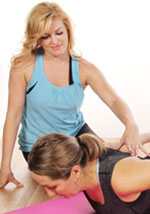
The Rib-Shoulder Connection
About 2 million people in the U.S. visit the doctor annually for rotator cuff problems (AAOS 2008), and at least 3% of adults will experience adhesive capsulitis, or frozen shoulder (Manske & Prohaska 2008). Multiple exercises can help prevent or postpone surgery, but what if they don’t seem to work? When regular shoulder exercises don’t help your client improve, or if they hurt too much, it’s time to start looking beyond the shoulder girdle.
Factors Associated With Youth Athlete Injury Risk
Young athletes have a significant risk of injury. A recent study questioned whether specific factors could be associated with increased levels of risk.
Presented at the
2013 American Academy
of Pediatrics National Conference and Exhibition in Orlando, Florida, the study featured 1,206 athletes aged 8–18. Participants completed a questionnaire that asked about sports specialization; stage of puberty; and height and weight. Researchers collected the same data on the athletes every 6 months for 3 years.
Does Foot Pronation Cause Injury?
When starting a running program, beginners always want to put their best foot forward. To avoid injury, many purchase a supportive shoe that minimizes excess movement in the foot. Researchers from Aarhus University in Aarhus, Denmark, suggest that this may not always be necessary.
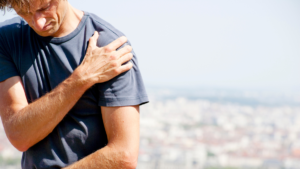
Corrective Exercise for Shoulder Impairments
Movie stars, athletes and brides-to-be work hard to develop shoulders that are aesthetically pleasing, and shoulders are an integral part of the big somatic “picture.” However, there is much more going on in this area than meets the eye. The shoulder complex involves more than one joint, and healthy, functional shoulders are more desirable than ones that merely look good on camera. After all, looking good for the wedding is great, but not being able to carry your luggage on your honeymoon is not.

Extreme Conditioning Programs: High-Risk or Vulnerable Risk Takers?
Bergeron, M.F., et al. 2011. Consortium for Health and Military Performance and American College of Sports Medicine consensus paper on extreme conditioning programs in military personnel. Current Sports Medicine Reports, 10 (6), 383–89.
Pilates and Ankle Sprains
Pilates is a wonderful tool for helping a client who is recovering from an ankle injury, as weight and impact on the ankle joint can be less during Pilates than during many other forms of exercise.
Most of us have rolled an ankle. We trip while walking, running, dancing or playing sports—and often we try to self-diagnose with rest, ice, compression and elevation. While this approach may suffice with a very minor injury, a true ankle sprain requires more attention.

“Barefoot” Shoes Improve Balance
Barefoot-style shoes are growing in popularity, with some users convinced they improve running economy and help prevent injury. A new study suggests that wearing Vibram® FiveFingers “toe” shoes may have other positive benefits.

Preferred Foot Strike Among Barefoot Cultures
When it comes to running—both shod and barefoot—debate abounds as to which foot strike is best, with many favoring a forefoot strike (FFS) or midfoot strike (MFS) over a rear-foot strike (RFS) for efficiency and injury prevention. But is there really an optimal way to run?
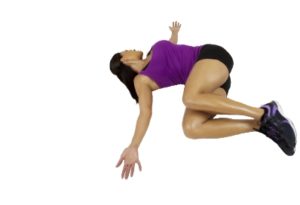
Stretches for Positive Aging
Do you know that one of the most effective, inexpensive and pain-free ways to look and feel younger is to exercise and perform daily stretches that ward off kyphosis (rounding…