

Sponsorship
News Archive
Media Inquiry
About us
News Topics


Latest News

IDEA Member Meet-Up
Join us for a special May Member Meet-Up with Amy Boone Thompson, CEO of IDEA Health & Fitness Association, for a live conversation centered on connection, growth, and our community. Together, we’ll explore valuable membership resources, continuing education opportunities, and the topics that matter most to you as fitness professionals and industry leaders. At IDEA,…

Exercise and the Brain: It Will Make You Want to Work Out
A plethora of scientific evidence clearly
depicts how regular aerobic exercise and resistance training can help to prevent and/or manage hypertension, coronary heart disease, stroke, type 2 diabetes,
osteoporosis, arthritis, stress, colon cancer, abnormal cholesterol levels and depression (Kravitz 2007). More recently, research on the favorable effects of exercise and brain function has been emerging.

Zone 2 Training: Where It Works and Where It’s Overapplied
What Zone 2 Actually Represents Zone 2 training is often presented as a simple target, typically defined by heart rate ranges or conversational effort. In practice, those markers are approximations of a more specific physiological condition. What distinguishes this intensity is not the number itself, but the metabolic environment it produces. At this level of…

Fitness Trackers Still Show Gaps in Accuracy Compared to Clinical Tools
Despite rapid improvements, consumer fitness trackers continue to show variability when compared to clinical-grade measurement tools. Research highlights discrepancies in areas such as calorie expenditure, sleep staging and recovery metrics. While these devices provide useful trends, their precision can vary depending on the metric being measured and the individual using them. This gap matters when…
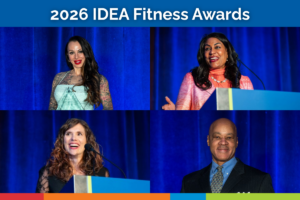
Celebrating the Recipients of the 2026 IDEA Fitness Awards
Each year, our community comes together to celebrate the people who are moving the fitness industry forward. Those who inspire, educate, and lead with purpose. At the 2026 NIRSA+IDEA World Expo and Conference in National Harbor, MD, we proudly honored this year’s outstanding award recipients. We’re thrilled to announce Dr. Judi Brown Clark as the recipient…
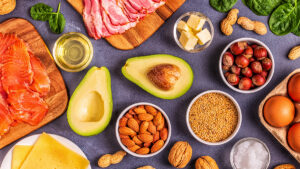
Dietary Patterns Still Matter More Than Individual Foods
Nutrition science increasingly emphasizes overall dietary patterns rather than individual nutrients or foods. Diets rich in vegetables, fruits, whole grains, legumes and healthy fats consistently show strong associations with improved health outcomes. Researchers note that focusing on broader eating patterns may help people make more sustainable dietary changes compared with focusing on single “good” or…