

The Rise of Peptides in Fitness Culture
Peptide therapies are gaining traction in fitness and longevity spaces, but understanding their biology, evidence, and risks is essential for informed decision-making.
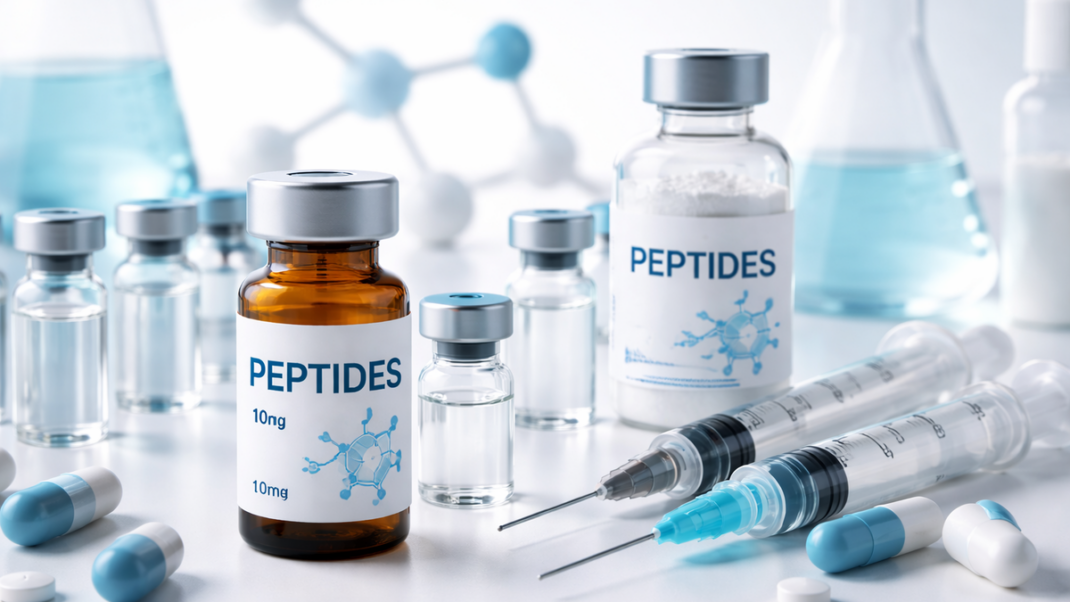

Peptides have quickly become one of the most discussed topics in fitness, longevity and anti-aging circles. Online forums, wellness clinics and social media influencers frequently promote peptide compounds for fat loss, muscle growth, recovery and lifespan extension. At the same time, many of these substances remain poorly studied, loosely regulated and widely misunderstood.
For fitness professionals, the surge in peptide interest raises important questions. What exactly are peptides from a biological standpoint and what does current science actually say about their potential benefits and risks?
What Peptides Are
Peptides are short chains of amino acids linked together by peptide bonds. Amino acids serve as the building blocks of proteins, and peptides are smaller molecular structures formed when only a few of these units connect.
Most peptides contain between two and roughly fifty amino acids. Larger chains are typically classified as proteins. The distinction is mostly practical rather than absolute, but peptides often behave differently because of their size and their role in cellular communication.
Many peptides function as biological messengers. They regulate communication between cells and tissues throughout the body and participate in processes such as metabolism, immune activity, appetite regulation and tissue repair.
Several familiar compounds are peptides. Insulin, which regulates blood glucose levels, is one of the most well known examples. Other naturally occurring peptides influence digestion, stress responses and energy balance. These molecules operate within tightly controlled biological systems and are produced in extremely small quantities.
Peptides also appear in food. When dietary proteins are digested, enzymes break them into smaller fragments that include both amino acids and short peptide chains. Protein-rich foods such as eggs, dairy, meat, fish, soy and legumes all yield peptides during digestion.
Because peptides already serve as signaling molecules in human physiology, scientists have long investigated whether synthetic versions could influence specific biological pathways. Some peptide-based medications have become important tools in modern medicine.
More recently, peptides have moved beyond clinical research into fitness, longevity, and anti-aging culture. Clinics, online retailers and social media personalities increasingly promote various peptide compounds as tools for fat loss, recovery, muscle growth and lifespan extension.
Interest has expanded far more quickly than the scientific evidence supporting many of these claims. A basic understanding of peptide biology helps place this rapid rise in context and makes it easier to distinguish established science from marketing and speculation.
Why Peptides Suddenly Became Popular
Until recently, peptides were largely confined to medical research and specialized clinical settings. Over the past several years they have moved rapidly into mainstream fitness and wellness culture. Discussions of peptide therapies now appear frequently across social media platforms, longevity clinics and online communities focused on physique enhancement and biohacking.
Several cultural forces have fueled this surge in interest.
One driver is the expanding longevity and anti-aging market. Wellness consumers increasingly seek interventions that promise to preserve metabolic health, slow visible aging and maintain physical performance. Peptides are often presented as targeted biological tools capable of influencing specific physiological pathways. This framing appeals to individuals looking for precise solutions rather than broad lifestyle strategies.
Social media and biohacking communities have accelerated the visibility of peptides. Influencers, online forums and wellness clinics frequently discuss peptide protocols as part of optimization routines, often highlighting compounds promoted for fat loss, recovery, skin health or hormone support. These conversations frequently spread faster than the scientific evidence behind them.
Public awareness of peptide-based medications has also grown in recent years. Drugs that influence appetite and metabolic health have introduced the concept of peptide hormones to a much broader audience. As these medications entered public discussion, curiosity about other peptide compounds increased as well.
For many consumers, peptides appear to occupy a middle ground between nutritional supplements and prescription drugs. They are often portrayed as more biologically sophisticated than traditional supplements while seeming more accessible than conventional pharmaceuticals.
The reality is more complicated. Some peptide therapies have legitimate medical uses supported by strong research. Others remain experimental or are promoted without meaningful human evidence. In many cases, the rapid spread of peptide products reflects cultural enthusiasm more than established science.
These dynamics explain why peptides are now appearing in conversations with clients and within the broader fitness industry.
Popular Peptides and the Claims Surrounding Them
As peptides have entered fitness and longevity culture, several specific compounds have become widely discussed in gyms, online forums, and wellness clinics. Each is associated with a set of promised benefits, many of which circulate faster than the research supporting them.
One group involves peptides linked to growth hormone signaling. Compounds such as CJC-1295 and Ipamorelin are frequently promoted together as substances that stimulate the body’s natural release of growth hormone. Marketing claims often include improved muscle growth, faster recovery, fat loss and enhanced sleep quality. These compounds are commonly described as “growth hormone releasers” rather than direct hormone replacement.
Other compounds frequently mentioned in fitness communities include BPC-157 and TB-500, which are commonly associated with injury recovery and tissue repair. Peptides such as AOD-9604 are sometimes promoted for fat metabolism, while Melanotan II is widely discussed in relation to skin tanning. Although these compounds differ in origin and biological targets, they are often promoted using similar claims about targeted biological effects.
Across these compounds, the marketing language often emphasizes biological precision. Because peptides function as signaling molecules in human physiology, they are frequently framed as targeted interventions that can affect specific systems in the body.
The claims surrounding peptide products typically fall into several categories. They are often promoted for muscle growth, fat loss, injury recovery, anti-aging, skin health, improved sleep and metabolic enhancement. Some compounds are also discussed in connection with longevity and cellular repair.
The strength of evidence behind these claims varies substantially.
Certain peptide hormones used in medicine are supported by decades of research and are prescribed for specific medical conditions. Many compounds circulating in fitness communities, however, have only limited human evidence. Some have been studied primarily in laboratory environments or animal models. Others have undergone early clinical investigation but remain far from established medical treatments.
This gap between evidence and promotion creates considerable confusion. Compounds that show preliminary promise in early research are sometimes presented online as though their benefits are already well established.
For fitness professionals, the central question is not whether peptides exist or influence biology. The critical issue is whether the specific compounds being promoted have reliable evidence demonstrating safety and effectiveness in humans.
Examining current scientific research provides a clearer view of how these claims hold up under closer scrutiny.
What the Science Actually Shows
Despite the enthusiasm surrounding peptides, the scientific literature presents a more cautious picture. Some peptides have been studied for decades and are used in legitimate medical treatments, while others remain experimental compounds with limited human evidence. Many of the substances discussed in fitness communities fall into this second category.
Peptide research typically begins in laboratory environments. New compounds are first examined in cell cultures and animal models in order to explore biological mechanisms and potential therapeutic uses. While these early findings can be promising, results observed in controlled experiments do not always translate to human physiology.
Human systems are far more complex than laboratory models. Dosage, metabolism, delivery method and long-term safety can all influence outcomes once a compound is tested in real populations.
Several peptides promoted in fitness and recovery discussions remain in these early stages of research.
BPC-157, for example, has been investigated primarily in animal studies examining tissue repair and gastrointestinal protection. Some experiments in rodents suggest potential improvements in tendon and ligament healing. However, controlled human trials evaluating these outcomes remain extremely limited and most claims circulating online rely on anecdotal reports rather than clinical evidence.
TB-500, derived from a fragment of thymosin beta-4, has also been explored largely through laboratory research. Studies have examined its potential role in cellular migration and wound healing, but clear evidence demonstrating musculoskeletal recovery benefits in humans is still lacking.
Growth hormone–related peptides such as CJC-1295 and Ipamorelin have received somewhat more investigation because of their relationship to endocrine signaling. Early studies have examined their ability to stimulate growth hormone release. Even so, research evaluating long-term safety, metabolic effects and performance outcomes in healthy individuals remains limited.
Peptides promoted for fat loss illustrate a similar evidence gap. AOD-9604, a fragment derived from growth hormone, has been examined in small human trials exploring metabolic effects. Results have been inconsistent and the compound has not become an accepted treatment for obesity or metabolic disease.
The history of drug development offers an important perspective here. Many compounds that appear promising in early laboratory research ultimately fail to demonstrate meaningful benefits in large clinical trials.
Safety evidence also remains incomplete for many peptides circulating through online vendors. When substances influence hormone signaling, immune pathways or cellular growth processes, unintended effects may emerge over time.
Another concern involves dosing consistency. Peptides sold through research chemical suppliers are not manufactured under the same regulatory standards required for pharmaceutical drugs. As a result, concentration and purity can vary widely between products.
Taken together, the current evidence reveals a clear pattern. Some peptides have legitimate therapeutic roles in medicine. Many of the compounds promoted in fitness culture remain experimental and insufficiently studied. Their potential benefits may exist, but strong clinical evidence supporting widespread use has not yet emerged.
Safety Concerns and Regulatory Reality
Regulation is one of the most important and least understood aspects of the peptide discussion. Many consumers assume that substances widely discussed in clinics, gyms and online communities have undergone the same safety review required for pharmaceutical medications. In many cases, that assumption is incorrect.
Some peptide drugs are legitimate prescription medications. These compounds have passed through clinical trials evaluating safety, dosage, and effectiveness for specific medical conditions. Insulin and several peptide hormones used in endocrine treatment are well-established examples.
However, many peptides promoted within fitness, longevity and physique enhancement communities fall outside this category.
A significant portion of these compounds are sold through research chemical vendors. Products are often labeled with disclaimers such as “for research purposes only” or “not intended for human consumption.” Despite these warnings, the marketing surrounding these substances frequently targets consumers interested in self-experimentation.
Because these products are not approved medications, they are not required to meet the same manufacturing standards that apply to pharmaceutical drugs. Independent analyses have shown that peptide products purchased online may contain inaccurate concentrations, contaminants or entirely different compounds than those listed on the label.
This lack of quality control introduces significant uncertainty.
Another concern involves dosing practices. Pharmaceutical medications are prescribed using dosage ranges established through clinical research. Many peptides circulating in wellness culture have no such guidelines. Suggested protocols often originate from informal online discussions rather than controlled studies.
There are also potential biological risks. Peptides influence signaling pathways that regulate hormones, immune responses, and cellular growth. Manipulating these pathways without clear evidence of safety or medical supervision can produce unintended effects.
Users sometimes report reactions such as injection site irritation, headaches, nausea, fluid retention or changes in blood glucose. Others describe fatigue, appetite shifts or sleep disturbances. Because most reports are anecdotal and uncontrolled, determining true risk levels remains difficult.
Regulatory approaches also vary internationally. Certain peptides may be offered through physician-supervised clinics in some countries while remaining unapproved or restricted elsewhere. This inconsistency can make it difficult for consumers to determine which products are legitimate and which operate outside regulatory oversight.
For fitness professionals, this ambiguity highlights an important boundary. Trainers and coaches should not recommend or advise on the use of experimental compounds. Their responsibility is to guide clients toward evidence-based practices involving training, recovery, nutrition and lifestyle behaviors.
When questions about peptides arise, directing clients toward qualified medical professionals remains the most appropriate course.
The regulatory environment surrounding peptides helps explain why the topic remains controversial within both medical and fitness communities.
Peptides in Food and Natural Physiology
Much of the current discussion around peptides focuses on injectable compounds or laboratory-produced substances. In reality, peptides are a normal component of human biology. The body produces thousands of them as part of everyday physiological processes.
A peptide is simply a short chain of amino acids joined by peptide bonds. When these chains become longer and fold into complex structures, they are classified as proteins. Peptides therefore exist on the structural spectrum between individual amino acids and complete proteins.
Many naturally occurring peptides act as signaling molecules. Hormones such as insulin and glucagon are peptide-based compounds that regulate metabolism and blood glucose control. Other peptides influence appetite, immune function, digestion and cellular repair.
Peptides also appear as part of normal digestion. When dietary proteins enter the stomach and small intestine, digestive enzymes break them into smaller fragments. These fragments include individual amino acids as well as short peptide chains that can be absorbed and used by the body.
Researchers have identified bioactive peptides released from foods such as dairy, eggs, fish, soy and legumes during digestion or fermentation. Some of these peptides have been studied for potential effects on blood pressure regulation, antioxidant activity, and cardiovascular health.
These dietary peptides differ significantly from the synthetic compounds often discussed in fitness culture. When peptides originate from whole foods they are consumed within a complex nutritional environment that includes fats, carbohydrates, vitamins, minerals and other bioactive compounds. Digestion regulates their release and absorption, which moderates their physiological impact.
Synthetic peptides used experimentally or sold online often bypass these digestive processes through injection. This allows them to interact directly with signaling pathways at concentrations that would not normally occur through diet.
Recognizing this distinction is important. The existence of peptides in food does not automatically support the safety or effectiveness of synthetic peptide injections promoted for physique or anti-aging purposes.
At the same time, the presence of bioactive peptides in food highlights how deeply peptide signaling is integrated into normal human physiology. Supporting these natural systems through balanced nutrition, adequate protein intake and overall metabolic health remains far more established than introducing experimental compounds.
This broader biological context helps place current peptide trends into perspective.
What Fitness Professionals Should Understand
As peptides continue to appear in discussions about physique development, recovery, and longevity, fitness professionals increasingly encounter questions from clients. Some people raise the topic after seeing peptides discussed in podcasts or social media posts. Others may already be experimenting with them and are looking for reassurance about their decisions.
Responding to these conversations requires both clear information and firm professional boundaries.
First, it is important to distinguish between interest and evidence. Many peptide compounds generate enthusiasm because they sound biologically sophisticated. They are often described as signaling molecules capable of activating specific physiological pathways. While that description may be technically accurate, it does not mean that using these compounds reliably produces beneficial outcomes in humans.
The fitness industry has experienced similar cycles before. Substances that appear promising in early research or anecdotal reports often gain popularity long before the science is settled. Some eventually prove effective when tested rigorously. Many do not.
Second, professionals must remain within their scope of practice. Trainers, instructors and coaches are not licensed to prescribe pharmacological treatments or advise on experimental compounds. Even when peptides are offered through wellness clinics, decisions regarding their use fall within medical supervision rather than coaching guidance.
The role of the fitness professional is different. It involves helping clients understand how training, nutrition, recovery, and lifestyle habits influence health and performance.
When clients ask about peptides, redirecting attention toward well-established strategies is often the most productive response. Consistent resistance training, sufficient protein intake, adequate sleep, stress management and progressive overload remain the primary drivers of strength development and metabolic health.
Interest in peptides reflects a broader cultural desire for rapid optimization. Many individuals hope to accelerate adaptation or bypass the slower process of training and lifestyle change through targeted biological interventions.
While biotechnology may eventually produce peptide therapies with clearly defined benefits, the current landscape contains far more speculation than established science. Remaining informed while emphasizing proven fundamentals allows professionals to guide clients responsibly.
The Bottom Line on Peptides
Peptides occupy a complex position between legitimate biomedical research and rapidly expanding wellness marketing. They are short chains of amino acids that function as signaling molecules throughout the body and play roles in hormonal regulation, immune signaling and metabolism.
Scientific interest in peptides is therefore well founded. Researchers have explored peptide compounds for decades as potential treatments for metabolic disease, endocrine disorders, wound healing and immune regulation. Some peptide-based medications are now well established in clinical medicine.
At the same time, the current surge of interest within fitness and anti-aging culture reflects a different dynamic.
Many of the compounds circulating through online discussions or sold by research chemical vendors remain early-stage interventions with limited human evidence. Some have only been studied in laboratory models, while others have small preliminary trials but little information about long-term safety.
Despite this uncertainty, marketing claims often portray peptides as highly targeted shortcuts for fat loss, muscle growth, recovery or longevity. Social media conversations can amplify anecdotal experiences while downplaying the absence of rigorous clinical research.
Regulation adds another layer of complexity. Many peptide products available through online suppliers are not approved pharmaceutical drugs. Manufacturing standards, purity and dosage accuracy can vary widely, and products labeled for research purposes may still be used by consumers without medical supervision.
For those working in the fitness field, the most important point is not that peptides are inherently ineffective or dangerous. Rather, the available evidence for many of the compounds currently discussed remains incomplete.
Clients seeking improved performance, recovery or healthy aging are still best served by interventions supported by far stronger research. Progressive resistance training, adequate protein intake, sufficient sleep and effective stress management influence many of the same biological systems that peptide marketing claims to enhance.
Interest in peptide therapies will likely continue as biotechnology advances. Some compounds currently under investigation may eventually become legitimate medical treatments supported by strong clinical evidence.
Until then, approaching peptide claims with informed caution rather than enthusiasm provides the most responsible perspective.
References
Fosgerau, K., and T. Hoffmann. “Peptide Therapeutics: Current Status and Future Directions.” Drug Discovery Today, vol. 20, no. 1, 2015, pp. 122–128.
Henninot, A., J. C. Collins, and J. M. Nuss. “The Current State of Peptide Drug Discovery: Back to the Future?” Journal of Medicinal Chemistry, vol. 61, no. 4, 2018, pp. 1382–1414.
Kaspar, A. A., and J. M. Reichert. “Future Directions for Peptide Therapeutics Development.” Drug Discovery Today, vol. 18, no. 17–18, 2013, pp. 807–817.
Lau, J. L., and M. K. Dunn. “Therapeutic Peptides: Historical Perspectives, Current Development Trends, and Future Directions.” Bioorganic & Medicinal Chemistry, vol. 26, no. 10, 2018, pp. 2700–2707.
Muttenthaler, M., et al. “Trends in Peptide Drug Discovery.” Nature Reviews Drug Discovery, vol. 20, 2021, pp. 309–325.
Nielsen, D. S., et al. “Bioactive Peptides in Food: Production, Function, and Health Implications.” Comprehensive Reviews in Food Science and Food Safety, vol. 16, no. 1, 2017, pp. 66–87.
Otvos, L. “Peptide-Based Drug Design: Here and Now.” Methods in Molecular Biology, vol. 2001, 2019, pp. 1–8.
Rasmussen, B. B., and D. K. H. Hsu. “Nutritional and Physiological Regulation of Muscle Protein Synthesis.” Annual Review of Nutrition, vol. 36, 2016, pp. 381–404.
U.S. Food and Drug Administration. “Compounded Drugs Containing Peptides.” FDA, 2023.
World Anti-Doping Agency. “Peptide Hormones, Growth Factors, and Related Substances.” WADA Prohibited List, 2024.
Zhou, J., et al. “Bioactive Peptides Derived from Food Proteins and Their Health-Promoting Effects.” Journal of Food Science, vol. 85, no. 7, 2020, pp. 1987–1996.