
Injury / Injury Prevention
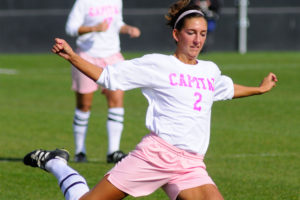
Are Compression Socks Effective?
A study involving amateur female soccer players found that those who wore compression socks during a match experienced less game-induced fatigue than teammates who wore regular socks. Investigators evaluated fatigue by testing agility, standing heel-rise and other factors immediately after the match.

Unlocking the Pelvis
Eight in ten American adults and adolescents do not move enough! This alarming finding from Department of Health and Human Services 2018 research wholeheartedly underscores Physical Activity Guidelines for Americans (2nd edition) recommendations to move more and sit less. Physical activity helps all of us to feel, function and sleep better, and decreases risk of many chronic diseases. We urgently need more aerobic and muscle-strengthening activities, along with greater variety of movement.

Self-Massage Techniques for Exercise Recovery
As a fitness pro, you no doubt value the restorative properties of professional massage. However, finding time for a massage may sometimes be difficult. That’s why it’s helpful to use self-care massage tools for preventing or treating pain or imbalances in the body. While these tools don’t provide “massage” as such (and can’t replace a professional therapist), the best ones offer some of the same benefits.

How to Improve Tennis Performance
Tennis is one of the most popular sports in the world. In the U.S. alone, there are almost 18 million players, with another 14 million expressing interest (TIA 2018). Unfortunately, the dynamic, forceful twists and turns of the game pose ever-present injury risks to players (Roetert & Kovacs 2011).

Pilates Helps Adolescents
6-week Pilates program improved core muscle endurance and hamstring flexibility among adolescents between 9 and 19 years with a history of back pain. Research findings from a preliminary study published in Complementary Therapies in Clinical Practice (2019; doi:10.1016/j.ctcp.2019.01.006) showed that a 6-week Pilates mat exercise program with two 55-minute sessions per week can improve conditioning in both young males and young females.

Preparing Clients for Active Vacations
Do your over-55 clients or class members want to travel for pleasure but need more strength, stamina and mobility? Do they worry they’ll miss seeing the world because they lack physical ability?

More Paths to Exercise Recovery
When it comes to balancing your training program, your mindset should be, “Tomorrow’s workout begins with your recovery from today’s.” Recovery heals the pounding, twisting and tearing of physical activity. A well-thought-out strategy for recovery is becoming ever more crucial with the rising popularity of high-intensity workouts featuring barbells, kettlebells, heavy medicine balls, explosive plyometrics and anaerobic interval training.
SMR Trends: Adopting Vibration Technology
The body of evidence in favor of self-myofascial release (SMR) techniques has been steadily growing. Research has shown that SMR can increase joint mobility and range of motion and reduce muscle soreness. It is used by personal trainers, athletic trainers and physical therapists alike to prevent and treat injuries in clients.
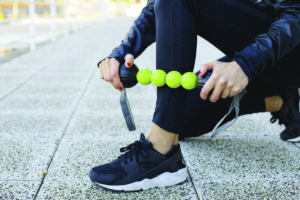
Self-Care Massage Tools for Recovery
As a fit pro, it’s helpful to use self-care massage tools for exercise recovery to prevent or treat pain or imbalances in the body.

Pilates and Fall Prevention
As many as one-third of all adults over 65 years old fall each year, with consequences that include serious injury, limited activity and significant costs. Researchers at California State University, Northridge, conducted a study that shows that Pilates reformer training—as little as once per week—can effectively reduce these risks.

Obesity Boosts Melanoma Risk
Add this to the list of dangers associated with obesity: New research from Sweden suggests obesity is a risk factor for developing skin cancer, and weight loss—in this case via bariatric surgery—could reduce the risk of malignant melanoma skin cancer, in particular, by 61%.
The study included 2,007 bariatric surgery patients and 2,040 nonsurgery controls whose skin cancer incidence was monitored for 18 years. Aside from the significantly lower risk of developing malignant melanoma, the surgery group saw a 42% reduction in skin cancer risk in general.

How Fast You Walk May Affect How Long You Live
Want to outwalk the grim reaper? Pick up the pace, say researchers. A new study from the United Kingdom suggests that quicker walking may add years to your life.
The study’s primary aim was to examine the impact of walking pace and volume on all-cause mortality. To determine this, researchers looked at mortality records for 50,225 individuals from Scotland and England who had self-reported their walking data via interview.

Strong Starts
The warmup. Is it simply a time for small talk while people trickle in, or is it an opportunity to ignite attendees’ best efforts? This may be the class section that fitness instructors plan the least, yet devoting some time to designing the warmup is really worthwhile. Why? Because starting on a strong note significantly affects the outcome of the entire workout. We want our participants to get the most from our classes, so let’s set them up for success.

An Eye on Vision Health
When it comes to muscles, we rarely think about our eyes, and yet the eye is the fastest and most active muscle in the human body (VSP 2018). We say “in the blink of an eye” for a reason! While you probably don’t program “eye lifts” into your strength training routines, exercise does support healthy vision. Read on to find out more about the benefits, along with a few fun facts you can share with clients to further inspire them to keep moving.

Pilates for Recreational Athletes
Professional athletes of all kinds have discovered that adding Pilates to their training can improve performance, reduce injury, speed recovery, and help their hardworking bodies stay balanced and healthy (Caple 2016; Knowlton 2016; Saxon 2016). Pilates—a whole-body exercise system that can help you develop strength, functional flexibility, coordination and balance—can offer those same benefits to recreational athletes. A well-rounded program, particularly one offered in a fully equipped Pilates studio, can do wonders for athletes of almost any age, ability or sport.
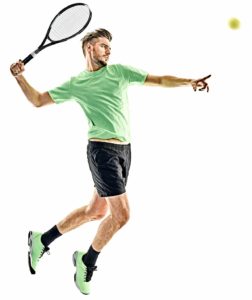
Tennis: Reduce Pain, Improve Performance
Tennis is one of the most popular sports in the world. In the U.S. alone, there are almost 18 million players, with another 14 million expressing interest (TIA 2018). Unfortunately, the dynamic, forceful twists and turns of the game pose ever-present injury risks to players (Roetert & Kovacs 2011).
If your fitness clientele includes people interested in playing this sport, you need to understand the causes of tennis-related injuries. This will help you develop strategies to improve movement function, reduce pain and keep clients on the court.
Stand Up to Aging
Getting up off the ground grows more difficult as we age. Muscles and bones weaken, coordination becomes less fluid, and simply doing chores around the house gets more challenging. Ground-to-standing (G2S) exercises address these changes. hile even performance athletes can benefit from G2S drills (see the sidebar “G2S Exercises Also Help Performance Athletes”), they’re supremely helpful for older exercisers who are at risk for broken hips and other threats to their mobility.

The Case Against Allowing Injured Instructors to Teach
Owing to the part-time nature of most group fitness instruction jobs, program directors don’t always interact with staff on a daily basis and may not know that an instructor is teaching while injured.

Bone Loss: A Primer
Bone loss is a normal part of aging, and understanding it can help fitness professionals to develop preventive strategies for their clients.

Best Foot Forward
A challenging beginning. Ezra didn’t have an easy start. Born with club feet—a congenital condition in which the foot is twisted out of shape or position—he had his first surgery shortly after birth and spent the first few years of life sleeping with corrective boots.