

Weight Management/Weight Loss

Weight Disparities in Children Worldwide
When it comes to childhood health, lots of emphasis is placed on the risks of being overweight or obese—and an estimated 124 million kids worldwide were in those weight categories in 2016, a tenfold increase since 1975. While this is of great concern, a new study has found that in the same year, 192 million boys and girls were moderately or severely underweight. The researchers believe that family income levels may play a role in a child’s weight.

New Way to Calculate Childhood Obesity
Over the years, experts have questioned the accuracy of body mass index scores, known as BMI “z-scores,” for estimating body fat percentages in kids (the z is specific to younger age groups and requires complicated calculations to get results). The criticism is that adolescent weight doesn’t scale with height, which can produce faulty data. Now, researchers claim to have discovered a new, more accurate formula for measuring body fat in kids aged 8–17.

TV Time a Threat to Mobility in Older Adults
To minimize their future immobility risk, older adults should cut television time and boost activity levels, says new research.
Scientists looked at data on 134,269 subjects aged 50–71 from six states over 8 years. The data included self-reported total sitting time, television viewing time and physical activity intensity, as well as health histories. At follow-up, study participants provided information on walking pace and mobility, indicating whether they were “unable to walk” or could keep up an “easy walking pace.”

A Weigh-In a Day Keeps the Pounds Away?
Stepping on the scale daily may help women lose weight, according to a
new study. For 2 years, at intervals, 294 college-age women provided information on their self-weighing practices and underwent body mass index and body fat testing. According to the data, women who weighed themselves daily saw significant decreases in BMI and body fat percentage over time.

New Dangers Associated With Childhood Obesity
Having obesity as a kid doesn’t just create immediate risks. According to a new study, it may also set the stage for significant health problems later on.
While being obese in childhood is known to predict adulthood obesity, the study’s purpose was to learn about other potential and undetermined weight-related health risks that might take root in the early years. Specifically, the researchers focused on how childhood obesity related to cardiovascular disease and abnormal blood sugar levels that result in disease.
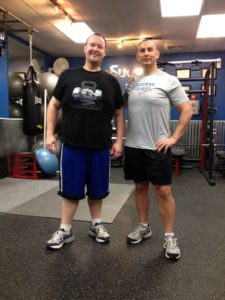
Weight Loss and the Resistant Client
client: Paul | personal trainer: Joe Carson, Wellness Coordinator, Spann Wellness Center | location: Tulsa, Oklahoma
The power of fear. It was early morning, and personal trainer Joe Carson had instructed his client, Paul, to complete a progressive-load “up-down” circuit that included a lat pull-down. The two had worked together for some time, so Carson knew that Paul was strong enough to finish.

Water-Based Weight Loss Programs Help Older Women Manage Knee Problems
Ratcheting up the intensity of water workouts may help women lose weight without exacerbating knee pain, suggests a new study. Knee osteoarthritis (OA) affects around 13% of women aged 60 and older, and the condition can make it painful for them to exercise and lose weight. It can also become a Catch-22, because carrying excess weight can worsen the problem.

Is Exercise an Ineffective Tool for Weight Management?
Being physically active is a primary way to lose or manage weight—right? And sedentary behavior is largely to blame for
current rates of obesity? Well, let's slow down. Findings from
a study conducted at Loyola University Chicago challenge both those statements.

“Fat Shaming” Has Negative Consequences
The term "fat shaming" has garnered plenty of attention lately. Some believe that criticizing people for their size will inspire them to lose weight. According to researchers from the Perelman School of Medicine at the University of Pennsylvania, the practice can be harmful.
The Effects of Intensive Weight Loss on Female Physiology
Experts often raise concerns over intensive weight loss protocols. A recent study, published in Frontiers in Physiology (2017; https://doi.org/10.3389/fphys.2016.00689), sought to better understand the ramifications of rapid and significant weight loss in female participants. The research took place at the University of Jyväskylä in Finland.

Older Adults Will Walk for Money, Charity
Want to motivate older adults to move more? Try offering them financial or charitable-giving incentives.

Parents’ Perceptions of Child Weight May Cause Weight Gain
It might seem illogical that children would gain more weight if their parents acknowledged them as being overweight. After all, the knowledge could help parents mitigate future weight gain. Not so, according to two new studies. It turns out that children are more likely to gain weight over 10 years if their parents see them as overweight.

Taming Testosterone Troubles
Men: Have you had difficulty getting out of bed in the morning, or are you suffering from low mood or libido? Have you gained body fat, lost muscle or begun to struggle with depression or lack of motivation? Low testosterone levels may be to blame.

To Help Clients Succeed, Keep Change Simple
Samuel L. Berry, MS, is a Master Trainer for the American Council on Exercise and for Functional Movement Systems. He serves a wide range of clients and athletes aged 11—81 who are working toward a variety of objectives. In addition to his roles as a trainer and educator, he has contributed to publications for Harvard Medical School, Encyclopedia of Sports Medicine, PTontheNet.com and prominent peer–reviewed publications such as The Journal of Pediatrics.
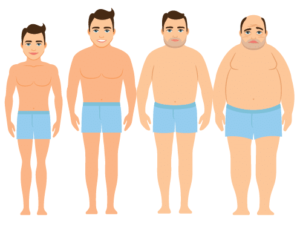
Weight Gain and Cancer Risk
According to the World Cancer Research Fund, 10 types of cancers are linked with obesity. Researchers from the University of Manchester in the U.K. warn that significant weight gain throughout adulthood ups the risk—by as much as 50% for men and 17% for women—of developing obesity-related cancer.

Aging and Cardiovascular Disease: Exercise to the Rescue!
Our species is long–lived compared with other primates. Chimpanzees, for instance, have a life expectancy of about 13 years versus 78.5 years for U.S. babies born in 2009 (Pringle 2013). Why such a big gap? Pringle says vaccines, antibiotics, sanitation, and access to nutritious vegetables and fruits year round give us a huge edge over our great–ape cousins, as does our acquired ability to fight off pathogens and irritants in our environments.

5 Reasons to Ditch the Diet Mentality
Research suggests intuitive eating may be a promising way to maintain a normal body weight and a healthy relationship with food.

Bone Health and Plant-Based Diets
Do you embrace a plant-based diet? If you're avoiding dairy, do you get enough calcium—the best-known nutrient for healthy bones?
To build a sturdy frame, getting enough calcium and vitamin D is key. Matthew Kadey, MS, RD, a James Beard Award-winning journalist, Canada-based dietitian, freelance nutrition writer and recipe developer, gives you the low-down on these nutrients—and the plant foods that can help you get your fill.
Calcium
Obesity and Cancer Tie in Survey as Top Health Threat
Americans seem to understand the personal health risks of obesity, but widespread confusion persists about the causes and treatments of the disease, says a new survey from the American Society for Metabolic and Bariatric Surgery (ASMBS) and the independent research organization NORC at the University of Chicago.

Personal Training and the Power of Listening
client: Christopher | personal trainer: Ginny Pietila, personal trainer and owner, MI Athletic lub | location: Mercer Island, Washington