

Equipment – Personal Training

Mindful Movement May Reduce Stress and Anxiety
Encouraging clients to increase body awareness and pay attention to their surroundings when being physically active may reduce stress.

Hot Yoga May Provide Heat Stress Conditioning for Athletes
If you’re looking for a good cross-training technique for your more athletic clients, suggest they practice hot yoga, which may boost aerobic performance while minimizing exercise stress.
University of British Columbia, Vancouver, researchers recruited 10 elite female field hockey players for observation. All athletes participated in 60-minute hot-yoga classes (30 degrees Celsius/86 degrees Fahrenheit) over 6 consecutive days, during which they did not engage in any other exercise. Following the intervention, the athletes played in a national-team camp.

Mindful Exercise in the Pool
The sensory-rich pool environment is an ideal setting for mindful exercise and a welcome respite from digital stress.
The Optimal Amount of Exercise for Heart Health
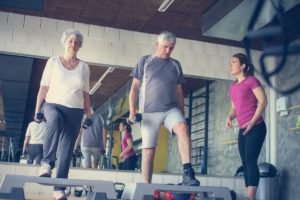
Arterial stiffness, which increases with sedentary living, is associated with higher risk of heart disease. It’s well known that exercise can help, but how much—or how little—is enough?
“While near-daily, vigorous lifelong (>25 years) endurance exercise training prevents arterial stiffening with ageing, this rigorous routine of exercise training over a lifetime is impractical for most individuals,” noted the authors of a new study, which aimed to determine the least amount of exercise necessary to reduce arterial stiffness.

How Fast You Walk May Affect How Long You Live
Want to outwalk the grim reaper? Pick up the pace, say researchers. A new study from the United Kingdom suggests that quicker walking may add years to your life.
The study’s primary aim was to examine the impact of walking pace and volume on all-cause mortality. To determine this, researchers looked at mortality records for 50,225 individuals from Scotland and England who had self-reported their walking data via interview.

New Mindful Outdoor Leadership Program
As green exercise and the health benefits of spending time in nature gain more prominence in popular and scientific news, the Kripalu Center for Yoga & Health in Stockbridge, Massachusetts, is introducing a Mindful Outdoor Leadership Program in October.
The curriculum includes elements of forest bathing, Ayurveda, yoga, outdoor skills, and research related to nature’s health benefits.

Question of the Month
When you offer training advice to clients, are you discussing the significance of sleep? If yes, are you using sleep trackers and monitoring results? Please describe how you are educating clients regarding the role of sleep in effective training and weight management and share any success stories you have had.
Share your responses with executive editor Joy Keller, jkeller@ideafit.com.

Equal Calories Burned ≠ Same Results
Many people fixate on the number of exercise calories they burn. New research, sponsored by Les Mills International, shows that even when two group fitness activities (indoor cycling and a resistance workout) were matched for duration and caloric expenditure, they did not have equivalent metabolic effects—which could influence long-term training results. Lead study author Nigel Harris, PhD, said, “The type of exercise used to burn those calories . . . impacts the long-term positive effects that exercise has on the body.”

Pilates for Recreational Athletes
Professional athletes of all kinds have discovered that adding Pilates to their training can improve performance, reduce injury, speed recovery, and help their hardworking bodies stay balanced and healthy (Caple 2016; Knowlton 2016; Saxon 2016). Pilates—a whole-body exercise system that can help you develop strength, functional flexibility, coordination and balance—can offer those same benefits to recreational athletes. A well-rounded program, particularly one offered in a fully equipped Pilates studio, can do wonders for athletes of almost any age, ability or sport.
Tennis: Reduce Pain, Improve Performance
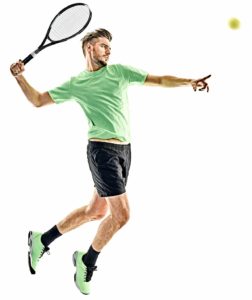
Tennis is one of the most popular sports in the world. In the U.S. alone, there are almost 18 million players, with another 14 million expressing interest (TIA 2018). Unfortunately, the dynamic, forceful twists and turns of the game pose ever-present injury risks to players (Roetert & Kovacs 2011).
If your fitness clientele includes people interested in playing this sport, you need to understand the causes of tennis-related injuries. This will help you develop strategies to improve movement function, reduce pain and keep clients on the court.
The Long-Term Benefits of Pedometer Use
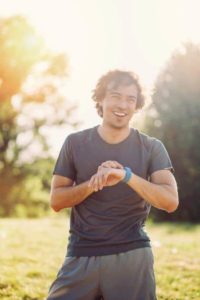
Studies show that tracking daily steps with a pedometer leads to higher activity levels. A new report out of the U.K. suggests the practice can inspire people to take more steps for many years.
The report included data from two separate 12-month studies; one involved inactive adults aged 45–75, while the other featured older adults aged 60–75. In the first, participants were assigned to one of three 12-week pedometer-based interventions—consultation with a nurse, support by mail or no consultation. In the second, there was no mail support group.

Teaching Yoga at the Wall
As a yoga teacher, you guide participants through a practice that deepens their understanding of asanas (poses) and how these take shape in students’ bodies. You cue, coach, align, adjust, demonstrate and discuss, and you offer tips on breathing, anatomy, “feel” and sensation. Often, the most effective way to help participants understand a specific element is to slow down, grab a prop or two, and work a little deeper. You may have access to straps, blocks and bolsters, but you might be forgetting another perfect “prop”: the wall.
A for Effort
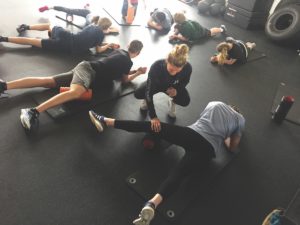
client: Kent Denver School Students | personal trainer: Laura Bordeaux, strength and conditioning coach, Kent Denver School location: Englewood, Colorado
A complete course load. Think of it as core curriculum—literally. The Kent Denver School, a college-preparatory institution outside of Denver, offers a comprehensive educational experience that emphasizes both academics and sports. That’s where Laura Bordeaux comes in.

Stand Up to Aging
Getting up off the ground grows more difficult as we age. Muscles and bones weaken, coordination becomes less fluid, and simply doing chores around the house gets more challenging. Ground-to-standing (G2S) exercises address these changes. hile even performance athletes can benefit from G2S drills (see the sidebar “G2S Exercises Also Help Performance Athletes”), they’re supremely helpful for older exercisers who are at risk for broken hips and other threats to their mobility.

High-Intensity Interval Training for Fat Loss
Two recent studies reveal that high-intensity interval training has the ability to produce high-impact fitness gains in a short time frame.
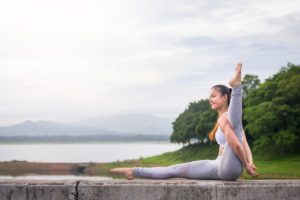
Thai Yoga Improves Flexibility
If your clients need to improve their flexibility, you may want to encourage them to try Thai yoga during their time away from training. In a review of randomized controlled trials, researchers found that consistent practice of Thai yoga improved muscular flexibility and specific joint range of motion. Thai yoga is from traditional Thai medicine and includes gentle dynamic stretching, deep breathing, meditation and self-acupressure.
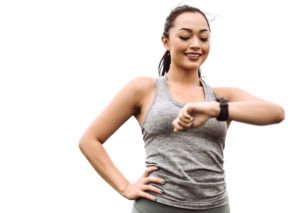
Activity Tracker Usage Improves
The initial finding—that people stop using their fitness trackers after the first 6 months—seems to be evolving. In a new study by insurance company Humana, 80% of participants in a structured program were still using activity trackers after 6 months. Researchers at the Perelman School of Medicine at the University of Pennsylvania in Philadelphia found that game design elements—such as points, levels, badges and financial incentives—helped to keep users active.

Bone Loss: A Primer
Bone loss is a normal part of aging, and understanding it can help fitness professionals to develop preventive strategies for their clients.

Walking Speed: A Predictor of Functional Health
Slow walking speed has been linked to a greater risk of mortality in older adults, while brisk walking has been linked to better health.

Spotting and Fixing Flaws in Walking Biomechanics
Participating in a program of regular exercise is a good idea at any stage of life, but particularly as we get older. Exercising frequently and consistently has many documented benefits, including promoting good health, preventing disease, enhancing mental health and physical capacity, aiding recovery from injury and illness, minimizing the effects of aging, and improving one’s ability to handle the physical demands of life (Bird, Smith & James 1998).