

Exercise/Class Formats

How to Design a Repeatable Class that Brings People Back
Why Repeatability Matters In group fitness, it is easy to mistake intensity for value. A class that leaves participants breathless, sweaty and visibly exhausted can feel successful in the moment….

Training the Mind Through the Body
The Mind–Body Divide That Never Truly Existed For much of modern fitness culture, the body and mind have been treated as separate domains. Strength training was treated as physical work,…

The Hidden Biology of Strength
Skeletal muscle has traditionally been defined by what it allows the body to do. It produces force, enables locomotion, stabilizes joints and supports posture. In fitness settings, conversation often centers…

The Importance of Muscular Power in Healthy Aging
Why Power Deserves Its Own Conversation Muscular power is the ability to generate force rapidly. Mechanically, it reflects force multiplied by velocity. In practical terms, it determines how quickly the…

Cardiorespiratory Fitness Remains One of the Strongest Health Predictors
Cardiorespiratory fitness, often measured through VO₂ max, continues to emerge as one of the most powerful indicators of long-term health. Numerous studies show that individuals with higher aerobic fitness levels…

Cardio “Snacks”: The Smart Way to Stay Active Indoors
When outdoor conditions aren’t ideal—whether due to allergens, weather, or time constraints—many fitness enthusiasts are turning to “cardio snacks.” These are short, 5–10 minute bouts of activity performed throughout the…

Minimal Equipment, Maximum Results: The Rise of Simplified Strength Training
Strength training no longer requires a fully equipped gym. One of the biggest trends right now is minimal equipment training—programs built around dumbbells, kettlebells, and bodyweight exercises that deliver serious…

Cardiorespiratory Fitness Outperforms BMI in Mortality Prediction
Large-scale cohort analyses continue to demonstrate that cardiorespiratory fitness strongly predicts mortality risk, often independent of body mass index. Individuals classified as overweight but exhibiting high fitness levels show lower…

Social Isolation and Physical Activity Decline
Recent public health research continues to document a bidirectional relationship between social isolation and physical inactivity. Large-scale cohort studies report that individuals experiencing higher levels of loneliness demonstrate lower weekly…

Building Metabolic Capacity
Why Metabolic Regulation Is a Programming Variable Metabolic health is often discussed in broad public health terms, but for fitness professionals, it is a programming variable. Skeletal muscle is not…

Exercise Intensity, Recovery and Cardiovascular Risk
Exercise is widely recognized as a cornerstone of cardiovascular health, yet conversations about how exercise intensity influences cardiovascular risk often become polarized. High-intensity training is alternately framed as either the…

Resistance Training Research Shifts
Strength and resistance training continue to gain traction, not just for performance but as foundational for metabolic health, functional capacity, and longevity. Positioning resistance work as a core component of…

The Return of Small Group Training
Small-group training is experiencing renewed momentum as clients seek a balance between individualized attention and social connection. Semi-private formats offer coaching visibility and personalization without the cost or isolation of…

Anxiety, Emotional Regulation and Exercise
Physical activity is often discussed as a tool for stress relief, mood enhancement, and mental well-being. In popular narratives, exercise is sometimes framed as a direct antidote to anxiety, with…

Fitness and Mental Health Integration
Fitness is increasingly integrated with mental well-being, reflecting consumer interest in holistic health rather than physical outcomes alone. Industry surveys show rising demand for programming that acknowledges stress, mood, and…

Register for “The Language of Fascia” Webinar
IDEA Health & Fitness Association® is pleased to welcome you to this live educational webinar with functional podiatrist and human movement specialist Dr. Emily Splichal, owner and founder of Naboso….

Interval Walking Goes Viral
The recent viral interest in Japanese interval walking reflects growing appetite for simple, structured approaches that balance challenge with accessibility. The trend aligns with broader industry movement toward formats that…

Long-Term HIIT Adherence Remains Mixed
While HIIT performs well in structured research settings, long-term adherence outside the lab remains inconsistent. Recent systematic reviews suggest that more moderate, repeatable approaches may better support sustained participation, adding…

Consistency Gains Ground Over Intensity Messaging
Across industry commentary, consistency is increasingly positioned as the primary driver of results. This perspective aligns with the growing emphasis on repeatability over spectacle, as more voices highlight habit formation…
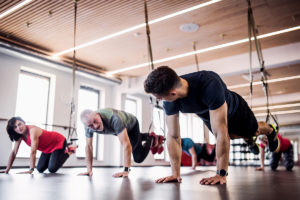
HIIT’s Role in Aging – Benefits and Boundaries
While high-intensity training remains effective, new research adds nuance to how and when it is best applied. A recent review comparing HIIT and continuous aerobic training in older adults highlights…