
Stretching for Hypertension Improvements
Flexibility helps lower blood pressure more than walking does, study finds.
| Earn 1 CEC - Take Quiz
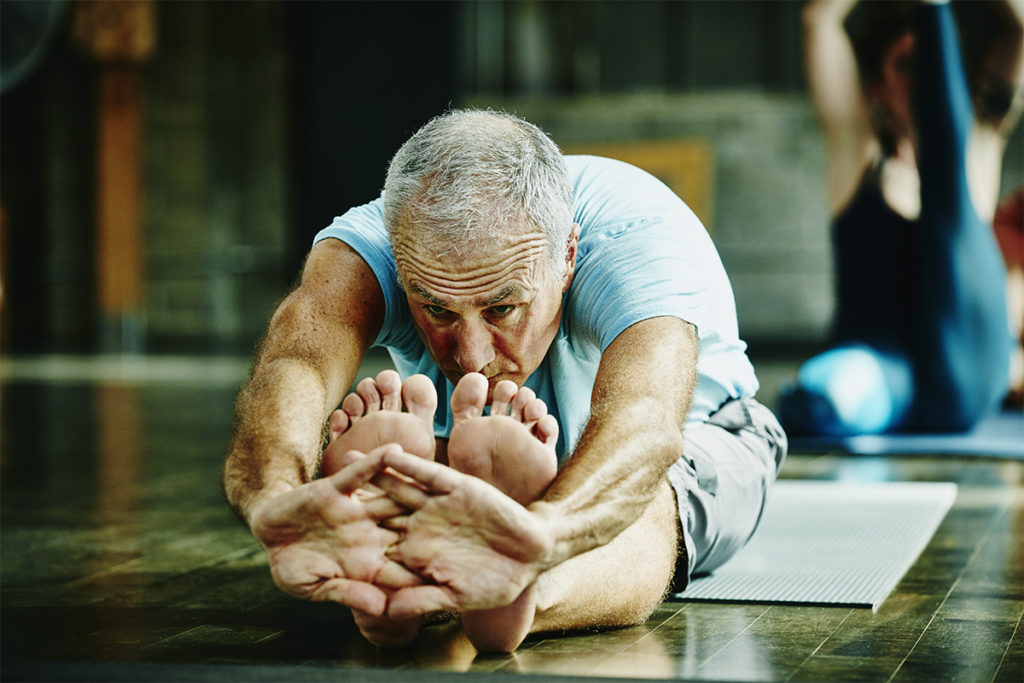
Here’s some good news for people who favor flexibility in their workouts. Regular stretching for hypertension improvements may be more effective than brisk walking in those with high-normal blood pressure, according to findings from the University of Saskatchewan and University of Regina. “Everyone thinks stretching is just about stretching your muscles,” said study co-author Phil Chilibeck, PhD, kinesiology professor at the University of Saskatchewan. “But, when you stretch your muscles, you’re also stretching all the blood vessels that feed into the muscle, including all the arteries. If you reduce the stiffness in your arteries, there’s less resistance to blood flow.”
Investigators conducted the study with 40 older men and women (mean age 61) who had stage one hypertension (systolic pressure of 130–139 mm Hg; diastolic pressure of 80–89 mm Hg). The stretching group members did a whole-body routine, 30 minutes a day, 5 days per week, while brisk walkers exercised for the same amount of time and frequency. Walking group members lost more body fat, but stretching participants experienced greater reductions in blood pressure.
Study authors noted that the takeaway message is to add more stretching for hypertension improvements, but not to reduce cardiovascular training. “I don’t want people to come away from our research thinking they shouldn’t be doing some form of aerobic activity,” says Chilibeck. “Things like walking, biking, or cross-country skiing all have a positive effect on body fat, cholesterol levels, and blood sugar.”
Find the study in the Journal of Physical Activity and Health (2020; 18 [1], 21–28).
See also: Evening Cardio Training and Hypertension

Shirley Eichenberger-Archer, JD, MA
Shirley Archer, JD, MA, is an internationally acknowledged integrative health and mindfulness specialist, best-selling author of 16 fitness and wellness books translated into multiple languages and sold worldwide, award-winning health journalist, contributing editor to Fitness Journal, media spokesperson, and IDEA's 2008 Fitness Instructor of the Year. She's a 25-year industry veteran and former health and fitness educator at the Stanford Prevention Research Center, who has served on multiple industry committees and co-authored trade books and manuals for ACE, ACSM and YMCA of the USA. She has appeared on TV worldwide and was a featured trainer on America's Next Top Model.