

Strength/Resistance

Training the Pelvic Core
"I wish someone had told me this could happen to my body after having a baby!" . . . "Why did my doctor tell me I could return to exercise at my 6–week checkup?"

Sample Class: Body-Weight Barrage
When was the last time you taught a class based solely on using the body as a "machine"? Body–weight exercises are often undervalued and underused. Many people want to advance rapidly, and they end up neglecting important functional (and foundational) movement patterns. Body–Weight Barrage blends popular strength training moves with cutting–edge training methods in a way that challenges clients at any fitness level without using barbells, dumbbells or any other equipment.
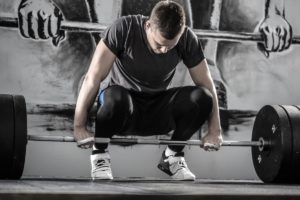
Suggested Repetition Ranges for Strength, Hypertrophy
Improving strength and increasing muscle mass are two prominent goals for exercisers. According to recent research, both goals require significantly different training protocols.
Published in the Journal of Sports Science & Medicine (2016; 15, 715–22), the small study involved 19 men (~23 years old) with experience in resistance training. They were assigned to one of two protocols—one aimed at building strength (heavy resistance), the other designed to build muscle (hypertrophy).
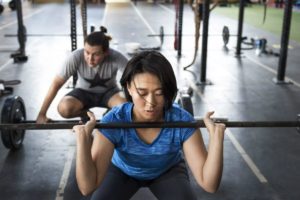
Weightlifting Helps Breast Cancer Survivors
According to Lynn Panton, PhD, professor of exercise science at Florida State University, breast cancer survivors are often discouraged from lifting weights after treatment, for fear it could cause lymphedema, or swelling of the arms and/or legs. Panton, however, facilitated a study that suggests otherwise.

Aging and Cardiovascular Disease: Exercise to the Rescue!
Our species is long–lived compared with other primates. Chimpanzees, for instance, have a life expectancy of about 13 years versus 78.5 years for U.S. babies born in 2009 (Pringle 2013). Why such a big gap? Pringle says vaccines, antibiotics, sanitation, and access to nutritious vegetables and fruits year round give us a huge edge over our great–ape cousins, as does our acquired ability to fight off pathogens and irritants in our environments.
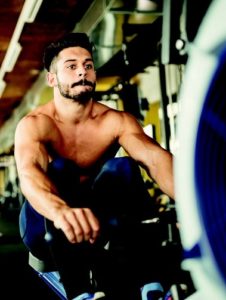
3 Rowing Workouts to Boost Strength, Endurance, and Aerobic Capacity
Don’t forget about the rowing machine—it’s a perfect tool to help client improve all areas of fitness.

Lifting Weights Builds Mental Muscle
Older adults who have mild cognitive impairment or could be at risk for it may want to head for the weight room. A study by researchers in Australia has found that progressive strength training is helpful in boosting brain power.

Sample Class: HIIT Remix
If your members enjoy amazing results from HIIT workouts but crave a more gentle approach to burning calories, HIIT Remix is the solution. This class takes the results-focused challenge of a traditional high-intensity conditioning class and presents it in mellow, low-impact versions of favorite interval drills. Participants will appreciate the change of pace and the opportunity to cross-train. HIIT Remix Details
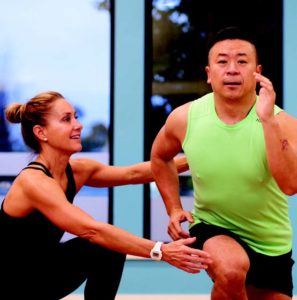
Personal Training and the Power of Listening
client: Christopher | personal trainer: Ginny Pietila, personal trainer and owner, MI Athletic lub | location: Mercer Island, Washington

7 Principles for Outstanding Boomer Workouts
Do you teach or train generally healthy, moderate- to high-functioning baby boomers? Or are you thinking of directing more of your efforts to exercisers over 50? If so, be among the first to learn targeted principles you can weave into clients' or class participants' workouts.
Whether you're a small-class leader, a one-on-one trainer or a group fitness instructor, applying seven specific principles will allow you to offer the most effective sessions for midlifers and older boomers.
Skeletal Muscle Hypertrophy
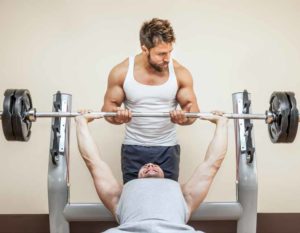
Clients who want more muscularity need to face one of the most fundamental facts of skeletal muscle hypertrophy: Training to failure is crucial to building bigger muscles. Two original research studies reinforce this reality while offering meaningful new insights into hypertrophy training.

A Best Rest Interval for Bench Press?
Rest is often a carefully thought-out variable in strength training routines. Rightly so, suggests research published
in the Journal of Strength & Conditioning Research (2015; 29 [11], 3079–83). The study found that resting too little or too much can negatively impact ratings of perceived exertion and the number of repetitions exercisers complete.
Sample Class: Circuit Progressions
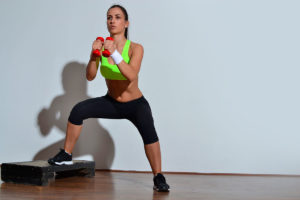
To achieve results, your participants need to be challenged in new ways. If your strength training classes are circuit-style and you want to up the ante, try adding strategic progressions. This workout, a traditional circuit format, cycles through several exercises with minimal rest. The key is to challenge participants by adjusting a variable during each cycle. With this approach, they enjoy the familiarity of the sequences, as well as fun surprises.
Circuit Progressions Details
External Cues In Action: Strength and Power
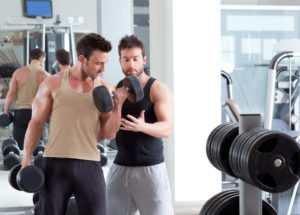
Trainers and coaches know the importance of strength and power development. Traditionally, we try to identify optimum doses (reps and sets) and periodization schemes rather than consider the types of cues we are using. However, we now know that attentional focus can influence movement velocity, movement force, vertical-jump and horizontal-jump characteristics, just as you would expect programming variables to affect such things (Vance et al. 2004; Marchant, Greig & Scott 2009; Wulf & Dufek 2009; Porter et al. 2010a).
Row the Right Way
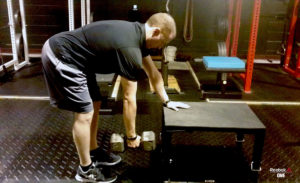
We can all assume that we know how to row, but if you’re serious about getting strong while keeping your shoulders healthy, you may just want to read this. Mike Robertson, ReebokONE Expert Contributor and President of Robertson Training Systems, breaks down the proper way to row.

Five Benefits of Eccentric Exercise
Not everyone likes to focus on eccentric contractions, but this style of training deserves more attention because it may be a “secret weapon” for creating healthier joints and a long, lean body. Research reveals the perks for newcomers and well-trained athletes.
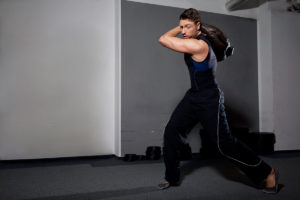
Sample Class: Farmhand Fitness
Several years ago, I attended an IDEA World Fitness Convention™ session led by Michol Dalcourt, director of the Institute of Motion. During that presentation, he discussed hockey camps he used to lead and described the differences in capabilities among the young athletes. He remarked that athletes from rural areas tended to perform better on the ice than those from cities and towns. His assertion: The rural hockey players’ advantage was due to full-body training using low-tech “tools” like heavy logs or hay bales.

Asymmetrical Bar Training
Asymmetrical bar training (ABT) can help clients enhance their sense of balance while improving their core strength and rotational power.

Does Exercise Order Really Matter in Resistance Training?
Research on resistance training design finds that the chief variables include intensity, volume, recovery between sets and exercises, workout frequency, equipment and speed of movement (Sima?o et al. 2012).

Which Is Best for Hormones: The Bar or the Machine?
Testosterone and growth hormone are associated with strength and muscle gains. But what is the best training method for eliciting an acute hormone response? A study published in the Journal of the National Strength and Conditioning Association (2104; 28 [4], 1032–40) contributes to this debate.