

Fitness Assessment

Pillars of Functional Training for Active Aging
Healthy aging is more than the absence of disease, according to the World Health Organization (WHO): “For most older people, the maintenance of functional ability has the highest importance” (WHO 2015). Colin Milner, founder and CEO of the International Council on Active Aging in Vancouver, British Columbia, echoes these comments. “When looking at the healthy aging market today, the focus is all about function,” he says.

130/80 = High Blood Pressure
For the first time since 2003, the American College of Cardiology and the American Heart Association have produced a substantial report updating blood pressure recommendations. People with a reading of 130/80 are now classified as having high blood pressure. This is down from 140/90.
According to the ACC, this means 46% of U.S. adults will now be categorized as having hypertension.
Those in the “hypertensive crisis” category require medication intervention and immediate hospitalization if there is organ damage, according to the report.

A Scientific Approach to Core Training
Core training can improve functional capacity and reduce injury potential. But accurately programming a successful, tailored and progressive core- training protocol can be a complicated endeavor. Now, researchers from Heriot-Watt University in Edinburgh, Scotland, have developed a model they hope gives fitness pros a solid platform to work from.
How Older Adults Can Boost Psychological Well-Being
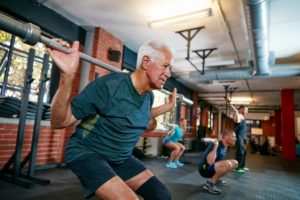
Researchers from Finland have determined that older adults who pump iron can build more than muscle: Resistance training can strengthen their outlook on life. The scientists say frequency is an important variable in maximizing benefits.

Resistance Training for Youth: 10 Tips for Success
Resistance training for youth can be a polarizing topic, mostly because of misconceptions about safety, injury rates and training techniques. Though parents and trainers alike often worry about the hazards of youth resistance training, research shows that it has a host of benefits—if it’s done properly.

The Anatomy of Functional Training Risks
Many clients can’t seem to get enough of workouts that meld functional movements with high-intensity resistance training. Indeed, workouts using dynamic, high-intensity, full-body movements are great for strength and health—provided the body functions properly and exercisers use correct technique.

Why Proper Rib-Cage Position Is Important
Proper thoracic-cage functioning sets the groundwork for healthy movement.
Brief Bouts of Stair Climbing Boost Fitness Levels
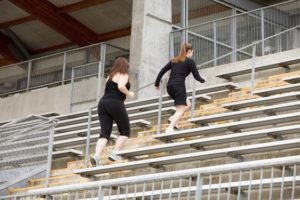
Lack of time and no access to fitness equipment are two of the most common responses given by people who do not exercise. Researchers at McMaster University and Queens University, in Ontario, have released a report suggesting a workaround to those responses. The scientists have found that very short bouts of stair climbing can help people get in better shape.
The “New” Knee Ligament, Rediscovered
Hasn't the knee been thoroughly mapped? Perhaps. However, the following bold headline reverberated throughout the allied health community in 2013: "Doctors Identify a New Knee Ligament."
Really?

Preventing Golf Injuries
As a golfer, you want to stay injury-free to practice and compete regularly, which ultimately lets you hone your skills and elevate your performance.
To help avoid injury and boost level of play, you need to understand how two key muscle and soft-tissue systems—the posterior oblique system and the anterior oblique system—affect the golf swing.
Getting the Facts on Fatigue
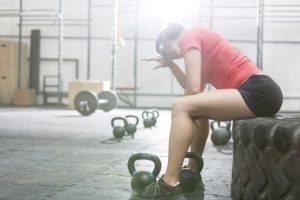
Fatigue is a crucial concept for exercisers because it represents the point where they fail to complete a set or feel too exhausted to continue a long-distance run or other endeavor. Fatigue fascinates researchers because it reflects mental, chemical and mechanical processes that affect muscle performance. Indeed, the physiology of fatigue recently inspired the journal Medicine & Science in Sports & Exercise to devote a special section to the topic.
I'll review highlights from the journal's special section in a question-and-answer format:
A Minor Issue?
When you work with enough clients, eventually you notice all the variations in biomechanics and anatomy. You may or may not remember from your fitness professional certification studies that only about half of people have a psoas minor muscle. When it's there, it lies in front of the psoas major and originates from the sides of the 12th thoracic vertebra (T12), the first lumbar vertebra (L1) and the corresponding intervertebral disk (Farias et al. 2012).

What Is Plica Syndrome?
Clients sometimes experience general pain in the knee during or after an exercise session, and while it's not within your scope of practice to diagnose, a broad understanding of issues that affect this important joint can be helpful. Here's a snapshot of plica syndrome.
Plica is a fold of synovial tissue that's a "remnant" of embryologic development. The knee is initially divided into three compartments by membranes, which are then resorbed by the third or fourth month of fetal life (Scuderi et al. 1997).
Power Up to Prevent Injury
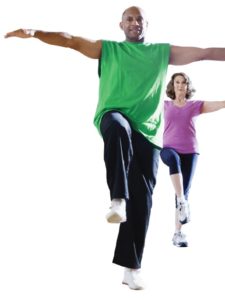
Participants rarely think about injuries until after they happen (hopefully not in your class!). But someone who needs rehabilitation may face a delay in meeting fitness goals. Another issue: Our group fitness studios are filling with people of many different ages and abilities.

5 Simple Assessments for Youth
"He's just not very coordinated."
"She's strong."
"She's out of shape."
"He's slow."
"He's athletic."

Health Disparities Influenced by ZIP Code
Did you know that where you live may be more important than your family tree in predicting health disparities and health longevity?
How to Teach HIIT to Everyone
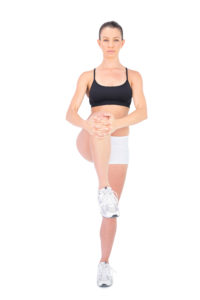
High-intensity interval training has been riding a wave of popularity, and it seems everyone wants to give it a try. However, intense interval training is nothing new. Group fitness instructors have been teaching HIIT for a long time. Fartlek training, for example, was big in the 1970s. The 1980s brought us high-impact classes, and the 1990s introduced indoor cycling (think repeat hill training). HIIT is a fantastic workout and an effective way to train energy systems; build muscle; lose weight; enhance strength, power and agility; and prevent adaptation.
Treadmill Performance and Mortality Link
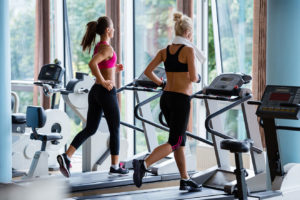
nterested in predicting how long you’ll live? Hop on the treadmill. That’s according to researchers from the Johns Hopkins University School of Medicine, who have developed a formula they say can be used to predict 10-year survival.
To develop this formula, the researchers studied data for 58,020 individuals aged 18–96, who underwent standard exercise stress testing between 1991 and 2009 to determine how well their heart and lungs responded to walking at increasing speeds. Subjects were required to be free of heart disease.
Low Intensity vs. High Intensity: Which Is Best for Obese Adults?
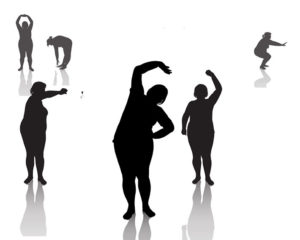
The debate continues regarding the most effective exercise measures for reducing abdominal obesity and improving glucose measures.
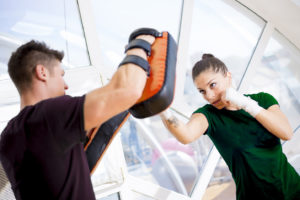
Attentional Focus & Cuing
Nod if these scenarios seem familiar:
You give your client well-articulated instructions and get a blank stare followed by, “So what do you want me to do?”?
You give your client a series of cues, but the client’s movements actually get worse because your point is misunderstood.
You have a successful training session one week where the client really seems to click with everything you are saying, but the next week it is as though your coaching had dissolved and the client is right back to those inefficient movements.