

Strength/Resistance

Most Popular Club Activities
The three types of workout equipment used most often in health clubs in 2016 were treadmills, resistance machines and free weights, according to the IHRSA 2017 Health Club Consumer Report. Among group exercise and training programs, yoga topped the list, with 36% of members reporting participation. Stretching (24%) and calisthenics (23%) ranked second and third.

The Anatomy of Functional Training Risks
Many clients can’t seem to get enough of workouts that meld functional movements with high-intensity resistance training. Indeed, workouts using dynamic, high-intensity, full-body movements are great for strength and health—provided the body functions properly and exercisers use correct technique.

Does Strength Training Offer Protection Against Metabolic Syndrome?
Previous research has determined a link between metabolic syndrome and reduced muscular strength and resistance training levels. A new study aimed to determine if resistance exercise—with or without aerobic exercise—could offer protection against developing the disease.

Sample Class: Cardio-Strength Circuit
Circuit training remains a popular activity, which is not surprising since it provides an integrated and accessible full-body workout. Not only can you combine cardio and strength moves in one class, but you can offer a wide variety of easily modifiable moves, accommodating participants of all abilities.
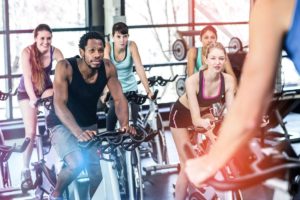
Sample Class: Rock and Ride!
Many indoor cycling instructors are not sure of the best way to combine strength and cycling without compromising either component. Rock and Ride provides the perfect mix of both while infusing a little fun with rock ’n’ roll music. This class is an ideal introduction for new riders because, instead of having to “suffer” through 60 minutes on an uncomfortable saddle, they get to hop off at the midpoint for strength work.

The Functional Movement Screen and Active Older Clients
Study reviewed: Mitchell, U.H., et al. 2016. Performance on the Functional Movement Screen in older active adults. Journal of Sport and Health Science, 5 (1), 119–25.

Why Proper Rib-Cage Position Is Important
Proper thoracic-cage functioning sets the groundwork for healthy movement.

Conditioning for Kayaking
Did you know that 13 million people participated in some form of kayaking in 2014, making it one of the most popular flatwater sports (Outdoor Foundation 2015)? If you’re a kayaker, you know that the main challenges are building upper-body strength for paddling and maintaining a strong lower back to avoid back pain.
Exercise Types Affect the Brain Differently
Plenty of research has determined that regular exercise benefits brain health. A recent large review got more specific and looked into how different types of exercise affect the brain.
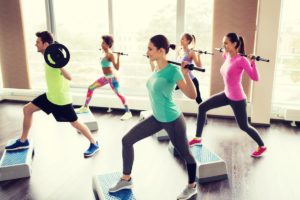
A 55-Minute Lower-Body Workout With Strength and Cardio Intervals
Help your students improve lower-body strength by taking them through unique variations of the lunge, squat and dead lift.
3 Effective Abs Exercises Anyone Can Do
Essentially, any exercise that uses the anterior and/or posterior muscles to stabilize the spine—and is performed in a coordinated fashion—works the core. It’s important to include some kind of core moves in all classes, particularly those in which core training might not be emphasized. Try the following exercises in one of your next classes; these moves are appropriate in a range of settings and will be effective with various pieces of equipment.

From Stroke to Strength
It’s not often that a personal training client’s initial screening reads “blocked cranial arteries in the left hemisphere, 1 billion destroyed brain cells, inability to speak, and paralysis and loss of feeling in both right limbs.”

Does Olympic Weightlifting Improve Muscle Power?
When it comes to improving jump and sprint performance, not all training programs are equal, says a study published in Medicine &s; Science in Sports &s; Exercise (2017; 49 [4], 736–45).

Exercise and Children: Better Brain Health, Less Obesity, Less Stress
Physically active young people can do better in school and improve their self-expression, self-confidence and social interaction compared with more sedentary children (WHO 2017). Indeed, two studies published in 2017 underscore the value of children getting plenty of exercise.
Let’s take a quick look at this research. Study 1. Fitness and Academic Achievement
A Team Approach to Wellness
Lisa Dougherty is the founder of the Medical Fitness Network (MFN). This mostly volunteer‐driven project is supported by more than 100 national businesses. Dougherty's vision is to improve the quality of lives of many millions of people by connecting them with fitness and allied health professionals who have a background in the prevention, treatment and rehabilitation of chronic diseases, medical conditions and disabilities, as well as in the management of women's health issues, including prenatal and postpartum care.
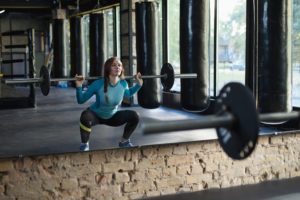
Comparing Periodization Strategies for Women
Study reviewed: Bartolomei, S., et al. 2015. Block vs. weekly undulating periodized resistance training programs in women. Journal of Strength and Conditioning Research, 29 (10), 2679—87.
If your clientele includes women looking to boost their muscular strength within a specific time frame, creating periodized weight–training programs for them is a great idea. The question is: How should you structure the program? Bartolomei and colleagues' study published in 2015 offers guidance on two possibilities.

Is Exercise an Ineffective Tool for Weight Management?
Being physically active is a primary way to lose or manage weight—right? And sedentary behavior is largely to blame for
current rates of obesity? Well, let's slow down. Findings from
a study conducted at Loyola University Chicago challenge both those statements.
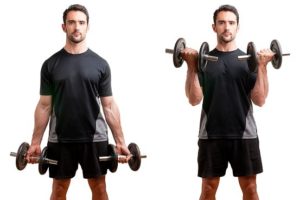
Resistance Training and the Cardiorespiratory Response
We know that resistance training improves strength, but can it also challenge the cardiorespiratory system? In a study published in The Journal of Strength & Conditioning Research (2017; 31[3], 644—52), researchers analyzed the effects of three exercises performed three different ways, to determine the cardiorespiratory response to each.
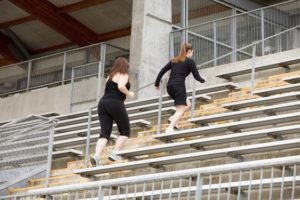
Brief Bouts of Stair Climbing Boost Fitness Levels
Lack of time and no access to fitness equipment are two of the most common responses given by people who do not exercise. Researchers at McMaster University and Queens University, in Ontario, have released a report suggesting a workaround to those responses. The scientists have found that very short bouts of stair climbing can help people get in better shape.
Weak Thighs May Lead to Knee Problems in Women
Research suggests that women are more likely than men to develop knee osteoarthritis (KOA). Improving thigh muscle strength may be one way to get a leg up on reducing or preventing the condition, according to a new study.
This study compared muscle anatomical cross–sectional areas &lpar:ACSAs) and isometric extensor and flexor muscle strength in 161 KOA patients against the same factors in 186 individuals without the condition. The researchers also looked at BMI as a possible contributor to knee osteoarthritis.