

Inactive/Deconditioned

Changing Behavior Changes Lives
In North America—and around the world—people are suffering or dying from the ravages of chronic lifestyle diseases that are mostly preventable. It’s troubling to write those words as a flat statement of fact, especially in an era of such astonishing medical advancements paralleled with a daily firehose of new health research that further pressure-washes what we already know.

Tracker Information Motivates
With the abundance of activity trackers on the market, deciding which product to choose can be overwhelming. New research suggests that the most important criterion may simply be how easy it is to access the data the device provides. Recent research conducted at the Atlantic Sports Health Research Department of Atlantic Health System in Morris?¡town, New Jersey, shows that people who wore a device and accessed data via an app were more active daily when compared with those who did not access the activity information.

Can Exercise Prevent Depression?
Fifteen minutes of vigorous activity or approximately 1 hour of moderate activity (like walking or gardening)—or a combination of light and vigorous physical activity—may significantly reduce risk of major depression, according to a study published in JAMA Psychiatry (2019; doi:10.1001/jamapsychiatry.2018.4175).

UK Med School Includes Physical Activity Education
Lancaster Medical School in Lancaster, England, has been acknowledged throughout the United Kingdom and by the World Health Organization Europe for being the first medical school in the U.K. to integrate guidelines on how to prescribe physical activity. The initiative is referred to as the “Movement for Movement.”

June 2019 Question of the Month: Should Cities Help Shape What People Eat?
Like them or hate them, soda taxes are proving effective at curbing the intake of sugary drinks. A study published in the American Journal of Public Health cites data showing that after the city of Berkeley, California, implemented a penny-per-ounce soda tax in 2014, consumption of sweetened drinks, including soda and energy drinks, plummeted by 21% in lower-income neighborhoods. And 3 years later, city-polled residents reported drinking 52% fewer of these beverages than they did before the tax passed.

Career Advancement for Everyone
Thousands of fitness professionals consider the IDEA World Convention to be the best investment they can make to further their careers. That’s largely because the event delivers robust, multilevel education covering all facets of the industry. But there’s more to it than that, according to fitness industry veteran and this year’s IDEA Jack LaLanne Award recipient, Jay Blahnik.

Inside the Latest Physical Activity Guidelines
The more we move, the better we live. Even a few minutes of exercise is better than sitting still.
These are just two of the conclusions in the recent report from the 2018 Physical Activity Guidelines Advisory Committee, whose recommendations form a sound foundation for integrating exercise into our daily lives.

The Power of Simple Lifestyle Changes
Lifestyle choices have a significant impact on quality and length of life. With many Americans living longer than ever, fitness pros are on the front lines of a complex challenge: How will we help people remain active and engaged from their 60s into their 90s and beyond? How can we help them stay healthy to rein in healthcare costs?

Debating Alcohol Consumption and Risk
In our September 2018 issue of Fitness Journal, we reported on an international study published in The Lancet that found any level of drinking above 100 grams of alcohol (3.75 ounces) per week increases heart disease risk and shortens lifespan.

The Key to a Prolific Career
Soccer great Pelé once said, “Success is no accident. It is hard work, perseverance, learning, studying, sacrifice and, most of all, love of what you are doing or learning to do.” This concept forms the foundation of everything you will experience at the 2019 IDEA® World Convention in Anaheim, June 26–30.

Preparing Clients for Active Vacations
Do your over-55 clients or class members want to travel for pleasure but need more strength, stamina and mobility? Do they worry they’ll miss seeing the world because they lack physical ability?

Creating Enjoyable Training Programs
Physical inactivity levels continue to rise in spite of widespread knowledge of the negative consequences. University of North Carolina at Chapel Hill researchers suggest the issue may not come from a lack of knowledge but from how exercise is programmed. Studies show that simply manipulating elements of the FITT principle (frequency, intensity, time and type of exercise) does not improve adherence to exercise.
The State of Metabolic Health
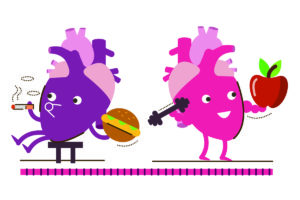
Public health may be compromised unless people shift their lifestyle choices from bad to better, according to new research. A recent study found that only 12% of American adults are “metabolically healthy,” and current trends raise a red flag on efforts to lower associated risks of type 2 diabetes, heart disease and other complications.

Kids’ Inactivity: A Global Crisis
Children worldwide, in both developed and developing nations, are not engaging in enough physical activity, according to research published in the Journal of Physical Activity and Health (2018; 15 [S251]). The report evaluated global trends using data from 49 countries across six continents. Nations with the most success in supporting active children are Slovenia, Japan and Denmark; the least successful nations are Ethiopia, Venezuela and China.

Ignite Your Passion and Watch Your Career Thrive
The most powerful industry event in the world, IDEA® World Convention, lands in Anaheim, California, June 26–30.

Cook and Taste the World for Health
A few weeks ago, I purged my extensive collection of cookbooks to make way for new ones. Like the 30 or so I just weeded from the mix, the new books will be learned from, splattered upon and well-loved until I’ve extracted all of their goodness.

Question Of The Month: Physical Activity Classes in College?
Are you training college students on campus, or is your facility offering physical activity programs for college students at a local campus? If yes, does the college require physical activity courses, or are they elective? In view of your experience working with college students, do you support a requirement for physical activity classes in college?
Share your experiences teaching at local colleges. We want to hear from you! Email executive editor Joy Keller, jkeller@ideafit.com.

College Physical Activity Classes
Findings from a recent study may lead to more opportunities for fitness professionals to teach at college campuses. Evidence suggests that requiring physical activity classes in college encourages sedentary students to become more active, while elective classes simply support those who are already active.

Sitting Is Not the New Smoking
The evidence is definitive. Risks of smoking far outweigh the health dangers of a sedentary lifestyle. It’s important to raise awareness of the hazards of inactivity, but distorted information about risks of behavioral choices can confuse the public. “The simple fact is, smoking is one of the greatest public health disasters of the past century. Sitting is not, and you can’t really compare the two,” said study author Terry Boyle, PhD, an epidemiologist at the University of South Australia, Adelaide.

Most Adults Misjudge Their Physical Activity Levels
A recent cross-cultural study shows that most adults do not accurately estimate their physical activity levels and that Americans tend toward extremes when assessing their behavior. Researchers from the U.S., the U.K. and Holland collaborated on the study to compare self-reported levels of activity by adults aged 18 through older adulthood against actual data harvested from activity trackers.