

Environmental and Social Barriers to Physical Activity
How Fitness Professionals can Design for Access
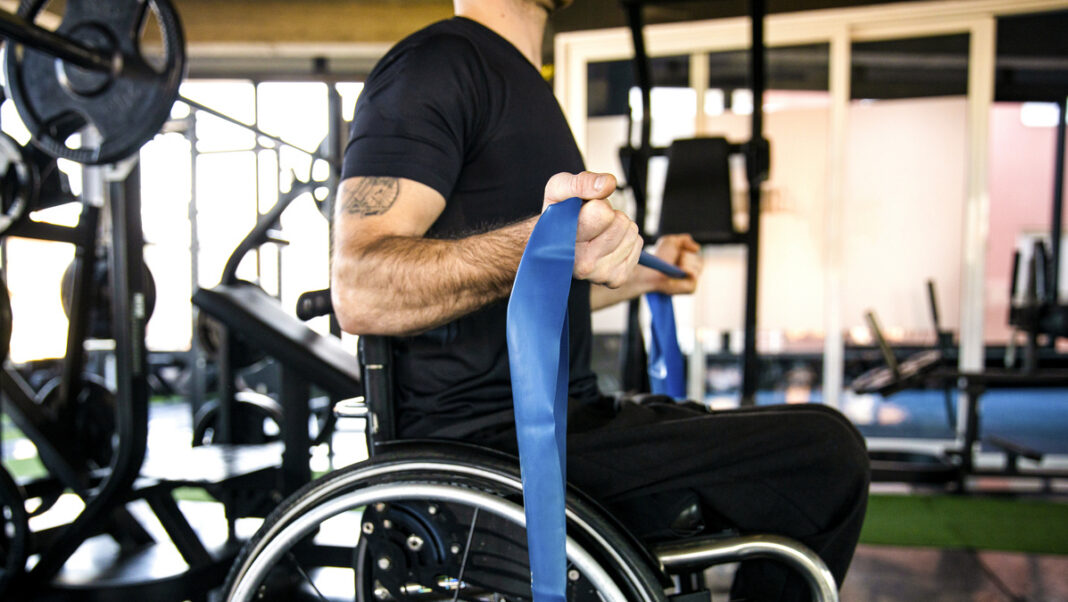

When Movement Depends on Geography
Two people can receive the same advice – “be more active” – and live in entirely different realities.
One walks out their front door onto tree-lined sidewalks, with bike lanes, public parks and a community center within a mile. The other steps into traffic-heavy streets without crosswalks, limited lighting and no nearby recreational space. One has flexible work hours and childcare support. The other is navigating shift work, caregiving and unreliable transportation.
Neither scenario is unusual.
Physical activity patterns are shaped long before a client steps into a fitness facility. They are shaped by streets, schedules, safety, culture, cost and policy. When participation in movement is uneven across neighborhoods, genders, income levels and countries, the issue is not simply motivation. It is structure.
For fitness professionals, access is not an abstract public health term. It is the difference between a program that works in theory and one that works in real life.
This article examines how environment and social context shape activity participation globally and locally — and how fitness professionals can design programs that account for these realities rather than ignoring them.
Infrastructure Is Policy in Physical Form
Urban planning decisions function as long-term behavioral cues. Sidewalks, lighting, crosswalks, zoning density, public transit routes, park maintenance and traffic patterns collectively shape how easily people can integrate movement into daily life. These decisions are rarely framed as physical activity policy, yet they influence activity participation more consistently than most educational campaigns.
Research in environmental epidemiology demonstrates that walkable neighborhoods—characterized by connected street grids, mixed land use and proximity to retail and services—are associated with significantly higher daily movement accumulation. Individuals in such neighborhoods are more likely to walk for transportation, accumulate moderate-intensity activity incidentally and report greater overall movement participation.
In contrast, car-dependent environments reduce incidental movement. Long commuting distances, separated residential and commercial zones, and high-speed traffic corridors limit opportunities for walking or cycling. Even highly motivated individuals may find it impractical or unsafe to rely on active transport.
Safety—both perceived and actual—also mediates participation. Poor lighting, traffic danger, lack of sidewalks and visible neglect reduce outdoor activity even when parks or open spaces are technically available. Studies consistently show that perceived safety influences activity levels independently of crime statistics. If an environment feels unsafe, movement decreases.
Infrastructure influences children and adolescents in distinct ways. Access to safe routes to school, playground and supervised recreation strongly predicts youth movement patterns. When outdoor play is constrained by safety concerns or limited green space, structured exercise becomes the only pathway to activity exposure—an option not universally accessible.
Importantly, the built environment’s influence accumulates over time. When daily movement is limited, structured exercise can feel less familiar and more demanding. Over years, this dynamic widens participation gaps between communities.
For fitness professionals, this means that clients do not enter programs as blank slates. They arrive shaped by the physical environments in which they live. Two clients with identical motivation may demonstrate vastly different activity histories based on geography alone.
Large-scale research on walkability and activity patterns consistently shows:
- Neighborhoods with connected sidewalks and mixed-use zoning generate higher daily step counts
- Proximity to green space increases moderate-intensity movement
- Traffic volume and lighting strongly influence outdoor participation
- Perceived safety affects activity as much as actual crime rates
In other words, infrastructure does not merely support movement – it predicts it.
Importantly, facility density does not compensate fully for weak public infrastructure. A well-equipped gym does not replace a safe sidewalk. Structured sessions cannot entirely offset environments that discourage habitual movement.
What This Means for Professionals
If most of a client’s daily life occurs in spaces that discourage movement, a two- or three-session-per-week program carries more burden. It becomes the sole anchor for activity exposure rather than a complement to it.
That reality should influence how we design programs.
Built environments shape everyday opportunity. Yet even in walkable communities, access to structured activity is uneven. Infrastructure creates possibility—but participation often depends on whether facilities themselves are reachable, affordable, and welcoming.
Facility Access Is Not Universal
Fitness facilities are often positioned as the primary solution to low activity levels. Yet access to structured exercise spaces is unevenly distributed and influenced by more than proximity.
Cost remains a primary barrier. Even modest monthly membership fees can represent a meaningful financial strain for individuals managing housing instability, childcare expenses or variable employment. When participation competes with essential expenses, structured exercise becomes fragile.
Transportation is another overlooked factor. A facility located five miles away may be functionally inaccessible without reliable transportation. In urban areas, inconsistent public transit schedules and safety concerns can further reduce attendance. In rural regions, long travel distances increase time burden.
Cultural familiarity and representation influence participation as well. Research on fitness environment inclusivity shows that individuals are more likely to join and remain in spaces where they see representation—across gender, age, body size and cultural background. When environments feel homogenous or exclusionary, participation declines even when cost and location are manageable.
Psychological safety also matters. Individuals new to structured exercise may perceive fitness facilities as intimidating or performance-oriented. Without intentional onboarding, these perceptions reduce entry and retention rates.
Globally, access disparities are even more pronounced. High-income countries report higher facility density and structured activity participation, while low- and middle-income regions often rely more heavily on occupational and incidental movement. As occupational activity declines worldwide due to technological and economic shifts, structured exercise has not replaced it evenly.
Facility access, therefore, is not a universal corrective to inactivity. It is one tool among many—and one that serves some populations more readily than others.
For fitness professionals, this requires reframing the facility as a hub rather than a gatekeeper. Movement should not depend exclusively on membership status.
Actionable Design Principles: Working Within Environmental Constraints
Fitness professionals cannot redesign zoning laws, but they can design around constraints.
1. Design for Transferability
Programs should translate beyond the facility:
- Movements that require minimal equipment
- Workouts adaptable to home or park environments
- Strength sessions that rely on bodyweight, bands or common objects
If movement cannot leave the gym, participation becomes fragile.
Expanding beyond facility-dependent equipment increases resilience. Clients who can replicate core movements in multiple environments are less likely to disengage during travel, schedule disruption or financial strain. Transferable programming also reduces psychological barriers; when movement feels portable, it becomes integrated rather than compartmentalized.
2. Build “Low-Barrier” Entry Points
Offer:
- Short-format sessions (20–30 minutes)
- Sliding scale pricing or community sessions
- Outdoor classes in accessible spaces
Reducing friction increases reach. Shorter formats acknowledge time poverty. Sliding scale or community offerings reduce financial exclusion. Outdoor sessions increase visibility and reduce intimidation for newcomers. These adjustments do not dilute programming quality—they expand its accessibility.
3. Map Client Geography
Ask clients:
- Where do you spend most of your day?
- What routes do you travel regularly?
- What spaces feel safe?
Programming can then integrate existing movement corridors rather than impose unrealistic expectations. This practice transforms environmental awareness into practical strategy. Encouraging clients to walk part of a commute, use workplace stairs or leverage nearby parks embeds movement into lived geography rather than isolating it within a facility.
Mapping geography addresses physical constraints. But even when facilities are available and affordable, participation remains uneven. Structural access does not guarantee usable time. Social roles and caregiving expectations often determine who can convert opportunity into action.
Gender, Caregiving and Time Poverty
Why opportunity is unevenly distributed across roles and responsibilities
Even in communities with strong infrastructure and accessible facilities, participation in physical activity remains uneven. Geography explains part of the gap. Time, gender norms, caregiving expectations and labor patterns explain much of the rest.
Public health data consistently show that women report lower levels of structured exercise participation than men across many regions of the world. The gap is not universal in every country, but it is persistent enough to warrant structural explanation. Similarly, adults with caregiving responsibilities—whether for children, aging parents or family members with disabilities—demonstrate lower rates of consistent exercise participation than non-caregivers.
These disparities are not primarily about awareness. They are about time allocation, social expectation and invisible labor.
Time Poverty as a Structural Constraint
Time poverty refers to the experience of having insufficient discretionary time after accounting for paid labor, unpaid labor, commuting and essential responsibilities. Unlike general busyness, time poverty reflects constrained choice. Individuals may understand the benefits of movement yet lack flexible windows to act on that knowledge.
Research examining time-use patterns shows that women, globally, perform a disproportionate share of unpaid labor, including childcare, household management and eldercare. Even in dual-income households, women often carry the majority of domestic coordination responsibilities. This results in fragmented schedules and reduced uninterrupted time blocks.
Caregivers of any gender experience similar constraints. Parenting young children, managing medical appointments, coordinating school schedules or supporting aging relatives compresses discretionary time. Structured exercise sessions—particularly those requiring travel and fixed schedules—become logistically difficult.
Shift workers face additional barriers. Nontraditional work hours disrupt routine, sleep patterns and social support. Movement participation declines when schedules rotate unpredictably.
The result is not necessarily inactivity in absolute terms, but reduced access to structured, facility-based activity. Many caregivers accumulate incidental movement through daily responsibilities, yet report lower participation in planned exercise.
For fitness professionals, interpreting this pattern as lack of motivation is a misread. It is more accurately understood as constrained capacity within a fixed 24-hour day.
Gender Norms and Activity Patterns
Cultural expectations further shape activity participation. In some contexts, women face social scrutiny for prioritizing personal time over family responsibilities. In others, participation in mixed-gender facilities may be culturally uncomfortable or restricted. Dress codes, religious practices and safety concerns can all influence willingness to engage in certain environments.
Adolescent girls show declining movement participation during puberty in many regions, influenced by body image pressures, reduced access to safe recreational spaces and shifting social expectations. Without intentional intervention, these declines often track into adulthood.
Men, by contrast, may experience social reinforcement for participation in competitive or performance-oriented activity but may face stigma around seeking support for beginner-level or noncompetitive movement. Gender norms influence both overparticipation and underparticipation depending on context.
These patterns underscore a broader point: physical activity is socially situated. It is shaped by expectations about who “belongs” in certain spaces and who has permission to allocate time to personal health.
Caregiving and Cognitive Load
Caregiving does not only consume time; it consumes cognitive bandwidth. The mental labor associated with scheduling, anticipating needs and managing logistics reduces capacity for self-directed behavior. Even when short time blocks are available, decision fatigue may limit engagement.
Research in behavioral economics suggests that scarcity—whether financial or temporal—narrows attention to immediate demands. When daily life feels compressed, long-term goals such as building aerobic capacity or improving strength may recede in priority, regardless of understanding.
For professionals, recognizing cognitive load as a barrier shifts program design. Instead of requiring complex routines or multi-step preparation, prevention-oriented programs should minimize decision burden.
Practical Responses: Designing Around Time and Role Constraints
Fitness professionals cannot redistribute unpaid labor or rewrite cultural norms. They can, however, adapt programming structures to acknowledge them.
1. Shorten Without Diluting
Offer:
- 20–30 minute structured sessions
- “Stackable” workouts that can be divided into segments
- Express strength or mobility formats
Shorter sessions reduce psychological resistance and fit more easily into fragmented schedules. Evidence suggests that accumulated moderate activity yields meaningful benefit, particularly when consistent.
2. Build Family-Integrated Options
Consider:
- Parent-and-child movement sessions
- Outdoor family circuits
- Open-floor formats where children can be present safely
For caregivers, eliminating childcare barriers can significantly increase participation.
3. Normalize Flexible Scheduling
Implement:
- Drop-in options
- Rotating class times
- Hybrid virtual participation
Rigid scheduling disproportionately affects those with unpredictable obligations. Flexibility supports retention.
4. Reduce Cognitive Load
Design programs that:
- Use consistent movement patterns week to week
- Provide clear, simple instructions
- Minimize equipment changes
Reducing complexity increases the likelihood of follow-through when mental bandwidth is limited.
5. Address Cultural Comfort
Evaluate:
- Representation in marketing and staff
- Inclusive language in programming
- Options for single-gender sessions when appropriate
Cultural comfort influences retention as strongly as facility quality.
Shifting Professional Mindset
When time poverty and caregiving are treated as structural realities rather than personal shortcomings, professional responses become more effective. Instead of asking, “Why aren’t you consistent?” the more productive question becomes, “How can we design this to fit your life as it is?”
Prevention that ignores time constraints favors those already positioned to participate. Prevention that adapts to time constraints expands reach.
Time, gender norms and caregiving responsibilities operate within broader policy and cultural systems. At the global level, governments and international organizations are increasingly recognizing that increasing activity participation requires structural change, not individual messaging alone.
The next section examines how global initiatives—from the World Health Organization to UNICEF—are approaching movement participation at scale and what lessons fitness professionals can draw from these efforts.
Global and National Efforts: What Policy Teaches About Participation
While fitness professionals work one client, class or community at a time, governments and international agencies work at population scale. Their strategies offer insight into a critical truth: increasing physical activity participation requires environmental change, policy alignment and cultural normalization—not just encouragement.
Over the past decade, physical inactivity has been recognized as a leading global public health concern. Yet global strategies have increasingly shifted away from messaging campaigns alone and toward structural intervention. The lesson is clear: awareness without access does not move populations.
The World Health Organization: Systems Over Slogans
The World Health Organization’s Global Action Plan on Physical Activity (GAPPA) outlines a framework built on four pillars: active societies, active environments, active people and active systems. Rather than centering individual willpower, the framework emphasizes creating conditions where movement is normal, supported and embedded in daily life.
Key priorities include:
- Urban design that promotes walking and cycling
- School-based movement integration
- Workplace activity support
- Policy alignment across transportation, health and education sectors
Importantly, the WHO does not frame movement as solely a fitness industry responsibility. It positions physical activity as a multi-sector issue requiring collaboration between urban planners, educators, employers and healthcare systems.
For fitness professionals, this reinforces an important point: participation does not increase because individuals are told to move more. It increases when environments make movement easier than inactivity.
UNICEF and Youth Movement Equity
Youth physical activity has become a focal point for global health agencies due to consistent declines in movement participation among children and adolescents. UNICEF and related international bodies have emphasized:
- Safe routes to school
- Gender equity in sport participation
- Community play spaces
- Integration of physical activity into education systems
Data across multiple countries show that adolescent girls, in particular, demonstrate lower participation rates than boys. Barriers include safety concerns, cultural norms, lack of female representation in sport leadership and limited recreational space.
The implications extend into adulthood. Early low movement exposure often predicts lower adult participation, widening disparities across the lifespan.
For professionals working locally, this suggests a broader role in youth engagement. Partnerships with schools, after-school programs and community organizations can amplify impact beyond facility walls.
U.S. National and Community-Level Approaches
In the United States, initiatives such as the Physical Activity Guidelines for Americans and community-level Complete Streets policies reflect similar priorities to global efforts.
Complete Streets policies, adopted in many municipalities, require transportation planners to design roads that accommodate pedestrians, cyclists and public transit users—not just vehicles. Research shows that communities implementing such policies often see increases in walking and cycling rates.
The CDC and other public health agencies have also invested in community-based interventions targeting:
- Rural access disparities
- School wellness policies
- Workplace wellness initiatives
- Faith-based movement programs
However, implementation remains uneven. Activity participation continues to vary by income, race, geography and education level.
This unevenness underscores a key takeaway: policy establishes possibility, but local execution determines reach.
What Fitness Professionals Can Learn From Policy-Level Approaches
Global and national strategies share several consistent themes. These themes translate directly to facility-level and community-level practice.
1. Normalize Movement Across Contexts
Policy approaches emphasize embedding movement into transportation, education and work. Fitness professionals can mirror this by:
- Encouraging walking meetings
- Supporting active commuting strategies
- Designing programs that integrate into daily routines
Movement should not be confined to scheduled sessions.
2. Prioritize Environment Before Intensity
Population-level initiatives focus on infrastructure before performance. Professionals can apply this principle by:
- Ensuring programs are accessible before they are advanced
- Removing logistical barriers before increasing complexity
- Designing entry points that reduce intimidation
If the environment is unwelcoming, intensity will not compensate.
3. Expand Partnerships Beyond Fitness Spaces
Public health initiatives succeed when sectors collaborate. Fitness professionals can:
- Partner with schools, parks departments or local businesses
- Host community movement days
- Offer introductory sessions in nontraditional venues
Visibility outside the gym broadens access.
4. Measure Participation, Not Just Performance
Global frameworks track activity prevalence and access indicators—not just athletic achievement. Similarly, professionals can:
- Track attendance consistency
- Monitor retention across demographic groups
- Evaluate whether programs reach underrepresented populations
Prevention at scale depends on participation breadth, not elite performance.
Bridging Policy and Practice
Policy-level strategies acknowledge that physical activity participation is a systems outcome. When professionals internalize this perspective, programming shifts subtly but meaningfully.
Instead of asking, “How can I make this program more challenging?” the question becomes, “How can I make this program more reachable?”
Instead of assuming nonattendance reflects disinterest, the assumption becomes, “What structural friction might be limiting participation?”
Instead of measuring success solely through visible change, professionals begin measuring it through expanded access.
Policy establishes the conditions for participation at scale. But participation is experienced locally. That responsibility ultimately rests with facilities and professionals translating policy into practice.
Designing for Access in Practice
Access does not improve solely because a facility exists. It improves when policies, pricing, programming, representation, and delivery models are intentionally structured to reduce friction. Fitness professionals operate at different leverage points depending on their role. Facility operators shape systems. Trainers shape experiences within those systems.
Both matter.
For Operators: Structuring Access at the System Level
Facility owners and operators influence participation long before a class begins. Pricing models, physical layout, staff representation, scheduling, onboarding processes, and community partnerships collectively determine who feels welcome—and who does not.
Operators control the structural variables that either widen or narrow participation gaps.
Pricing and Financial Accessibility
Cost remains one of the most cited barriers to structured activity participation. Research consistently shows that lower-income communities demonstrate lower membership rates even when facilities are geographically nearby.
Operators can address this by:
- Implementing sliding scale membership models
- Offering tiered pricing based on access level
- Providing community-rate time blocks
- Partnering with local employers or nonprofits to subsidize access
Even modest financial flexibility signals inclusion.
Importantly, affordability alone does not guarantee participation. Transparent pricing structures reduce intimidation. Hidden fees and complicated contract terms disproportionately discourage first-time or lower-income members.
Scheduling and Time Distribution
Prime-time scheduling often reflects the routines of traditional 9-to-5 professionals. Yet caregivers, shift workers and gig economy participants operate on varied schedules.
Operators can:
- Rotate class times across morning, mid-day, evening and weekend slots
- Offer short-format sessions during nontraditional hours
- Create open-access blocks for flexible use
Expanding scheduling diversity increases participation among those with fragmented time availability.
Representation and Cultural Relevance
Facility marketing and staff composition influence who feels comfortable entering a space. Research on belonging demonstrates that visual representation affects perception of inclusion.
Operators should evaluate:
- Diversity in instructors and leadership
- Imagery in marketing materials
- Language used in promotional content
- Program offerings that reflect varied cultural interests
Inclusive representation broadens reach beyond historically dominant demographics.
Physical Layout and Psychological Safety
Environmental cues within a facility communicate expectations. Highly performance-oriented layouts, visible competitive training areas or intimidating equipment clusters may discourage beginners.
Operators can:
- Design clear beginner pathways
- Provide orientation spaces separate from high-intensity zones
- Offer introductory workshops regularly
- Train staff in inclusive onboarding practices
Psychological access matters as much as physical access.
Community Integration
Facilities that operate as isolated businesses often struggle to reach underrepresented populations. Those that embed within community networks expand their footprint.
Operators can:
- Partner with schools and youth programs
- Host free outdoor movement days
- Collaborate with healthcare providers for referrals
- Engage local organizations serving marginalized communities
Access grows when facilities are visible beyond their walls.
For Trainers: Expanding Access Within the Client Experience
Independent trainers and staff coaches operate at a different leverage point. They may not control pricing or infrastructure, but they influence how accessible movement feels within individual sessions and client relationships.
Access at the trainer level often comes down to flexibility, communication and program design.
Reduce Program Fragility
Clients disengage when programs depend on ideal conditions. Trainers can design for resilience by:
- Programming movements that translate to home and travel settings
- Offering scaled options without stigma
- Encouraging short bouts of movement between sessions
- Providing contingency plans for busy weeks
When programs survive disruption, participation stabilizes.
Adapt to Time Poverty
Instead of defaulting to hour-long sessions, trainers can:
- Offer 30-minute formats
- Provide structured “micro-sessions”
- Integrate mobility or strength blocks into existing routines
Time-sensitive design increases adherence among caregivers and shift workers.
Lower Cognitive Load
Complex programming increases dropout risk among clients managing high mental bandwidth demands. Trainers can:
- Use consistent movement patterns week to week
- Simplify cueing and instructions
- Limit excessive equipment transitions
Simplicity supports follow-through.
Address Cultural and Social Comfort
Trainers should consider:
- Language tone and assumptions
- Dress code flexibility
- Sensitivity to cultural norms around mixed-gender environments
- Awareness of body image concerns
Cultural responsiveness increases retention.
Normalize Nonlinear Progress
Clients navigating environmental and social constraints may experience inconsistent attendance. Trainers can:
- Reinforce effort rather than perfection
- Frame interruptions as expected, not failures
- Emphasize long-term participation over short-term outcomes
This reduces shame and strengthens trust.
Designing for Belonging, Not Just Participation
Access is not solved by motivation alone. It is shaped by infrastructure, culture, economics, time and trust. If participation in exercise declines across communities, the explanation is rarely a lack of willpower. More often, it reflects friction embedded in environments—financial friction, logistical friction, psychological friction and social friction.
Fitness professionals cannot single-handedly redesign cities, eliminate poverty or resolve global health inequities. But they do influence something profoundly important: the design of programs, spaces, communication and client experiences.
Every scheduling decision signals who a program is built for.
Every pricing structure communicates who is expected to attend.
Every marketing image shapes who sees themselves as belonging.
Every intake conversation either reduces or reinforces hesitation.
When operators and trainers approach program design as an access question rather than a performance question, the focus shifts. The question becomes less about “How do we push people harder?” and more about “How do we remove unnecessary barriers so more people can begin and continue?”
This shift does not dilute standards. It strengthens them.
Communities facing disproportionate rates of inactivity, metabolic disease or obesity are not lacking capacity—they are often navigating environments that make movement harder to initiate and sustain. When professionals design with friction reduction in mind, participation becomes more durable. And durability, not intensity, is what drives long-term health impact.
At a global level, public health organizations continue to emphasize physical activity as a cornerstone of disease prevention and longevity. At a local level, fitness facilities remain one of the most direct access points to structured movement support. The bridge between these two levels is design.
Accessible programming is not about lowering expectations.
It is about widening the doorway.
That widening may look like:
- Flexible membership models
- Clear onboarding pathways
- Programs that respect caregiving realities
- Cultural representation in staff and messaging
- Outdoor or community-based extensions of facility programming
- Explicitly welcoming beginners and deconditioned adults
Over time, small design decisions accumulate. They shape whether clients feel competent, safe, and capable—or whether they quietly opt out.
The long-term opportunity for the profession is this:
Move from delivering workouts to engineering environments where movement is more likely to occur.
When facilities and professionals adopt this lens, they align business sustainability with public health impact. Retention improves because friction decreases. Trust strengthens because belonging increases. Outcomes improve because participation stabilizes.
Design is not decoration. It is structure. And structure determines who gets to participate.
The most resilient organizations and practitioners will not be those who simply adopt the newest training method or technology. They will be those who ask, consistently:
Who is this built for?
Who might this unintentionally exclude?
What small change would make starting easier?
When access becomes intentional rather than incidental, participation expands.
And when participation expands, health outcomes follow.
References
Giles-Corti, Billie, et al. “City Planning and Population Health: A Global Challenge.” The Lancet, vol. 388, no. 10062, 2016, pp. 2912–2924.
Sallis, James F., et al. “Role of Built Environments in Physical Activity, Obesity, and Cardiovascular Disease.” Circulation, vol. 125, no. 5, 2012, pp. 729–737.
Trost, Stewart G., et al. “Correlates of Adults’ Participation in Physical Activity: Review and Update.” Medicine & Science in Sports & Exercise, vol. 34, no. 12, 2002, pp. 1996–2001.
UNICEF. The State of the World’s Children 2019: Children, Food and Nutrition. UNICEF, 2019.
United States Department of Health and Human Services. Physical Activity Guidelines for Americans, 2nd ed., 2018.
World Health Organization. Global Action Plan on Physical Activity 2018–2030. WHO, 2018.