
Why Kids Drop Out of Sports and How Coaches Can Keep Them Engaged
Addressing participation decline and supporting long-term athletic involvement


The Dropout Problem Isn’t Random
Youth sport participation rarely ends because of a single moment. It is more often the result of a series of experiences that gradually shift how a child feels about being there. What begins as interest or excitement becomes inconsistent, then optional and eventually something they no longer choose to return to.
Participation data reflects this pattern. Across sports, dropout rates tend to increase during early adolescence, often between the ages of 11 and 14 and this timing is not accidental. It coincides with a period of rapid physical, social and psychological change. Expectations increase, competition becomes more visible and the structure of sport begins to resemble adult models more closely.
From the outside, these changes can appear positive. Training becomes more organized, skill demands increase and performance starts to matter more. For some athletes, this shift is engaging, but for others it introduces a level of pressure and comparison that changes how they experience the environment.
The key point is that dropout is not random and it is not limited to athletes who lack ability or motivation. It occurs across a wide range of participants, including those who were previously engaged and consistent.
When viewed this way, the question shifts. Instead of asking why certain kids lose interest, it becomes more useful to ask what changes in the environment make continued participation less appealing.
Applied Scenario
A 12-year-old athlete who has participated consistently for several years begins missing practices. Performance has not declined significantly, but engagement appears lower. When asked, they say they are “just not as into it” as before.
Apply This:
- What changes might have occurred in the training environment at this stage?
- How might increasing structure or expectations influence engagement?
- What signals would you look for to understand whether this is a temporary dip or part of a larger pattern?
What Kids Actually Experience in Sports
Coaching decisions are typically made with clear intent. Sessions are structured to develop skills, improve performance and prepare athletes for competition. From a coaching perspective, these goals are logical and necessary. What is less visible is how those same sessions are experienced by the athletes themselves as they move through them.
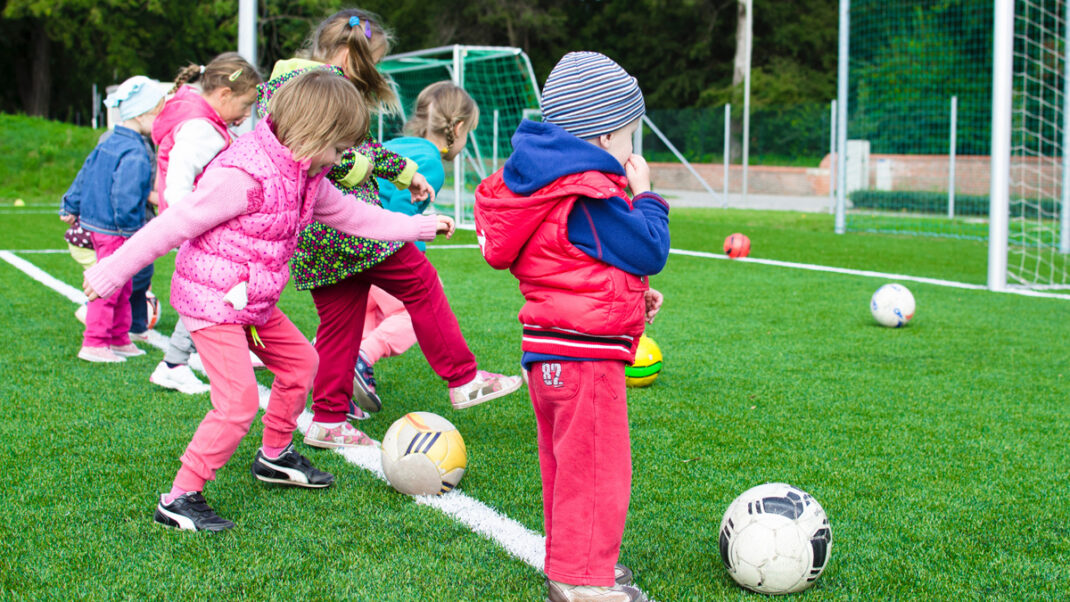
For younger athletes, sport is initially defined by participation. Movement, interaction and variation create an environment that feels engaging without requiring much interpretation. As programs become more structured, the nature of that experience changes. Repetition increases, evaluation becomes more frequent and differences in ability become more apparent. Two athletes can move through the same session and leave with very different impressions. One may experience challenge and improvement, while another may experience exposure and comparison.
This difference often comes down to how the session aligns with the athlete’s current level of competence and confidence. When tasks feel achievable, effort tends to increase. When tasks feel out of reach or consistently unsuccessful, effort often decreases, even if the athlete continues to participate.
From the athlete’s perspective, several elements shape the experience:
- Whether they understand what is expected
- Whether they feel capable of meeting those expectations
- Whether improvement is visible over time
When these elements are present, engagement tends to be sustained. When they are not, participation becomes less rewarding, even if the athlete continues to attend.
Applied Scenario
During a practice session, drills are structured so that stronger athletes complete repetitions successfully, while less experienced athletes struggle to keep pace. Feedback is primarily directed toward correcting errors rather than reinforcing progress.
Apply This:
- How might different athletes interpret the same session?
- What impact does repeated failure have on engagement over time?
- How could the structure of the drill be adjusted to create more consistent success across the group?
The Mismatch Between Program Design and Development
Many youth sport programs are built using models that are adapted from adult training environments. These models emphasize structure, repetition and progression, which are all necessary components of skill development. The challenge is not in the elements themselves, but in how they are applied.
Children do not experience training in the same way adults do. Their motivation is influenced more by immediate experience than by long-term outcomes. Improvement matters, but so does enjoyment, variation and a sense of inclusion.
When programs become too rigid too early, a mismatch begins to develop. Training may be well designed from a technical standpoint, but it does not align with how younger athletes engage with activity. This often shows up in a few consistent ways.
One is early specialization. Athletes are asked to focus on a single sport or position before they have had the opportunity to explore a range of movements and environments. While this can accelerate certain skill development, it can also reduce overall engagement, particularly for athletes who have not yet developed a strong sense of identity within the sport.
Another is the application of repetitive training structures without sufficient variation. Repetition is necessary for skill acquisition, but when it is presented without variation or progression that the athlete can perceive, it can feel monotonous. For younger athletes, this often leads to disengagement rather than mastery.
A third is the use of evaluation-heavy environments. Constant comparison, whether through formal competition or informal feedback, can shift the focus from participation to performance. For some athletes, this is motivating. For others, it creates a sense of pressure that makes them less willing to fully engage.
These patterns do not necessarily reflect poor coaching. In many cases, they reflect the application of effective methods in a context where they are not fully aligned with the developmental stage of the athlete.
Applied Scenario
A youth program introduces position-specific training and performance tracking for athletes at an early stage. Some athletes respond positively, while others become less engaged and begin to withdraw during sessions.
Apply This:
- How might early specialization influence different types of athletes?
- What tradeoffs exist between accelerated skill development and long-term engagement?
- How could the program maintain structure while allowing for broader participation?
Coaching Applications
Recognizing the mismatch between program design and developmental stage is only useful if it leads to adjustment. In practice, this does not require abandoning structure or lowering expectations. It requires modifying how structure is delivered so that it aligns with how younger athletes engage and learn.
Small changes in how drills are designed, how progression is introduced and how athletes are grouped can significantly improve alignment without reducing the quality of training.
In practice:
- Delay strict position specialization; rotate roles within sessions to broaden exposure
- Layer progression within drills (e.g., same task, different difficulty levels)
- Build variation into repetition by changing constraints (space, speed, decision-making)
- Limit continuous evaluation; separate “practice” reps from “performance” reps
- Use short blocks of focused structure followed by less constrained application
Competence, Confidence and Perceived Ability
This mismatch in program design becomes most visible in how athletes begin to perceive their own ability.
One of the most consistent patterns in youth sport dropout is not a lack of ability, but a shift in perceived ability and the distinction matters. Performance may remain stable or even improve, while confidence declines. When that happens, participation often follows.
For younger athletes, confidence is closely tied to what they can do in the moment. It is shaped less by long-term progress and more by immediate feedback. Success is not abstract; it is felt through repeated experiences of doing something correctly or at least doing it well enough to feel capable.
As training becomes more structured, the gap between athletes becomes more visible. Differences in coordination, strength and experience begin to separate participants into informal tiers. Even without explicit labeling, athletes become aware of where they stand.
When an athlete consistently experiences themselves behind, effort often becomes more cautious, risk-taking decreases and participation becomes more selective. Over time, this can be interpreted as a lack of motivation, when it is more accurately a response to repeated experiences of low success.
Confidence in this context is not built through encouragement alone, but through experiences that reinforce capability. These experiences do not need to be constant success, but they need to be frequent enough that the athlete can recognize progress.
This is where program design intersects directly with retention. When tasks are structured so that only a portion of the group experiences consistent success, engagement will begin to narrow to those individuals. The rest may continue to attend, but their level of involvement often declines.
Coaching Applications
Confidence is built through repeated experiences of capability, not through encouragement alone. For coaches, this means designing environments where success is both possible and visible across a range of ability levels.
This does not require lowering standards. It requires structuring progression so that athletes experience improvement before being asked to perform under full demand.
In practice:
- Break complex skills into smaller, achievable components
- Ensure early repetitions are performed under lower pressure or reduced speed
- Track and highlight individual progress, not just group outcomes
- Adjust success criteria based on developmental stage, not comparison
- Increase difficulty only after consistent success is demonstrated
The Role of Coaching Behavior
Program structure sets the environment, but coaching behavior determines how that environment is experienced. The same session can feel supportive or discouraging depending on how feedback is delivered, where attention is directed and how expectations are communicated.
Feedback is one of the most influential variables. In many sessions, feedback is concentrated on correcting errors. This is necessary for skill development, but when it dominates the interaction, it can create a pattern where athletes primarily associate feedback with what they are doing wrong.
For athletes who are already confident, this type of feedback can be processed constructively. For those who are less confident, it can reinforce the perception that they are consistently underperforming.
Attention distribution is another factor that often goes unnoticed. Coaches naturally spend more time with athletes who are either performing at a high level or struggling significantly. Athletes in the middle may receive less direct interaction, which can affect whether they feel connected at all.
Language also plays a role. Phrases that are intended to motivate can be interpreted differently depending on the athlete. Statements that emphasize effort and improvement tend to support engagement. Statements that emphasize outcome or comparison can increase pressure, particularly for those who are unsure of their standing.
These patterns do not need to be extreme to have an effect. Small, repeated interactions accumulate over time. For some athletes, they reinforce involvement. For others, they gradually reduce it.
Coaching Applications
Coaching behavior shapes how athletes interpret the training environment. Small adjustments in feedback, attention and language can shift how sessions are experienced without changing the structure of the session itself.
The goal is not to reduce correction, but to balance it with information that reinforces capability and progress.
In practice:
- Pair corrective feedback with one specific acknowledgment of what improved
- Distribute attention intentionally; track who has and hasn’t received feedback
- Use neutral, descriptive language rather than evaluative language when possible
- Emphasize effort and execution over outcome, especially in early development
- Limit repeated correction during a single rep; allow athletes to adjust between attempts
Burnout Is a System Outcome
When these patterns in coaching behavior persist over time, they begin to shape the broader experience of training. Burnout in youth sport is often attributed to excessive training volume or intensity. While these factors contribute, they are rarely the only cause. Burnout more often reflects the cumulative effect of how the environment is structured and experienced.
A key contributor is the absence of variation. When sessions follow the same pattern repeatedly, with limited opportunity for change, engagement can decline even if the workload is appropriate. For younger athletes, variation is not just a preference; it is part of how they remain engaged with the activity.
Another factor is the lack of autonomy. When every aspect of training is directed, with little opportunity for input or choice, athletes can begin to feel that participation is something they are required to do rather than something they choose to do. This shift changes the nature of motivation.
Constant evaluation also plays a role. When athletes feel that they are being assessed in most interactions, the environment becomes more performance-focused. For some, this increases engagement, but for others, it introduces a level of pressure that reduces willingness to participate fully.
Burnout, in this sense, is not a sudden loss of interest. It is the result of an environment that gradually reduces the reasons an athlete has to stay engaged.
Coaching Applications
Burnout is rarely the result of a single variable. It emerges when structure, repetition and expectation combine in a way that reduces engagement over time. Preventing burnout requires introducing variation and autonomy without removing direction.
This can be done within existing sessions by adjusting how control and choice are balanced.
In practice:
- Introduce variation within drills rather than replacing them entirely
- Build in short segments where athletes can make decisions or choose variations
- Rotate session emphasis (skill, play, competition) across the week
- Reduce constant evaluation by clearly defining “learning” vs “performance” segments
- Monitor behavioral signals (effort, interaction, focus) rather than relying only on attendance
Social Environment and Belonging
While training structure and coaching behavior are often the focus of program design, the social environment plays an equally important role in retention. For many young athletes, the experience of sport is shaped as much by peer interaction as by the activity itself.
A sense of belonging can sustain participation even when training becomes more demanding. Conversely, a lack of connection can accelerate dropout, regardless of skill level or performance.
Peer dynamics influence how comfortable athletes feel participating in drills, asking questions or making mistakes. When the environment supports inclusion, athletes are more likely to engage fully. When it does not, participation can become more guarded.
Group structure also matters. Consistent groupings that reinforce ability differences can unintentionally create divisions. Athletes who are regularly placed in lower-performing groups may begin to associate themselves with that position, which can influence both confidence and motivation.
Team identity is another factor. When athletes feel that they are part of something collective, their reasons for participation extend beyond individual performance. This can provide a buffer against periods where confidence or performance fluctuate.
Coaching Applications
Belonging is influenced by how athletes are grouped, how they interact and how success is distributed within the session. Coaches can shape this environment through small structural decisions.
The objective is not to eliminate differences in ability, but to prevent those differences from becoming fixed identities within the group.
In practice:
- Rotate groupings regularly rather than keeping fixed ability groups
- Design drills that require interaction across different skill levels
- Avoid consistently pairing the same athletes in “top” or “bottom” roles
- Create opportunities for shared success (partner or small-group tasks)
- Reinforce team identity through language that emphasizes collective progress
What Keeps Kids Engaged
These social dynamics influence more than just participation—they shape what keeps athletes engaged over time.
Understanding why athletes drop out provides one perspective; identifying what keeps them engaged provides another. The factors that support long-term participation are often consistent across different sports and environments.
One of the most important is the ability to perceive progress. Athletes need to see or feel that they are improving. This does not require constant success, but it does require that improvement is visible enough to be recognized.
Appropriate challenge is also critical. Tasks that are too easy reduce engagement, while tasks that are consistently too difficult reduce confidence. Finding the balance between the two allows athletes to remain involved without becoming overwhelmed.
Variation plays a supporting role. Changes in drills, formats and session structure help maintain interest and reduce the sense of repetition. This does not mean abandoning structure, but it does mean introducing enough variation to keep sessions from becoming predictable.
Ownership is another factor that is often underused. When athletes have some input into their experience, even in small ways, it can increase their connection to the activity. This does not require full autonomy, but it does require space for participation in decisions.
Taken together, these elements create an environment where athletes have reasons to stay engaged, even as training becomes more demanding.
Coaching Applications
Engagement is not accidental. It is created through the interaction of progression, challenge, variation and ownership. These elements can be intentionally built into session design without reducing structure.
The focus is not on making sessions entertaining, but on making them meaningful from the athlete’s perspective.
In practice:
- Make progress visible through simple tracking or feedback loops
- Adjust challenge so that success rate remains moderate, not extreme
- Introduce variation at predictable intervals to prevent monotony
- Allow limited choice within sessions (order, variation, partner selection)
- Use short competitive elements to increase engagement without dominating the session
Coaching Strategies That Support Engagement
Understanding the factors that influence engagement is only useful if it leads to changes in how sessions are designed and delivered. In practice, retention is shaped less by isolated decisions and more by consistent patterns in how training is structured.
One of the most effective adjustments is scaling tasks within the same session. Rather than running a single version of a drill for all athletes, variations can be introduced that allow each athlete to work at an appropriate level. This does not require separate sessions or entirely different programs. It requires small modifications that change the level of difficulty without changing the intent of the drill.
For example, a skill-based activity can be adjusted through distance, speed or complexity. Athletes who are still developing the skill can work within a version that allows for more consistent success, while more advanced athletes can be challenged within the same structure.
Another strategy is managing repetition differently. Repetition is necessary, but it does not need to be identical. Small variations in how a skill is practiced can maintain engagement while still reinforcing the same underlying movement. This helps reduce the sense of monotony that often develops when drills are repeated without change.
Feedback can also be adjusted to support a wider range of athletes. Instead of focusing exclusively on correction, feedback can include recognition of improvement and effort. This does not replace technical instruction, but it changes how that instruction is experienced.
Attention distribution is another area where small changes can have a meaningful impact. Ensuring that all athletes receive some level of direct interaction during a session helps maintain connection. This does not require equal time with each athlete, but it does require awareness of who is and is not being engaged. These adjustments are not complex, but their impact becomes clear over time.
Implementation Guidelines
Applying these strategies consistently requires planning. Without structure, variation and scaling can become inconsistent or overly complex.
In practice:
- Pre-plan two to three variations for each primary drill
- Decide in advance how groups will rotate or adjust
- Identify where feedback will be focused during the session
- Keep variations simple so transitions do not disrupt flow
- Review sessions afterward to identify which athletes were less engaged
Applied Scenarios Across Athlete Types
Different athletes respond to the same environment in different ways. Looking at specific cases helps clarify how the same underlying principles can be applied across a range of situations.
The High-Performing Athlete at Risk of Burnout
A talented athlete performs well in training and competition but shows signs of fatigue and reduced enthusiasm. Participation remains consistent, but engagement appears to be declining.
For this athlete, the issue is not competence but sustainability. They may be experiencing a lack of variation, constant evaluation or pressure to maintain performance. Adjustments that introduce variation, reduce constant evaluation or provide periods of lower demand can help maintain long-term engagement.
The Average Athlete Losing Interest
An athlete with moderate ability participates consistently but shows decreasing effort and involvement. Performance has not declined significantly, but engagement is inconsistent.
Here, the issue is often related to perceived progress. The athlete may not feel that they are improving, even if objective performance is stable. Increasing visibility of progress, adjusting task difficulty and providing more targeted feedback can help restore engagement.
The Late Developer
An athlete who is still developing physically and technically may struggle to keep pace with peers. Over time, this can affect confidence and willingness to participate. In this situation, scaling tasks and adjusting expectations are critical. Providing opportunities for success and creating environments where the athlete can compete at an appropriate level helps maintain involvement during development.
he Over-Coached Environment
In some programs, structure and instruction are highly emphasized. Athletes receive constant feedback, and sessions are tightly controlled. While this can produce short-term improvements, it can also reduce autonomy and increase pressure. Introducing opportunities for decision-making, reducing constant correction and allowing for more open-ended activity can help balance the environment.
Applied Scenario
A program includes athletes with varying levels of ability and engagement. Some are highly motivated, while others show signs of withdrawal.
Apply This:
• How would you identify which athletes need different types of support?
• What adjustments could address multiple needs within the same session?
• How can individual differences be managed without fragmenting the program?
Coaching Response Framework
Across different athlete types, the response follows a similar pattern. The goal is to identify the underlying issue and adjust environment, not just behavior.
In practice:
- Identify whether the issue is competence, confidence or environment
- Adjust task difficulty before assuming motivation is the problem
- Modify feedback before increasing instruction
- Introduce variation before increasing intensity
- Re-evaluate grouping and structure before attributing disengagement to the athlete
Long-Term Development vs Short-Term Performance
Across these decisions, the same underlying principle appears.
Youth sport programs often operate within a tension between immediate performance and long-term development. Decisions that improve short-term outcomes do not always support continued participation.
A focus on short-term performance tends to emphasize structure, repetition and evaluation. These elements can produce measurable improvements, but they can also narrow engagement if applied without balance.
Long-term development places greater emphasis on retention, skill variety and gradual progression. Performance still matters, but it is viewed within a broader timeline. The goal is not only to improve current outcomes, but to maintain participation long enough for those outcomes to develop.
The challenge is that these approaches are not always aligned. Programs that prioritize winning or immediate results may unintentionally reduce retention. Programs that prioritize engagement may progress more slowly in the short term.
For coaches, this requires a decision about what the program is designed to optimize. In many cases, the most effective approach is not choosing one over the other but managing the balance between them.
This balance is reflected in how sessions are structured, how feedback is delivered and how success is defined. When success includes continued participation, not just performance outcomes; programming decisions begin to shift.
Applied Scenario
A team prioritizes competition results and structures training accordingly. Performance improves, but participation declines over time.
Apply This:
- What aspects of the program may be contributing to dropout?
- How could performance goals be maintained while improving retention?
- What would change if participation were treated as a primary outcome?
Youth sport dropout is not the result of a single factor. It reflects how athletes experience the environment over time. Training structure, coaching behavior and social dynamics all contribute to that experience.
When programs align with how young athletes develop and engage, participation tends to continue. When they do not, even well-designed training can become less effective.
For coaches, the implication is practical. Retention is not separate from performance. It is part of the system that supports it. Athletes who remain engaged have more time to develop, more opportunities to improve and a greater likelihood of reaching higher levels of performance.
The objective is not to remove challenges or reduce structure, it is to apply both in a way that supports continued participation.
When engagement is treated as something that can be designed, rather than something that happens on its own, the likelihood of long-term involvement increases.
References
Crane, J., & Temple, V. (2015). A systematic review of dropout from organized sport among children and youth. European Physical Education Review, 21(1), 114–131.
Fraser-Thomas, J., Côté, J., & Deakin, J. (2008). Understanding dropout and prolonged engagement in adolescent competitive sport. Psychology of Sport and Exercise, 9(5), 645–662.
Côté, J., & Hancock, D. J. (2016). Evidence-based policies for youth sport programmes. International Journal of Sport Policy and Politics, 8(1), 51–65.
Bailey, R., Hillman, C., Arent, S., & Petitpas, A. (2013). Physical activity: An underestimated investment in human capital? Journal of Physical Activity and Health, 10(3), 289–308.
Weiss, M. R., & Amorose, A. J. (2008). Motivational orientations and sport behavior. In T. S. Horn (Ed.), Advances in sport psychology (3rd ed., pp. 115–155). Human Kinetics.
Deci, E. L., & Ryan, R. M. (2000). The “what” and “why” of goal pursuits: Human needs and self-determination of behavior. Psychological Inquiry, 11(4), 227–268.
Smith, R. E., Smoll, F. L., & Cumming, S. P. (2007). Effects of a motivational climate intervention for coaches on young athletes’ sport performance anxiety. Journal of Sport & Exercise Psychology, 29(1), 39–59.
Fraser-Thomas, J., & Côté, J. (2009). Understanding adolescents’ positive and negative developmental experiences in sport. The Sport Psychologist, 23(1), 3–23.
Harwood, C. G., Keegan, R. J., Smith, J. M. J., & Raine, A. S. (2015). A systematic review of the intrapersonal correlates of motivational climate perceptions in youth sport. Psychology of Sport and Exercise, 18, 9–25.
Visek, A. J., Achrati, S. M., Mannix, H. M., McDonnell, K., Harris, B. S., & DiPietro, L. (2015). The fun integration theory: Toward sustaining children and adolescents sport participation. Journal of Physical Activity and Health, 12(3), 424–433.