

Shoulder Girdle Anatomy
Building Strength and Protecting Mobility

Why the Shoulder Girdle Matters
The shoulder girdle is one of the most remarkable structures in the human body. Composed of the clavicle (collarbone) and scapula (shoulder blade), it connects the arms to the trunk and allows a remarkable range of upper body movement. Because of this design, humans can perform complex tasks such as reaching overhead, throwing with speed, and lifting with precision. This combination of stability and mobility makes the shoulder girdle both powerful and vulnerable. Understanding how the shoulder girdle works is an important step toward maintaining healthy shoulders throughout life.
Anatomy of the Shoulder Girdle
The shoulder girdle includes two main bones:
- The clavicle (collarbone): A long, slender bone that runs horizontally across the front of the chest, acting as a strut that keeps the arm away from the torso and supports shoulder alignment.
- The scapula (shoulder blade): A flat, triangular bone at the back of the rib cage that provides attachment points for many muscles and helps control arm movement.
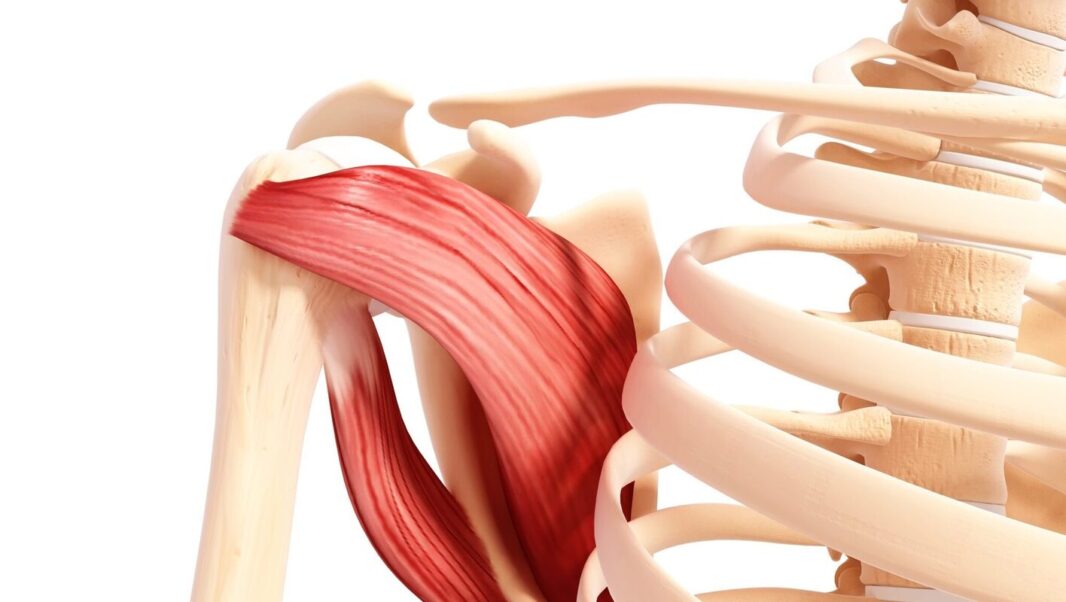
Together, these bones form the foundation of the shoulder complex, working with the humerus (upper arm bone) to create the glenohumeral joint. The scapula glides along the rib cage, while the clavicle serves as a brace, enabling the arm to move through multiple planes. This design prioritizes mobility, making the shoulder one of the most flexible joints in the body. However, that same mobility comes with a trade-off: less stability compared to joints like the hip.
The Role of Muscles in Shoulder Stability
Muscles surrounding the shoulder girdle provide dynamic support. The most notable include:
- Rotator cuff muscles (supraspinatus, infraspinatus, teres minor, subscapularis): These small but powerful muscles stabilize the shoulder joint and assist with rotation.
- Scapular stabilizers (serratus anterior, trapezius, rhomboids, levator scapulae): These muscles control scapular motion, which is critical for efficient arm movement.
- Deltoids and pectorals: Larger muscles that generate strength for lifting and pressing movements.
When these muscles work in balance, the shoulder functions smoothly. Weakness or imbalance, however, can lead to instability, poor movement mechanics, and injuries such as impingement, tendonitis, or even dislocation. Everyday tasks such as reaching overhead, carrying groceries, or lifting weights become more difficult when these muscles are not properly conditioned.
Common Shoulder Issues and Risk Factors
Because of its mobility, the shoulder girdle is one of the most injury-prone areas of the body. Common issues include:
- Impingement: When soft tissue gets pinched between bones due to poor movement mechanics or muscle imbalance.
- Rotator cuff tears: Partial or complete tears of the stabilizing muscles, often due to overuse or trauma.
- Dislocation: When the humeral head slips out of the socket, usually caused by forceful movement or instability.
- Poor posture–related pain: Rounded shoulders and weak upper back muscles can strain the shoulder joint over time.
Risk factors include sedentary lifestyles, repetitive overhead activity, heavy lifting with poor technique, or neglecting upper back and scapular strength in training programs. Recognizing these factors allows people to make proactive choices to protect their shoulder health.
Training for Shoulder Girdle Strength and Stability
Balanced training is the cornerstone of shoulder health. Overemphasizing pressing movements (such as push-ups, bench presses, or overhead presses) without including pulling exercises creates muscular imbalances. To keep the shoulder girdle strong and stable, training should include:
- Rows: Strengthen the rhomboids, trapezius, and rear deltoids to improve posture and scapular stability.
- External rotation drills: Using resistance bands or light weights to strengthen rotator cuff muscles.
- Scapular mobility work: Wall slides, scapular push-ups, and prone Y/T/Ws to enhance control of shoulder blade movement.
- Postural support exercises: Core training and thoracic spine mobility drills to ensure the shoulder girdle is aligned and supported.
A well-rounded program not only builds strength but also ensures longevity by reducing the risk of injury and improving functional movement patterns.

Lifestyle Habits for Healthy Shoulders
Beyond exercise, daily habits influence shoulder health. Prolonged sitting, hunching over phones, or working at desks can contribute to poor posture and shoulder strain. Simple lifestyle adjustments can support joint health, such as:
- Sitting with the shoulders back and the screen at eye level.
- Taking regular breaks to stretch and move during sedentary work.
- Carrying loads evenly to avoid overloading one side of the body.
- Sleeping with supportive pillows to prevent awkward shoulder positions.
Nutrition and hydration also play roles. Adequate protein supports muscle repair, while omega-3 fatty acids and antioxidants reduce inflammation that may contribute to joint pain.
Action Steps for Protecting Shoulder Health
- Incorporate pulling and rowing exercises into weekly workouts.
- Strengthen the rotator cuff with external rotation drills.
- Maintain good posture at work and during daily activities.
- Warm up shoulders with mobility drills before exercise.
- Balance pushing and pulling movements to avoid overuse injuries.
- Take regular breaks from sitting to stretch and reset alignment.
A Balance of Strength and Mobility
The shoulder girdle provides the flexibility needed for countless daily activities, but this freedom of motion also makes it vulnerable to injury. By understanding its anatomy and reinforcing it with balanced strength training, proper posture, and mindful daily habits, people can protect this vital structure. Strong, stable shoulders ensure not only better performance in sports and exercise but also greater comfort and independence in everyday life.
References
American Academy of Orthopaedic Surgeons. (2022). Shoulder conditioning program. https://orthoinfo.aaos.org/en/recovery/shoulder-conditioning-program/
Cleveland Clinic. (2022). Shoulder anatomy, function and common problems. https://my.clevelandclinic.org/health/body/21796-shoulder
Mayo Clinic. (2023). Rotator cuff injury. https://www.mayoclinic.org/diseases-conditions/rotator-cuff-injury
Standring, S. (2021). Gray’s anatomy: The anatomical basis of clinical practice (42nd ed.). Elsevier.