

Programming

Question of the Month
With springtime’s seasonal change and momentum for renewal, are you or your facility offering any new spring training programs to build participation or recruit new clients? If so, please describe the program you’re promoting, your target demographic, and whether it’s indoors or outside. Also, let us know how it is received.
Share your responses with executive editor Joy Keller, [email protected].

Smoking and Musculoskeletal Injury Risk
Researchers have identified more reasons to quit smoking and to alert any clients who do smoke. A recent research review on smoking and musculoskeletal injury risk in military trainees found that for those who smoked, injury risk was 31% higher for men and 23% higher for women. The risk grew as smoking levels increased. For example, among the heaviest smokers, risk increased up to 84% for men and up to 56% for women.

4,000 Steps a Day for Brain Fitness
By walking more than 4,000 steps a day, adults aged 60 and older can improve both attention and mental skills, according to a study in the Journal of Alzheimer’s Disease (2017; doi:10.3233/JAD-170586).
University of California, Los Angeles, researchers examined the relationship between physical activity and cognitive function in nondemented older adults with memory issues. For 2 years, researchers tracked the number of daily steps taken by 26 older adults and conducted neuropsychological tests and MRI scans to measure thickness of brain structures.

High-Intensity Workouts May Boost Memory
Next time you’re prepping for a test, consider high-intensity interval training as your study break of choice. HIIT workouts boosted memory in young adults, according to researchers at McMaster University in Hamilton, Ontario. The team conducted a study to examine the relationship between brain training and physical exercise.
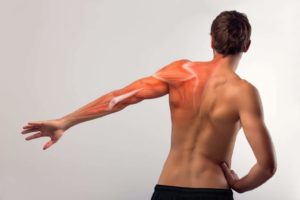
Shoulder Blades: The Right Moves
The shoulder blades, or scapulae, are critical links in the kinetic chain from the waist through the shoulders, up to the neck and down to the fingertips. Abnormalities in the position or movement of the shoulder blades—technically called scapular dyskinesis—can trigger pain and discomfort, especially among people who spend long hours sitting and using computers.

Programming to Prevent ACL Injury
Your new client, 16-year-old Alexis, is a competitive athlete who wants you to design a fitness program that will help her prevent a second anterior cruciate ligament (ACL) tear. She partially tore her ACL while playing soccer and rehabbed it with a physical therapist, who cleared her to play again. Alexis returned to spring softball without an issue, but she would like to be as fully prepared as possible for the upcoming fall soccer season. She hopes to be recruited to play in college, but her parents are concerned she will sustain another ACL injury, perhaps a more severe one.
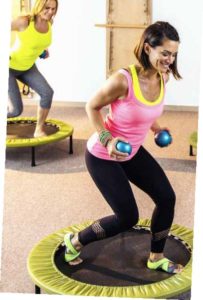
Range of Motion: Full or Partial?
Research shows there’s a time and place for both full and partial range of motion in resistance training program design.
Some training systems purposely use partial ROM for various exercises. Moreover, certain surgeries and orthopedic injuries require partial-ROM movements during rehabilitation (Pinto et al. 2012). It seems natural for personal trainers to wonder which is superior: full ROM or partial ROM? ,/p>
Two studies comparing the benefits of partial ROM and full ROM give a clearer view of the landscape.

Green Exercise: How It Benefits You
Here’s a look at what the latest findings tell us about why you may want to incorporate green exercise into your programs.

The Well-Stocked Pantry: A Cook’s First Line of Healthy Defense
Coach clients to spring-clean and restock their cupboards, freezers and spice cabinets with sensible, versatile ingredients. These grab-and-go lists and how-to guides provide an approachable game plan for getting started.
Simplicity Steers Success
client: Jennifer | personal trainer: John Parker | location: San Diego
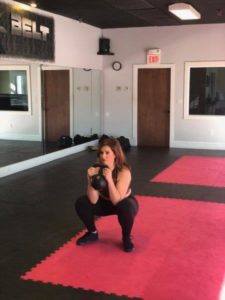
Keeping it simple. Every day it seems there’s a new supplement, food plan or training program that purports to produce unparalleled results. But all of these choices can make it difficult for clients to make wise choices and remain consistent in their approach. That was the problem faced by Jennifer, a florist and part-time kickboxing instructor, and it’s why she reached out to San Diego–based personal trainer John Parker, CSCS.

Sample Class: Center and Roll
This class is a mega movement multivitamin because it combines essential core training with restorative self-myofascial release techniques. Every movement recruits trunk muscles, creating a strong foundation for any physical challenge. The foam-rolling section helps attendees release fascial adhesions and, hopefully, prevent injuries. Participants will leave feeling strong, centered and relaxed.
Center and Roll Details
Goal/emphasis: core training and self-myofascial release
Total time: 1 hour

Multiple Planes, Many Positions
Participants may have a love-hate relationship with your core routines, but there’s no reason why you can’t make things fun while helping people to move, feel and look better. Ideally, the core-training exercises you choose will hit multiple planes from many positions (supine, prone, side-lying, sitting, kneeling, standing) while also stabilizing the pelvis, spine and scapulae. This functional approach prepares the body for the rigors of daily life.

How to Find Your Epic
The fitness industry is a rewarding and inspiring place to be. However, it’s not without its challenges, and getting ahead with passion alone can be difficult. The most successful fit pros know that to build an epic life and career, they must invest in education and learn from those who’ve been there and done it.

What Fitness Pros Need to Know About New Blood Pressure Guidelines
New guidelines on high blood pressure made headlines late last year because they suggest that nearly half of all Americans have hypertension—up from about one-third under previous guidelines. This is big news for fitness professionals because regular exercise is an excellent tool for regulating blood pressure. In this issue, we’ll review what you need to know about the new blood pressure guidelines.

Pillars of Functional Training for Active Aging
Healthy aging is more than the absence of disease, according to the World Health Organization (WHO): “For most older people, the maintenance of functional ability has the highest importance” (WHO 2015). Colin Milner, founder and CEO of the International Council on Active Aging in Vancouver, British Columbia, echoes these comments. “When looking at the healthy aging market today, the focus is all about function,” he says.
Understanding Set-Point Weight
Humans are hardwired to resist dietary restrictions. Science bears this out: In the absence of an ongoing weight maintenance program, half of the people who lose 10% or more of body weight gain it all back within 5 years or so (Montesi et al. 2016).
On This Day in Fitness History
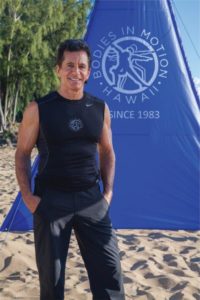
In March 2007, Gilad Janklowicz was inducted into the National Fitness Hall of Fame. Janklowicz is best known as the primary personality in Bodies in Motion, a popular and long-running fitness show.

A Scientific Approach to Core Training
Core training can improve functional capacity and reduce injury potential. But accurately programming a successful, tailored and progressive core- training protocol can be a complicated endeavor. Now, researchers from Heriot-Watt University in Edinburgh, Scotland, have developed a model they hope gives fitness pros a solid platform to work from.
Healthiest and Unhealthiest States
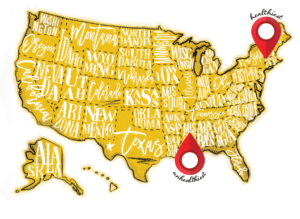
America’s Health Rankings® has released its annual report, which ranks each state’s health based on 35 factors, including behaviors, community and environment, policy, clinical care, and outcomes data. Now in its 28th year, the report has two primary goals: to provide a benchmark for states and to promote action to improve the health of citizens.
According to the data, these are the five healthiest states:
1. Massachusetts
2. Hawaii
3. Vermont
4. Utah
5. Connecticut
The Best Exercise to Prevent Mental Decline
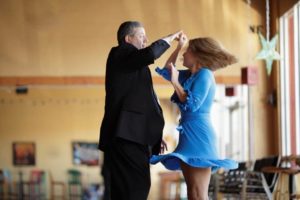
Exercise can boost brain health and slow cognitive decline. One form of exercise in particular seems to produce the best benefits—dancing!