

Anatomy/Kinesiology
Heart Rate Variability & Overtraining
Can New Research Prevent an Age-Old Paradigm?
Heart rate variability (HRV) is a reliable marker of physiological factors that directly affect the rhythms of the heart (Acharya et al. 2006). Acharya and colleagues explain that HRV reflects the heart’s ability to adapt to changing circumstances—stress, exercise and disease—by balancing the regulation of the autonomic nervous system, which controls bodily functions such as breathing, heart- beat and digestion.

Eight Fascinating Facts About Fascia
Fascia has been enjoying the limelight in the fitness industry as one of the hottest topics in recent fitness conference programming, workshops and publications. However, after the dust has settled, will fitness and wellness professionals still be scratching their heads and wondering, “Okay, great, it’s important, but what do I do with it?”

Neuromuscular Training and ACL Injury
According to a report published in the Journal of Athletic Training (2012; 47 [5], 589–90), anterior cruciate ligament injuries lead to about 113,000 ambulatory-care visits and about 75,000 outpatient surgical reconstructions among active youth and adults in the United States each year. A recent study suggests a potential key to minimizing ACL injury danger among young-adult athletes: neuromuscular training.
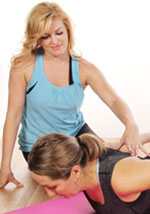
The Rib-Shoulder Connection
About 2 million people in the U.S. visit the doctor annually for rotator cuff problems (AAOS 2008), and at least 3% of adults will experience adhesive capsulitis, or frozen shoulder (Manske & Prohaska 2008). Multiple exercises can help prevent or postpone surgery, but what if they don’t seem to work? When regular shoulder exercises don’t help your client improve, or if they hurt too much, it’s time to start looking beyond the shoulder girdle.
The Human Heart and Its Cardiac Cycle
The cardiac cycle describes three phases of a single heartbeat:

5 Questions and Answers About the Heart
1. Does heart rate recovery indicate anything about a person’s health?
Yes. Cole et al. (1999) showed that a delayed decrease in heart rate (less than 12 beats slower) during the first minute after a maximal graded exercise may indicate decreased vagal nerve activity and is a powerful predictor of overall mortality.
2. Does exercise training improve recovery heart rate?
Yes. Seiler, Haugen & Kuffel (2007) showed that recovery heart improvement (faster recovery) occurs as fitness level progressively increases.
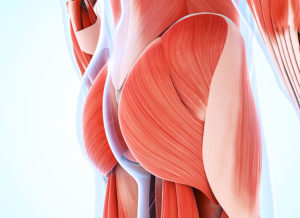
The 3D Booty: Training the Glutes for Form and Function
Booties, butts, glutes and rumps. Our fascination with enhancing our posterior spans the training spectrum, from the aesthetic-focused client to the performance-driven athlete. Yes, we want our backsides to look better, but we also need them to function more effectively, judging from the increasing number of knee and low-back injuries (Hoy et al. 2012).
Corrective Exercise for Shoulder Impairments
Movie stars, athletes and brides-to-be work hard to develop shoulders that are aesthetically pleasing, and shoulders are an integral part of the big somatic “picture.” However, there is much more going on in this area than meets the eye. The shoulder complex involves more than one joint, and healthy, functional shoulders are more desirable than ones that merely look good on camera. After all, looking good for the wedding is great, but not being able to carry your luggage on your honeymoon is not.
Foot Facts
IDEA Fitnographic:

Help for Hunched-Over Backs
??Do you have a hard time raising your arms to wash your hair, putting dishes in an overhead cupboard or pulling on a sweatshirt? You may be suffering from excessive thoracic kyphosis.
ETK is a disproportionate forward rounding or curvature of the middle and upper back, also known as the thoracic spine (Kendall, McCreary & Provance 2005). Everyday movements and athletic performance can be limited by ETK, as this excessive rounding of the middle and upper back can affect the function of your breathing, shoulders, spine and arms.
Transfer Your Energy: IDEA Personal Trainer Institute West
Thursday, May 2, 2013
Only at a fitness conference for personal trainers will you see people turning down the Doubletree hotel chocolate chip cookie. Not every person checking in for the IDEA Personal Trainer Institute West in Seattle bypassed the heavenly, sweet packet of fat and sugar, of course, but the front desk staff definitely had extras left over for the next crowd.
Diastasis Recti: When the Abs Don’t Come Together
Things your clients may split:
a training session, with a friend
their pants, while doing a deep squat
their abdominal muscles
Sometimes an unnatural divide can develop between the two sides of the rectus abdominis muscle bundles, a condition doctors call diastasis recti. It’s usually associated with pregnancy, but it can happen to men and children in addition to moms-to-be. If you have clients suffering from diastasis recti, chances are they are going to be interested in how the separation came about and how they can fix it.

Excessive Thoracic Kyphosis: Much More Than Just Bad Posture
Excessive thoracic kyphosis is a disproportionate forward rounding or curvature of the middle and upper back, also known as the thoracic spine (Kendall, McCreary & Provance 2005). ETK is an extremely common musculoskeletal imbalance brought on by prolonged time in some postural positions; exercise and/or activity choices; environmental factors; myofascial dysfunction; intolerances to food and/or other allergic reactions; and psychological stress.
Our Dynamic DNA
Imagine this science fiction scenario: While preparing your client for a set of back squats, the Training Scene Investigators (TSI) interrupt with a spot check. After your client has undergone a DNA mouth swab, a quick noninvasive laser muscle biopsy and a family history interview, the agents issue a comprehensive report.
Thicker Thighs = Improved Health?
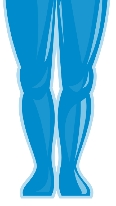
In a world where thin is in, scientists are suggesting that thicker thighs could mean better health. A study published in the Harvard Men’s Health Watch newsletter (www.health.harvard.edu/newsletters/Harvard_Mens_Health_Watch/2012/January) involved 2,816 apparently healthy men and women aged 35–65. Each participant was measured for height and weight and for thigh, hip and waist circumference. Subjects were tracked for 12.5 years on average.
Whole-Body Training: Warding Patterns
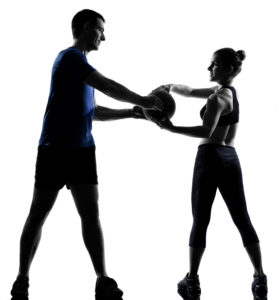
Observing sport is a great way to appreciate human structure and function. High-level athletes teach us a lot about optimal performance—and even dysfunction. Watching skilled athletic movement at the collegiate or professional level stimulates us to ask questions and scrutinize our existing training methods. This article identifies a need to introduce warding patterns as part of a well-balanced training and conditioning program. Practicing warding patterns elicits adaptations that are authentic to our physiology and can transfer to sports and daily activities.

Yoga Can Help Neck Pain
In our high-stress, hurried world—filled with financial pressures, information overload and “terror alerts”—many people feel the weight of the world on their shoulders. Add to this emotional tension the physical stress of sedentary lifestyles with long hours spent hunched over computers and, all too often, the result is a serious pain in the neck. Chronic neck pain is linked to a host of related disorders, including headache, jaw soreness, and pain radiating into the shoulders, upper back and arms.

Diaphragmatic Breathing & Neck Pain
Everyone from elite athletes to average clients can benefit from learning more about breathing or reprogramming the way they breathe. More specifically, by teaching them techniques that emphasize diaphragmatic breathing, you will help them meet their exercise goals.
Neuromuscular Warm-Ups Reduce Knee Injuries
According to a study published in the Archives of Pediatrics & Adolescent Medicine (2011; 165 [11], 1033–40), sports participation among high-school girls has increased 900% since 1972. Alongside increased participation, however, come higher numbers of injuries, with soccer and basketball the most offending sports. To combat injuries, more fitness professionals and coaches are integrating solid warm-up plans prior to practice or competition.
Psoas Stretches Benefit Seniors
Improving inefficient gait patterns is often a focus among fitness professionals working with older adults. Walking problems can diminish independence and increase injury potential. A recent study suggests that regular stretching of the hip flexor muscles can improve gait patterns among this population. The purpose of a study published in PM&R (2011; 3 [4], 324–29) was to determine the effectiveness of a 10-week hip flexor stretching program on walking patterns among 82 older adults.