

Technology

Do You Need a Better Technology Policy?
If you've spent any time at all inside a gym, you've likely experienced this scenario: You're humming along on your treadmill when Joe Talksalot hops onto the machine next to you and proceeds to speak loudly into his smartphone. To distract yourself from Talksalot's not–so–private conversation, you scan the gym floor—and over in the corner you see a woman doing backbends while contorting her neck to maintain a visual on her tablet.

On-Demand and App-Based Training: Getting Clients via Smartphone
The on–demand economy—featuring Uber–style personal fitness training—is here. While app platforms vary in structure and locale, they share a common thread: on–demand connection with fitness experts.
On–demand mobile commerce attracts more than 22.4 million consumers and $57.6 billion in spending annually, with $8.1 billion going to health and beauty services that include fitness training, Harvard Business Review reported in April 2016.

Fit-Tech Trends to Watch in 2017
Fitness technology is part of the fitness industry's "new normal," but it's changing rapidly. Many of the fitness technologies we saw at the beginning of last year have already morphed into new and improved devices and features. We should expect more exciting updates this year as fit-tech companies, app developers and tech-savvy fitness brands continue to iterate.

Pros and Cons of Virtual Fitness Classes
Technology is rapidly changing how the fitness industry delivers services. In addition to wearables, apps and countless other options, technology offers—at the touch of a screen—almost any type of prescheduled or on-demand group exercise class at any venue that has Wi-Fi. This is
virtual fitness,
exercise programming that is carried out, accessed or stored by means of a computer, especially over a network.
5 Steps to Be a Fit-Tech Guinea Pig
You don’t learn how to ride a bike by reading a book about it. You have to get on and start pedaling. The same is true of fitness technology: To learn it, you have to use it.
That’s why I recommend you become a fit-tech guinea pig—experimenting on yourself to see what works. Fitness technology offers motivational tools that can do the following:

Which Is Better: A Live Class or a Virtual One?
Technology is rapidly changing how the fitness industry delivers services. In addition to wearables, apps and countless other options, technology offers—at the touch of a screen—almost any type of prescheduled or on-demand group exercise class at any venue that has Wi-Fi. This is
virtual fitness,
exercise programming that is carried out, accessed or stored by means of a computer, especially over a network.
Become a Fit-Tech Guinea Pig
You don’t learn how to ride a bike by reading a book about it. You have to get on and start pedaling. The same is true of fitness technology: To learn it, you have to use it.
That’s why I recommend you become a fit-tech guinea pig—experimenting on yourself to see what works. Fitness technology offers motivational tools that can do the following:

Crowdfunding 101
In August 2014, personal trainer Lyam White learned that one of the owners of the studio where he was renting space was looking to sell. The Seattle-based location had worked well for him, and he was concerned that he might have to search for a new place to train.
“I talked to the other owner about buying in, to ensure that I would still be able to train at this location,” says White. “Additionally, my wife is a massage therapist, and it occurred to us that the space could be used to consolidate our services and offer a ‘whole body shop’ storefront.”

A No-Tech Sunday
Cellphones, computers, tablets. All of these are important tools that help you to run a successful fitness business. But technology can seep into every moment of your life and take over. Do you need to step away from email or give your smartphone a rest from time to time? Discover why you’ll be a better entrepreneur if you explore options for setting limits around technology and just say no to it some of the time.
Some fitness entrepreneurs are finding that saying no to digital devices every Sunday helps them find work-life balance.
Look Who’s Put a Block Party on the Plate
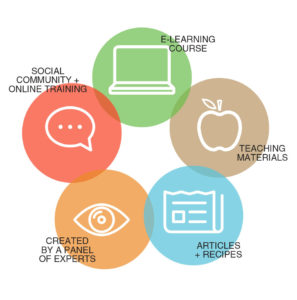
Zumba® instructors can now extend their celebration of fitness beyond the dance studio and help fuel all-around fitness with Plate by Zumba™, a healthy eating program and e-learning course.

Strategic Self-Promotion for Fitness Pros
Promoting yourself has never been easier. Free social media, affordable Web design and easily accessible graphic design provide ample opportunity to draw awareness to what you have to offer. But without a blueprint, you are wasting your time. Read on to uncover core self-promotion methods that can increase your business in less time than you think.

Top Tips for Personal Branding
More and more, knowledgeable individuals are developing themselves as brands. For exam- ple, well-known fitness professionals like Chalene Johnson and Cassey Ho have become the product they sell. Public relations expert Marsha Friedman believes that everyone should follow in these experts’ footsteps. “By branding yourself—making sure the world knows who you are and what expertise you have to offer—you not only set yourself apart from your competitors but you also open the door to new opportunities,” she explains.
Here are her top tips for developing your own brand:

Four Trainer Scheduling Tools That Will Save You Time and Help Grow Your Business
Client scheduling is a necessary component of your business. Learn some of the more popular programs and apps to simplify the scheduling process.

Building a Teaching Kitchen in a Studio
ave your clients ever asked:
“What should I cook for dinner?”
“How should I prepare it?”
“What if I have to cook a healthy
meal for my family?”

Four Easy-to-Use Email Tools to Launch Your Email Newsletter
Learn the pros and cons of four popular tools.

Educate Yourself, Evolve Your Business
The most successful entrepreneurs know that education is a cornerstone of building a strong business. Your chance to elevate your game is right around the corner at IDEA World Fitness Convention™.

How to Get (and Keep!) Online Training Clients
Once you’ve determined the kinds of online products you plan to offer, the next step is to attract and maintain a healthy virtual clientele. Learn how to do just that.

Online Training: Programming for Profit
The second installment of this series on online training focuses on the different types of programs—and pricing strategies—successful entrepreneurs have used to build a solid Internet-based business.

Self-Reported Energy Balance Data Cannot Be Trusted
Imagine your clients having to record their food consumption and energy expenditure as part of an important research study. The details might get a little sketchy from day to day, right?

Investing in Fitness Technology
In 2014, we saw numerous mobile health and telehealth acquisitions as larger companies ramped up their digital health strategies (Comstock 2014). These moves are more than business news headlines—they represent broad trends that are increasingly relevant to fitness and wellness professionals.