

Supplements/Ergogenic Aids

Wansink Studies Discredited
Some of the most profound and useful study findings on the psychology and marketing of food and eating published over the past two decades may be invalid. The famed, and now shunned, Cornell researcher Brian Wansink and his Food and Brand Lab published hundreds of studies, many of which have not stood up to scientific scrutiny.

Experts Torn On Weight Watchers’ Free Teen Program
As part of an effort to rebuild its brand as a health-and-wellness company rather than a diet brand (and to gain new loyal customers), Weight Watchers® announced in February that it will start a free weight management program for teens this summer. Controversy erupted immediately among health professionals and the public.

USDA Retires SuperTracker
The U.S. Department of Agriculture will retire SuperTracker on June 30. SuperTracker is a free online nutrition, goal-tracking and food analysis tool, which more than 27 million people have used since its launch in 2011. The USDA says many other private nutrition tools are readily available and that it would like to spend its resources finding more efficient and modern ways to “help Americans find an eating style that is right for them.”
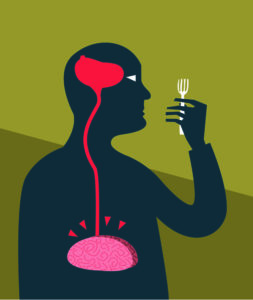
Hunger and Satiety Hormones High After Diet- and Exercise-Induced Weight Loss
Researchers are just beginning to understand why weight loss maintenance is so difficult. We know that at least part of the answer lies in metabolic changes that often accompany weight loss. For example, studies show that after diet-induced weight loss, the hunger hormone ghrelin increases, while satiety decreases amid declining levels of hormones such as peptide YY and glucagon-like peptide-1. After exercise-induced weight loss, hunger hormones also rise, but some studies suggest that satiety climbs as well.
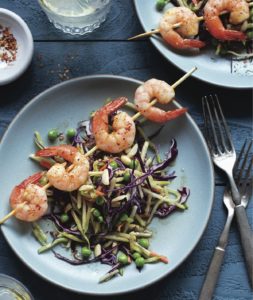
Curried Shrimp Kebabs With Spring Slaw
This recipe by Michelle Babb, MS, RD, CD, author of Anti-inflammatory Eating for a Happy, Healthy Brain (Sasquatch Books 2016), is one of 75 in an evidence-based cookbook that aims to teach readers how to use diet to improve one’s state of mind with anti-inflammatory foods. Babb opens the book by explaining the science behind this eating plan and then provides the “how-to” with tasty concoctions ranging from simple to easy gourmet. Satisfy your taste buds, your microbiome and your mood with this dish, just right for ushering in spring.
Question of the Month
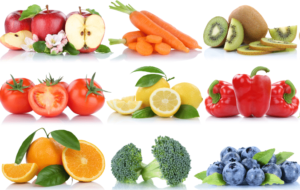
Despite government-funded health campaigns promoting healthier eating, Americans still eat shockingly low amounts of fruits and vegetables. According to a state-by-state survey by the Centers for Disease Control and Prevention, only 1 in 10 American adults meets federal fruit or vegetable recommendations—at least 1½–2 cups per day of fruit and 2–3 cups of vegetables.

Greens on Your Mind
Maybe smart people do eat more kale. A study published in the journal Neurology in December 2017 discovered that eating daily servings of leafy greens is associated with more youthful brains.

When at First You Don’t Succeed, Try Again . . . and Again
Persistence pays off when fostering a new generation of healthy eaters. A paper published by pediatric researchers from the University of Buffalo in the December 2017 edition of Obesity Reviews shows that repeatedly exposing infants and children to healthy foods, even when they snub their noses at them at first, is key to promoting healthy eating behaviors over the long term. This don’t-give-up attitude is particularly effective at getting little mouths to eat a greater variety of fruits and vegetables.

Alcohol May Boost Cancer Risks
Previous studies have associated light to moderate alcohol consumption with a lower risk for cardiovascular disease and maybe even diabetes, according to the Harvard T.H. Chan School of Public Health’s Nutrition Source, but teetotalers may have a leg up on avoiding cancer.

Waste Not, Want Not
In America, 30%–40% of the food supply goes to waste, the U.S. Department of Agriculture estimates. You probably know by now that most “use-by” and “best-by” dates are not toss-out dates, and you’re likely monitoring the contents of your fridge so you use as much of your food as possible before it goes bad. But you may be less aware of another important way to take a bite out of food waste.
Ask the RD
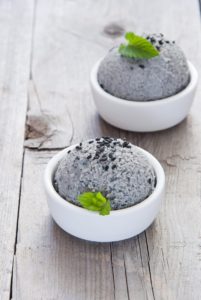
Question: I bought tahini to make hummus, and now I have most of the jar left. Are tahini and sesame seeds nutritious, and what else can I use them for?
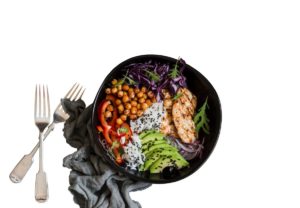
Informed Protein Consumption
It’s true: Muscles do thrive on protein. In combing through 49 high-quality studies involving 1,863 men and women, a team of international researchers found a strong link between protein supplementation intake and increased muscle size and strength among those who regularly engaged in resistance training, according to a study in the January edition of the British Journal of Sports Nutrition.

Low-Fat Versus Low-Carb: It’s A Draw
We have more proof that no single diet reigns supreme. Slashing either carbs or fats can trim the waistline to the same degree, according to a major study from Stanford University School of Medicine in conjunction with the U.S. National Institutes of Health. The study was published in JAMA in February.

Slow and Steady Wins the (Fat Loss) Race
Mealtime is a good time to remember the saying “slow as molasses.” Research published in the journal BMJ Open in February found that Japanese adults with type 2 diabetes who reported a habit of wolfing down their meals were 29% more likely to be overweight than those who ate at a normal pace. Fast eaters were 42% more likely to exceed weight norms than people who lingered over their meals for an especially long time.
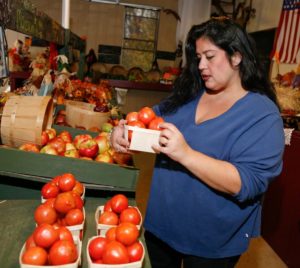
Health at Every Size: A Sound Approach to Behavior Change
The correlation between obesity and chronic disease is well established (Bacon & Aphramor 2011; Bombak 2014; Penney & Kirk 2015). Causality, however, is not so clear (Bombak 2014).
For decades, efforts to fight chronic disease have focused primarily on obesity—encouraging dieting as the best way to lose weight. But even as the U.S. weight loss industry has grown to $58.6 billion annually, we haven’t seen significant improvements in rates of chronic disease (Bacon & Aphramor 2011).

A Handy Way to Count Calories
If you want to lose weight, you know that calories matter. But in most cases, meticulously counting calories is not the solution. That approach is often tedious, inexact and unsustainable—and when eating becomes too complicated, people are more likely to give up and fall back on old habits.
So what can you do? The key is to find ways to eat quality foods in appropriate amounts.

Low-Fat Versus Low-Carb Diet? It’s a Draw
For decades researchers have sought to find the best diet to help people achieve the elusive goal of permanent weight loss. In the context of a worsening obesity epidemic and massive efforts underway to attempt to curb it, health professionals and the public are hungry for an answer. What diet will best help us improve the weight and health status of the most people?

Nutrition and Behavior Change: The Killer App
Since its inception in 2016, the IDEA World Nutrition & Behavior Change Summit has become the go-to event for health and fitness pros interested in using the most innovative approaches to helping clients achieve sustainable change. Some of the world’s top researchers and educators have presented on this rich program and this year’s lineup, scheduled for June 29–30, is no exception. As a bonus, attendees can earn 12 CPEUs/CECs.
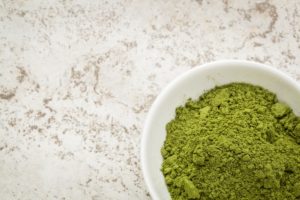
Ask the RD: Is Moringa Powder Similar to Matcha?
Answer: Green moringa powder is made from the dried leaves of
the moringa tree, also known as the drumstick tree, and is used in drinks and smoothies like matcha powder, although it doesn’t contain caffeine. Like green tea and leafy green vegetables, moringa leaves are high in antioxidant compounds. They have been used as food and traditional medicine for hundreds of years and reputedly have anti-inflammatory effects, help reduce blood pressure, lower blood sugar and cholesterol levels, and may have anticancer properties (Leone et al. 2015; Stohs & Hartman 2015).
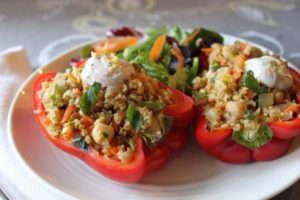
Recipe for Health: Freekeh-Stuffed Peppers
When it comes to grains in our diet, we now have more proof that whole is a whole lot better. In a study published last October in Gut, a team of Danish researchers assigned 50 adults to follow one of two diets for 2 months—one where all grains consumed were unrefined varieties, like brown rice and oats, and one where most grains were refined options, such as white rice and white pasta.