

Career Path for Group Fitness Instructors

Health News: Fact or Fiction?
A flood of faulty health news information online has surged in the past few years, experts say. Fitness pros are hardly immune.

The Top 3 Mistakes Trainers Make With Their Business
Mistakes are inevitable. But if you can avoid them before they happen, then you’ll have more time to focus on building a stronger business.

“What smartphone app or computer program could you not live without in your business?”
I could not live without the Tabata Pro™ Timer and MyFitnessPal apps. Tabata Pro Timer is essential to my private and small-group training sessions and our group running program. I can set three different timers to meet all my interval needs.
MyFitnessPal enables my clients to track exercise as well as food and water intake, and to share these publicly or just with me. The app provides accountability for my clients’ fitness and nutrition goals.

The 6-Step Approach for Creating New Habits
Following these six steps can help clients establish new daily habits to achieve a desired outcome.

Creating a Client Avatar
Do you remember the days before GPS and smartphones? When taking a road trip meant pulling over to look at a map, making U‐turns and stopping at gas stations to ask for directions? We had a destination, but not the exact route. What if you ran your fitness business that way? Taking action with no clear path? It would be frustrating, wasteful and inefficient. The reality is that many personal trainers do approach their businesses in that fashion.

What’s Your Exit Strategy?
Have you heard the saying "Begin with the ending in mind"? Over the years, this axiom has probably helped you solve complex math problems, create a science–fair project, or even write a research paper. But you may have forgotten this sage advice when it comes to planning something with even higher stakes: your career.

The Best of Times Are Yet to Come
Anytime Fitness CEO Chuck Runyon helped to revolutionize the fitness industry when he and Dave Mortensen co-founded the juggernaut brand in 2002. Now massive in scale and influence, Anytime's success grew by focusing on a model of smaller neighborhood gyms that emphasized convenience, affordability, quality equipment and personable service in friendly, nonintimidating facilities.

“How did you finance your personal training business or studio when you started it?”
The journey I took to open my own facility was long and happened in small steps. I was working in a big gym in Washington, D.C., when I decided it was time to step out on my own. My landlord was also a client, and when I told her what my intentions were, she suggested moving out of my studio and into a one-bedroom apartment in the same building. I turned the living room into the workout space and used the bedroom as my living space. I financed the move through what little savings I had, $2,000, plus a $1,500 loan from my parents.
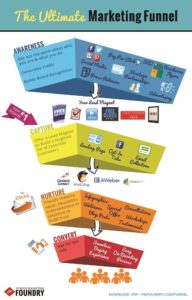
The 4-Step Marketing Funnel to Attract New Clients
Discover a targeted client-attraction system that provides results.

Overcoming the Fear of Change
client: Erin | personal trainer: Don Bahneman, MS, CSCS, general manager, fitness director and master personal trainer, The Energy Club | location: Arlington, Virginia
Fear of change. Erin, a member of The Energy Club, was searching for a new personal trainer in 2014. The one she had been working with was leaving for medical school, and Erin still had sessions remaining. After observing the trainers in the gym, she zeroed in on general manager and master personal trainer Don Bahneman.

The Foundation of a Fulfilling Future
Las Vegas has a reputation for secrets. As they say, "What happens in Vegas stays in Vegas." This July, more than 10,000 professionals will break that cardinal rule because what happens at the 2017 IDEA World Convention will be shared with millions of people worldwide. With more than 335 workshops, lectures and workouts, plus tons of special events planned to celebrate IDEA's 35th anniversary, it will be impossible to keep quiet about the career-changing experiences and top-level knowledge offered at this year's event.

Do You Offer 30-Minute Personal Training Sessions?
7 trainers weigh in on the debate about whether to offer half-hour sessions.

Intellectual Property in Fitness
What separates a freelance personal trainer from a fitness entrepreneur? A big part of the answer is intellectual property.
Intellectual property is a catchall term for a bucket of legal concepts, all directed toward a business's intangible assets. IP includes
patents that protect new and useful inventions,
copyrights that protect creative expressions (what media companies call "content"), and
trademarks that protect brands and consumer goodwill.

6 Ways to Help Clients Rediscover the Joy in Exercise
Getting people to move more begins with shifting the fitness conversation from tomorrow’s gains to today’s joy, experts say.

Behavior Modification Strategies
Behavior modification can be a tricky thing when it’s just you and your client working through challenging issues. But what happens when others are proving to be obstacles to progress? IDEA asked a handful of fitness professionals how they assist or advise clients whose friends and family may be sabotaging their efforts to get healthy.
I often ask clients about their social habits and suggest, for example, that "girls' night out" could be replaced by a fun activity that does not revolve around eating. Discussing strategies with clients in preparation for events like that is often helpful.

How to Fortify Your Purpose and Bolster Your Business
It was 2014 and Jill McKay was at a critical juncture. For the past decade, she had thought of herself as "just a mom," yet recently the idea of founding a fitness organization had begun to consume her. The problem? McKay lacked both confidence and the know-how to get started. Soon, however, she'd find her first step—and the catalyst to fulfilling her aspirations—underneath the Christmas tree.

Ageism and the Fitness Industry
At what age does a person become old? Is it 50 or 65 or 75? I've known healthy 75-year-olds who could outrun, outswim and outlift me, and I've known diseased 60-year-;olds who'd be short of breath walking to the mailbox.
3 Steps to Take Control of Your Finances
It may not be the most glamorous aspect of running a business, but putting solid accounting practices in place can save you stress and money.

Clinch Your Coaching Style
You look across the hall at Popular Instructor’s class and marvel at how she packs the house day after day, week after week. You’ve studied her style and tried your best to emulate her music, cuing, choreography—even the way she dresses—but your numbers are shrinking instead of growing. What are you doing wrong?

Cross-Training for the Career Win
A seasoned high school soccer player who has excellent shooting, passing, dribbling and heading skills walks into your office looking for a personal trainer to help her boost her game. To reach the next level—say, collegiate-quality—making her ball skills even better may not be what’s most important. To further excel, she will need to hold her own at control, speed, agility and strength. If she improves these abilities and combines them with her already exceptional ball skills, she’ll have the tools to become a strong, well-rounded college recruit.