

Consumer EducationShare With Clients

Green Exercise: How It Benefits You
Here’s a look at what the latest findings tell us about why you may want to incorporate green exercise into your programs.

Getting to the Bottom: The Ischial Tuberosity
The posterior aspect of the body, along with its muscles, tendons, bones and attachments, is easy to overlook because it’s out of sight and, therefore, often out of mind. Until, that is, pain occurs. The ischial tuberosity—also known as the “sit bones” or even “sitz bones” (from the German word sitzen) (Garikiparithi 2017)—has many different connections, although it is mainly associated with the hamstring muscles (Drake et al. 2010).

The Well-Stocked Pantry: A Cook’s First Line of Healthy Defense
Coach clients to spring-clean and restock their cupboards, freezers and spice cabinets with sensible, versatile ingredients. These grab-and-go lists and how-to guides provide an approachable game plan for getting started.
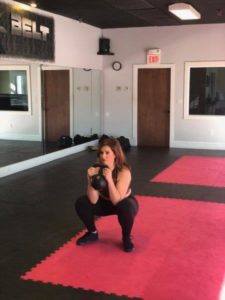
Simplicity Steers Success
client: Jennifer | personal trainer: John Parker | location: San Diego
Keeping it simple. Every day it seems there’s a new supplement, food plan or training program that purports to produce unparalleled results. But all of these choices can make it difficult for clients to make wise choices and remain consistent in their approach. That was the problem faced by Jennifer, a florist and part-time kickboxing instructor, and it’s why she reached out to San Diego–based personal trainer John Parker, CSCS.

Exercise’s Impact on Cancer
There are three ways to look at battling cancer. For those who don’t have it, lowering risk is the primary goal. For those who’ve had it, successfully recovering and, of course, reducing the chances of recurrence are of utmost importance. For those who currently have it, the priorities are getting rid of it and minimizing the harmful effects that both the disease and the treatment have on the body. Exercise has been shown to help with all three.

Sample Class: Center and Roll
This class is a mega movement multivitamin because it combines essential core training with restorative self-myofascial release techniques. Every movement recruits trunk muscles, creating a strong foundation for any physical challenge. The foam-rolling section helps attendees release fascial adhesions and, hopefully, prevent injuries. Participants will leave feeling strong, centered and relaxed.
Center and Roll Details
Goal/emphasis: core training and self-myofascial release
Total time: 1 hour

How to Find Your Epic
The fitness industry is a rewarding and inspiring place to be. However, it’s not without its challenges, and getting ahead with passion alone can be difficult. The most successful fit pros know that to build an epic life and career, they must invest in education and learn from those who’ve been there and done it.

What Fitness Pros Need to Know About New Blood Pressure Guidelines
New guidelines on high blood pressure made headlines late last year because they suggest that nearly half of all Americans have hypertension—up from about one-third under previous guidelines. This is big news for fitness professionals because regular exercise is an excellent tool for regulating blood pressure. In this issue, we’ll review what you need to know about the new blood pressure guidelines.
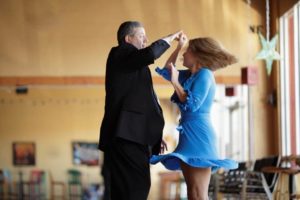
The Best Exercise to Prevent Mental Decline
Exercise can boost brain health and slow cognitive decline. One form of exercise in particular seems to produce the best benefits—dancing!
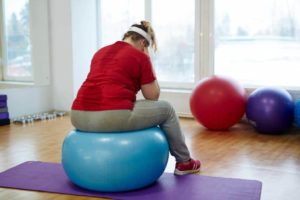
Exercise Responses Vary Among Women
A new study from Bangor University in Wales affirms that body type influences a woman’s response to exercise, potentially affecting weight management success.
Female participants were assigned to either a 4-week or 8-week circuit training intervention. The women met three times per week and exercised at 50%–90% VO2 peak for 45–90 minutes per session. They were instructed not to diverge from their usual diets.

The Achilles Tendon
Many fitness professionals have dealt with an Achilles tendon injury, either their own or a client’s. The largest and strongest tendon in the body, the Achilles connects the lower-leg muscles and calf to the heel. “Synchronous functioning” of the tendon and calf is crucial for many activities, including standing on tiptoe, running, jumping and climbing stairs (Bhimji 2016).
Dutch surgeon Philip Verheyen named the tendon (after the Greek hero Achilles) in 1693. Previously, it was known as “tendo magnus of Hippocrates” (van Dijk 2011).

Creating Healthy Habits
Have you ever tried to drink more water or stop eating fast food, but just not been able to sustain the new habit? Derrick Price, MS, programming officer at the Institute of Motion and adjunct faculty at Point Loma Nazarene University in San Diego, explains the anatomy of a habit and gives you strategies to create new behaviors.
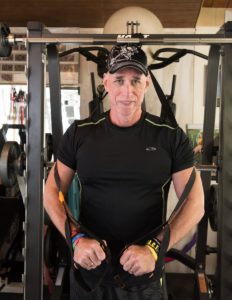
When the Client Is You
client: Frank | personal trainer: Frank McKenna, MEd, owner, Beach Better Bodies | location: Virginia Beach, Virginia
A dire situation. In the summer of 2016, personal trainer Frank McKenna received news he never expected to hear. At age 56, he had recently completed his own physical transformation and was arguably in tiptop shape, so when his doctor told him he had stage 4 lung cancer, he was stunned.

Meditation: Part of a Heart-Healthy Lifestyle?
The American Heart Association has released a scientific statement noting that meditation has potential to reduce some heart disease risk factors and may be considered an adjunct to a heart-healthy lifestyle of good nutrition, physical activity and smoking cessation, combined with medical treatment for conditions like high cholesterol or high blood pressure.

Strength Training and Type 2 Diabetes
A regular exercise program can help people with type 2 diabetes to manage blood sugar levels and maintain or improve fitness levels and overall health.

Resistance Training for Youth: 10 Tips for Success
Resistance training for youth can be a polarizing topic, mostly because of misconceptions about safety, injury rates and training techniques. Though parents and trainers alike often worry about the hazards of youth resistance training, research shows that it has a host of benefits—if it’s done properly.

Combined Training for Fitness and Weight Loss Clients
In today’s marketplace, knowing how to offer combined training is a must-have skill. People want it all—cardiovascular, strength and flexibility training—in just 50 minutes.

Taking the Right Step—Walking Research for the Ages
Have you ever heard clients say that “walking doesn’t count” as exercise? The truth is that walking can be a valuable part of your clients’ wellness routines—but how those steps fit into a whole program may depend on age. Two different studies offer valuable feedback on the benefits of walking through a workout.
STUDY #1: When Walking and Weight Loss Are in Step

All Types of Exercise Prevent Depression
Regular exercise of any intensity for as little as 1 hour per week can prevent depression in people of all ages and genders, according to findings by an international research team led by the Black Dog Institute in Randwick, Australia. The study monitored exercise levels and symptoms of anxiety and depression in 33,908 Norwegian adults for more than 11 years.
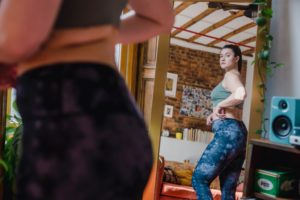
Body Image and the Fitness Industry
A look at why the fitness industry does indeed have a body image problem—and what we can do about it, starting now.