

Industry Issues/Trends
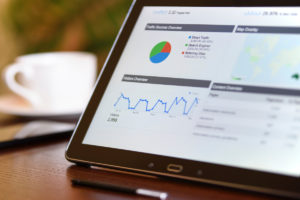
How to Optimize Your Fitness Site for Sales, Not Just Visitors
Nowadays, a top item on an entrepreneur’s to-do list is building a website. It’s no secret that consumers do their research online before making a purchase decision. They search for information about fitness services and then weigh their options, comparing what you offer to what your competitors provide.
So, yes, your business needs a website.

Reaching Millennial Moms
Are you leaning into the rise of millennial moms? These women are part of a generation that’s expected, as of this year, to surpass baby boomers as the nation’s largest age demographic. The 83 million 17- to 36-year-old “millennial” men and women in the United States—combined with Generation Xers—account for 80% of the fitness dollars spent in clubs (Lexington Law 2019; Les Mills 2017). Already fitness consumers, millennial women are becoming mothers.

2019 IDEA World Nutrition & Behavior Change Summit
There’s hardly anything more satisfying for many professionals than getting out of their own heads and feeding their minds with new ideas and skills. The sheer pleasure of immersing oneself in the waters of knowledge for even a few days each year can make an ocean of difference over the course of a career.

Not So Fast: Questions to Ask Before You Accept That Fitness Class
Too often, yoga and group fitness instructors are so eager to teach that they say yes to any class they can squeeze into their schedule. Tatiana Kolovou, MBA, owner of Ethos Cycling in Bloomington, Indiana, is among those who believe you shouldn’t undervalue your skills in order to do something you love. “There are many jobs that have strong purpose, and the individuals who do them have passion, and many of them make a lot of money,” Kolovou says.

Location Affects Fitness Activity Choice
While group fitness is most popular in Salt Lake City, Los Angeles and New York City, using weights or resistance machines is most widespread in San Diego, Chicago, and the Cleveland, Akron and Canton areas of Ohio.
Virtual-based training—either streamed live or recorded in advance—is growing in popularity. The most prevalent home-based activities include body-weight exercise, Pilates, stretching, tai chi and yoga.

Wearables Market Trends
Growth drivers for wearables in 2019 include more applications for hearable devices and stronger tracker integration into the healthcare market. In 2018, wearable shipments rose 27.5% overall, with 172.2 million products shipped. Greater sales of ear-worn wearables and a 54.3% increase in smartwatches are the main contributors for growth, according to data by International Data Corporation. In the United States, the number of smartwatches sold in 2019 is predicted to grow by 25% over last year, per the Consumer Technology Association.

Americans Enjoy Fitness More Than Sports
When it comes to being physically active, more Americans choose fitness pursuits over sports, according to the Sports & Fitness Industry Association’s 2019 SFIA Topline Report. The report is based on nationwide survey data across activity categories and includes responses from children (ages 6 and up) up to older adults. In 2018, fitness categories that use equipment reflected the highest growth. And, compared with 2013, at least 3.5% more Americans attended class-based exercises such as HIIT, cross-training, barre and yoga.

Transforming Your Fitness Facility Into a Wellness Center
People originally viewed fitness facilities simply as places to work out and play sports in order to change their physical appearance. However, this has shifted. Wellness—embracing physical, mental, emotional and spiritual health—has become the buzzword of the decade, and today’s fitness facilities have begun offering a myriad of services. To cover the full wellness spectrum, however, you need to combine forces with other health modalities.

Tracker Information Motivates
With the abundance of activity trackers on the market, deciding which product to choose can be overwhelming. New research suggests that the most important criterion may simply be how easy it is to access the data the device provides. Recent research conducted at the Atlantic Sports Health Research Department of Atlantic Health System in Morris?¡town, New Jersey, shows that people who wore a device and accessed data via an app were more active daily when compared with those who did not access the activity information.

UK Med School Includes Physical Activity Education
Lancaster Medical School in Lancaster, England, has been acknowledged throughout the United Kingdom and by the World Health Organization Europe for being the first medical school in the U.K. to integrate guidelines on how to prescribe physical activity. The initiative is referred to as the “Movement for Movement.”

Health Coaching: Starting Your Business
Are you excited about helping people to transform their lives through health coaching? You’ve educated yourself, earned certifications, gained practical experience and are ready to start your business. What’s next?

How—And Why—To Optimize Your Website for Voice Searches
Alexa, where is a hot yoga class near me?
Siri, how many reps should I do when I’m strength training?
If your potential clients haven’t uttered one of those phrases yet, they soon will—as voice search becomes the way of the future.

Career Advancement for Everyone
Thousands of fitness professionals consider the IDEA World Convention to be the best investment they can make to further their careers. That’s largely because the event delivers robust, multilevel education covering all facets of the industry. But there’s more to it than that, according to fitness industry veteran and this year’s IDEA Jack LaLanne Award recipient, Jay Blahnik.

Question of the Month: May 2019
Have you or the policymakers at any facilities where you work shared guidelines about positive body talk or about language that could contribute to body shame among members or clients? Share your best practices and illustrative stories on how you or your facility management promote positive body image in staff and fitness participants.
We want to hear from you!

Fitness Pros Influence Body Satisfaction
Women in a group exercise class experienced greater body satisfaction and better moods when the instructor made motivational comments related to strength and health instead of weight or appearance.

Debating Alcohol Consumption and Risk
In our September 2018 issue of Fitness Journal, we reported on an international study published in The Lancet that found any level of drinking above 100 grams of alcohol (3.75 ounces) per week increases heart disease risk and shortens lifespan.

The Key to a Prolific Career
Soccer great Pelé once said, “Success is no accident. It is hard work, perseverance, learning, studying, sacrifice and, most of all, love of what you are doing or learning to do.” This concept forms the foundation of everything you will experience at the 2019 IDEA® World Convention in Anaheim, June 26–30.

Hiring the Nutrition-Fitness Hybrid Pro
What are consumers looking for when they come to your gym or studio? Sure, they want great workouts and access to the latest equipment in a welcoming, fun environment. But above all, they really want to attain their health and fitness goals.

The Mobile Health Map: Exploring Telehealth
Telehealth is a huge win for nutrition experts and other wellness professionals. Embracing this ecosystem of wireless devices, digital platforms and mobile apps can give you a competitive edge with clients, who increasingly receive care via telehealth tools.

Question of the Month: April 2019
When you design training programs for clients, do you take exercise enjoyment into account? What strategies do you use to find out which types of physical activities clients enjoy doing most? Through experience, have you found ways that work better than others? Share your best practices and illustrative stories on how efforts to optimize client enjoyment of physical activity have produced better training results.
We want to hear from you!