

Chronic Diseases

Understanding Inflammation
Inflammation is the body’s immune, self-protective and healing response to harmful stimuli, irritants, pathogens and damaged cells. Most inflammation is acute, such as when you sprain your ankle. Symptoms of inflammation include swelling, redness, pain and (sometimes) impaired movement or function.

Playing Hurt
When Gray Cook was a high-school athlete, his coaches would comment, “That Gray Cook sure can play hurt.” He had over 20 fractures before he was 18, what with his love of football and motorcycles. He played while hurt, he says, because he had the ability to block out pain. Flash forward to 2014, and Cook—now a practicing physical therapist, certified orthopedic specialist and founder of Functional Movement Systems in Chatham, Virginia—was no longer able to block out neck pain. It was affecting his life, his work, and his ability to share his message of fitness and health.

Coronary Artery Disease: What Every Fitness Professional Needs to Know
Developing a thorough understanding of coronary artery disease (CAD) can help fitness professionals fight one of the world’s deadliest diseases. ?
How deadly? For starters, CAD is the leading cause of death around the world, accounting for 13.2% of all deaths in 2012 (WHO 2014a). It kills almost 380,000 Americans every year (CDC 2014a). Exercise professionals can do something about these statistics by designing fitness programs that reduce CAD risk factors in clients while improving their quality of life. ?

Is Magnesium a Diabetes Healer?
A Tufts University study led by Adela Hruby, PhD, MPH, has found that healthy people with the highest magnesium intake were 37% less likely to develop high blood sugar or excess circulating insulin, common precursors to diabetes.
Among people who already had those conditions, those who consumed the most magnesium were 32% less likely to develop diabetes than those consuming the least.
The second association held true even when researchers accounted
for other healthful factors—such as fiber—that often go along with magnesium-rich foods.

Nutrition Strategies for Stress and Pain Management
Stress and pain diminish quality of life for millionsofAmericansandcostbillionsin healthcare expenses and lost wages.
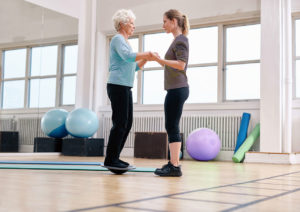
Fall Prevention Training for Seniors
It appears there is a growing need for seniors to engage in fall prevention. A recent report found a significant increase in falls from 1998 to 2010.
Researchers looked at data from the Health and Retirement Study, which is an interview-based report. Among individuals aged 65 and older, the percentage who had experienced at least one fall in the 2 years prior to the interview rose from 28.2% to 36.3%—a relative increase of close to 30%. The researchers were surprised to learn that the increase was most marked among the younger people studied (those closer to 65).

Physical Considerations for Training Older Seniors
The market for older seniors (70 and over) is growing thanks to the aging of the Baby Boomers. By 2050, 1 in 5 Americans (21%) will be 85 or older— up from roughly 14% in 2010 (Vincent & Velkoff 2010).
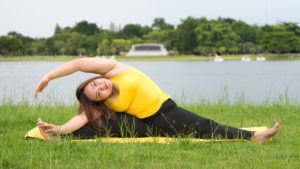
Exercise and Type 2 Diabetes
Did you know that diabetes affects nearly one-tenth of the U.S. population—a widening epidemic with more than 5,000 new cases per day (ADA 2013)? Type 2 diabetes, formerly called non-insulin-dependent diabetes or adult-onset diabetes, accounts for about 90% of diabetes cases (IDF 2014).

Prehabilitation Strengthening Exercises for Knee and Hip Arthroplasty
Fitness professionals may work in concert with a physical therapist to encourage a client to engage in “prehab” to maintain or enhance his strength preoperatively for knee or hip arthroplasty. (Shakoor et al. 2010). Pain is often a limiting factor, and it may be difficult for the client to participate in even the most basic daily activities. Below are a few suggested exercises.
KNEE ARTHROPLASTY
Isometric quadriceps sets. Lie on back with legs extended. Tighten quads and push knee into mat/surface. Hold 10 seconds. Do 10 repetitions, 5 times per day.

How to Work With an Overweight Client
Inspired by fear. Kerry was afraid when she first reached out to personal trainer Sue D’Alonzo in March 2013. The lim itations Kerry’s body presented from carrying excess weight had become more severe. She feared these limitations would make it increasingly difficult for her to keep up with her young son, and she worried that trying to do so might result in injury. Kerry also dealt with nagging hip pain. Although Kerry expressed these concerns to her physician, she was never advised to lose weight. Eventually, Kerry turned to D’Alonzo for help.

How to Improve Function in Obese Adults
Mobility can be an issue for adults with obesity, and exercise can help. But is there a preferred method for improving functional capacity in this population? Researchers may have the answer.

Gym Helps Kids Across the Spectrum
Sometimes the best ideas are born of necessity. Dina Kimmel, a mother of two, experienced difficulty finding ways to support her autistic son’s development, so she took on the challenge herself and created a “sensory gym” in her home. After seeing her son’s success with it, Kimmel decided that this type of setting should be available to others, and she opened the first We Rock the Spectrum Kid’s Gym® for All Kids in Tarzana, California.

Interval Walking and Type 2 Diabetes
Interval-style training is all the rage. While high-intensity formats seem most prevalent, researchers have learned that a less strenuous version—interval walking—may benefit individuals diagnosed with type 2 diabetes.
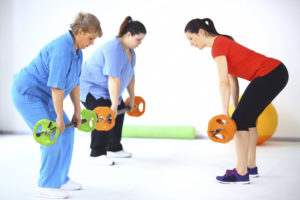
Resistance And Aerobic Training Recommendations for People With Type 2 Diabetes
Resistance Training Recommendations
Frequency. At least twice weekly on nonconsecutive days (Colberg et al. 2010); ideally at least three times a week. Colberg and colleagues propose that resistance training should be coordinated with other regular aerobic activities.
Intensity. For optimal gains in strength and insulin action, resistance training should be performed at moderate intensity (50% of 1-repetition maximum) or vigorous intensity (75%–80% 1-Rm) (Colberg et al. 2010).
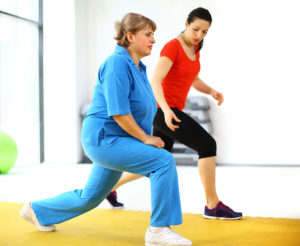
Diabetes & Exercise: What Every Fitness Professional Should Know
Diabetes affects nearly one-tenth of the U.S. popula- tion—a widening epidemic with more than 5,000 new cases per day and an economic cost of $245 billion per year (ADA 2013).

Prediabetes Rates Soar in England
Prediabetes, as described by the American Diabetes Association, is a precursor to type 2 diabetes. According to a new report, prediabetes rates in England tripled from 2003 to 2011.
“Prediabetes is a high-risk state for developing diabetes and associated complications,” explained the study’s authors. “The purpose of this paper was to report trends in prevalence of prediabetes for individuals aged 16 and older in England without previously diagnosed diabetes.”

Diabetes Trends
According to a study in the Annals of Internal Medicine (2014; 160 [8], 517–25), close to 21 million adults aged 20 and older had confirmed diabetes in 2010, and some sectors of the population were more likely than others to develop the disease.
Using data from the National Health and Nutrition Examination Surveys, the scientists looked at diabetes rates and diagnosis among adults in 1988–1994 and 1999–2010.*
Isometric Exercise Helps Hypertension
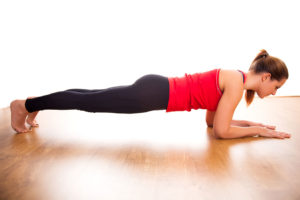
According to the U.S. Centers for Disease Control and Prevention website (www.cdc.gov/bloodpressure/facts.htm), 1 in every 3 adults has high blood pressure. A recent report suggests that isometric exercise—in which joint angle and muscle length do not change during muscular contraction—can be used to reduce and manage blood pressure.

Ownership of Certain Devices Linked to Obesity, Diabetes
Perhaps it’s no surprise that people who own computers, televisions and cars tend to be less active and may be more vulnerable to obesity-related diseases than people without these possessions. Now, researchers from Simon Fraser University in Canada and more than 20 other institutions around the world have collaborated to determine the level of risk that ownership of certain devices presents.

Exercise and Lifestyle Guidelines for People With Osteoarthritis
About 10 years ago, the CDC and the arthritis Foundation launched the national arthritis action Plan: a Public health strategy. This collaboration resulted in a landmark document with a consensus of lifestyle and exercise guidelines for people who suffer from chronic arthritis. here is a synthesis of the physical activity recommendations: