

Chronic Diseases

Why Those With Type 2 Diabetes Should Walk After Dinner
Reducing blood sugar levels is one step in managing type 2 diabetes, and some experts say walking regularly can help. A new study suggests that when walking takes place may make a difference.

35 Ailments, One Prescription: MOVE!
It’s not exactly news that physical activity and exercise have powerful health benefits. Indeed, it’s an insight almost as old as recorded history.
In the fifth century BC, the famous Greek physician Hippocrates observed, “All parts of the body, if used in moderation and exercised in labors to which each is accustomed, become thereby healthy and well developed and age slowly; but if they are unused and left idle, they become liable to disease, defective in growth and age quickly” (Kokkinos
&
Myers 2010).

The Impact of Chronic Pain
Use a three-pronged approach to help frail participants move better, get
stronger and improve their balance.
Did you know that more than 45% of Americans experience pain on a
regular basis? Are you one of them? Unfortunately, people tend to fall
into bad habits as the body adapts to, and becomes familiar with,
persistent pain (Duhigg 2012).
Cut Postmenopausal Breast Cancer Risk
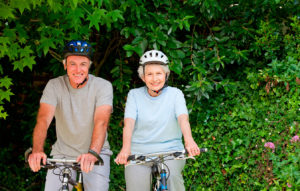
How much exercise is needed to reduce body fat—a known breast cancer risk factor—in postmenopausal women? That’s the question researchers explored in a study published in JAMA Oncology (2015; doi:10.1001/jamaon col.2015.2239).

Obesity Ups Cancer Risk in Black Men
According to researchers from the Fred Hutchinson Cancer Research Center and the University of Washington, African-American men have the highest rates of prostate cancer (both development and mortality) in the United States. Those same researchers have determined that obesity among this population makes the problem much worse.

Music Keeps Cardiac Patients Moving
Walk into most fitness facilities and you’ll likely hear some sort of music playing. Could that music be what motivates people to move more? For a group of cardiac rehabilitation patients, that was indeed the case.

Alzheimer’s and Diet
It’s never too early to talk about Alzheimer’s disease—even for a
nonmorning person like me. On a misty March morning in New York’s
financial district, I rushed across traffic and made it to the 8:00 am
continental breakfast just in time for the “Role of Nutrition in
Dementia Prevention and Management” conference, which was buzzing with
the world’s foremost nutrition epidemiologists and Alzheimer’s experts.

Chronic Pain in Fitness Professionals
An Objective Eye
It can be difficult to take a step back and be objective when it comes to your own health. Katy Bowman, MS, director of the Restorative Exercise Institute in Ventura, California, and author
of Move Your DNA: Restore Your Health Through Natural Movement (Propriometrics Press 2014), suggests you write down
the following:

Profiles of Pain and Perseverance
In February 2006, Danny Strong was on top of the world. After years of working as a gym manager, he had opened his own personal training gym, making his dream a reality. The husband and father was also eager to welcome a second child into the family. A month after receiving the keys to his new facility, he took his family on a trip to visit his godmother. While on the road, Strong lost control of his vehicle and was hit by a tractor-trailer traveling at full speed. His pregnant wife, Sandra Urbano Strong, was killed instantly.
Physical Activity in Middle Age Reduces Sudden Cardiac Arrest Risk
Need more help motivating your clients to stay active?
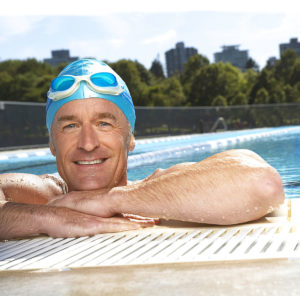
Scientists recently analyzed 1,247 sudden cardiac
arrest (SCA) cases to learn more about links between SCA events and sports participation. Study subjects were aged 35–65. Providing a boon to the active set, the researchers reported that only 5% of sudden cardiac arrests occurred during sports activities. Prevalence was higher in men and among those around 51 years of age. SCA survival rates were higher among active individuals than among those whose cardiac arrests were not sport related.

Major Risk Factors for Coronary Artery Disease
These are some of the factors that can increase the risk of developing atherosclerosis and coronary artery disease:

Four Heart Disease Facts
Developing a thorough understanding of coronary artery disease (CAD) can help fitness professionals fight one of the world’s deadliest diseases. ?
How deadly? For starters, CAD is the leading cause of death around the world, accounting for 13.2% of all deaths in 2012 (WHO 2014a). It kills almost 380,000 Americans every year (CDC 2014a). Exercise professionals can do something about these statistics by designing fitness programs that reduce CAD risk factors in clients while improving their quality of life. ?

How to Be an Empathetic Personal Trainer
New beginnings. When Patty Shoaf first met Barbara 19 years ago,
she realized quickly that this would be a client like no other. “I
arrived for a consult at her house and a classy, high-heeled,
67-year-old woman wearing a skirt walked in,” Shoaf recalls.
Tips for Working With Older Caregivers
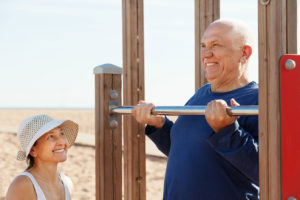
Adults over 50 who are caring for aging parents are not like other fitness clients of similar age.
For starters, caregivers tend to be less healthy. A study by the insurance company MetLife noted that “adult children 50+ who work and provide care to a parent are more likely to have fair or poor health than those who do not provide care to their parents” (MetLife 2011). Another study showed that 17% of caregivers felt their health had gotten worse as a result of their caregiving responsibilities (Feinberg et al. 2011).

Research Looks at the Brain; Diabetes
Two distinct mental strategies used to manage pain—focusing attention externally and re-appraising the pain—involve different brain pathways, according to new research using functional magnetic resonance imaging (fMRI). The study appeared in the journal Anesthesiology (2011, 115 [4], 844–51).

Self Myofascial Release for Seniors
Did you know it’s important to take care of the fascia—or connective tissue—in your body? The health of connective tissue is a serious concern for older people, as movement restrictions can make it hard for them to perform simple activities of daily living. The condition of our connective tissue depends on two factors—how old we are and what we have done in our lives to keep our tissue healthy, hydrated and flexible.
The Best Time of Day to Exercise for Individuals With Type 2 Diabetes
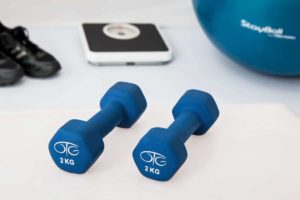
Do you have clients with type 2 diabetes? Perhaps you should think carefully about when to schedule their strength training sessions, say researchers.
The purpose of their study was to determine whether pre- or post-dinner resistance exercise (RE) would more effectively reduce the risk of cardiovascular disease in individuals with type
2 diabetes. The researchers noted that this group tends to have “abnormally” elevated postprandial glucose and triacylglycerol (TAG) concentrations, which are known risk factors for CVD.

Activity Requirements for Adults With Limited Mobility
While much of the population is physically able to meet the accepted exercise recommendations for improving health, many people are not. Research from the University Institute on Aging, at the University of Florida, Gainesville, indicates that even modest amounts of activity can prove beneficial for those with physical limitations.

Postmenopausal Women: Jump for Bone Health
Knee osteoarthritis (OA)—a progressive disease that destroys articular tissues and cartilage—affects about 13% of women aged 60 and older. According to a report published in the Caspian Journal of Internal Medicine (2011; 2 [2], 205–12), the percentage of the overall population affected by OA is expected to increase owing to the growth of the older-adult segment and to high overweight and obesity rates. However, this study shows there may a solution for women with mild knee OA: progressive-impact exercise.

Powerful Postures to Melt Stress
In today’s complicated world, just listening to the evening news on television or radio can raise cortisol rates in the body. High stress levels, combined with current technological advancements, almost unending sensorial bombardment, and the ever-changing dietary habits of many developed countries, can deny the body time for repose and resynthesis.