Consumer EducationShare With Clients
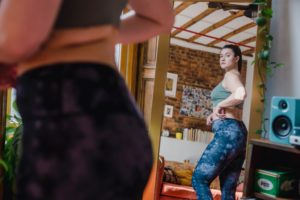
Body Image and the Fitness Industry
A look at why the fitness industry does indeed have a body image problem—and what we can do about it, starting now.

The Anatomy of Functional Training Risks
Many clients can’t seem to get enough of workouts that meld functional movements with high-intensity resistance training. Indeed, workouts using dynamic, high-intensity, full-body movements are great for strength and health—provided the body functions properly and exercisers use correct technique.
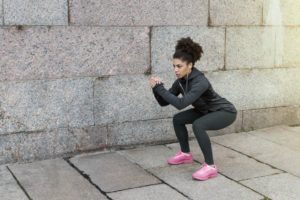
The Pelvic Floor: Base Support & More
Does the pelvic floor get the props it deserves? Many fitness professionals who specialize in women’s health think it warrants more respect and attention. Trista Zinn, founder of Hypopressives in Toronto, says the pelvic floor is “overlooked and misunderstood by many.” She adds, “Our quality of life and athletic performance literally rest on [the pelvic floor’s] synergistic ability to function with the core as a whole.”

Move 3 for Every 30
With most U.S. adults sitting 9–12 hours daily and the risks of inactivity becoming more apparent, the popular press and the scientific community concur that “sitting is the new smoking.” Indeed, there is mounting evidence linking sedentary lifestyles to cardiovascular diseases and all causes of mortality (Diaz et al. 2017).
Though the threat seems clear, one major question has puzzled researchers: Can people reduce their risks by taking short breaks in otherwise long periods of sitting still?
Your Epidermis Is Showing!
Some anatomy geeks get a kick out of asking unsuspecting people to name the largest system or external organ in the body. The answer: The integumentary system, of course, which includes the skin, hair, nails, and sebaceous and sweat glands (Springhouse 2002). Its main function is to protect the body from “the outside world” (bacteria, for example), but it also eliminates waste products, regulates body temperature and retains body fluids (AAAS 2017).

“How do you handle the situation when clients want to discuss political matters with you?
Handling political discussions during a training session can be tricky. Clients come to sessions stressed-out already, and talking politics does not help reduce their stress level. Living near Washington, D.C., many of my clients are involved in politics or hold positions that are severely affected by the new administration’s direction.

Getting Better at Recovery
A growing body of research is shedding more light on the importance of resting after exercise—providing vital clues on measuring and enhancing the recovery process. These insights are welcome news to personal trainers and coaches who see the consequences of overtraining and inadequate recovery every day. This column discusses some of the latest research on assessing and managing recovery and advises on tactics that may help your clients recover from exercise.

A Weigh-In a Day Keeps the Pounds Away?
Stepping on the scale daily may help women lose weight, according to a
new study. For 2 years, at intervals, 294 college-age women provided information on their self-weighing practices and underwent body mass index and body fat testing. According to the data, women who weighed themselves daily saw significant decreases in BMI and body fat percentage over time.

Recovery Tech—An Array of New Products, Services and Centers
New technologies, products and services are boosting the exercise-recovery business. What’s going on here?
The rising popularity of wearable devices is making people much more aware of their performance.
High-intensity interval training remains one of the most popular kinds of exercise.
Everyday exercisers can now afford treatments that were formerly reserved for pro athletes.

“How do you incorporate breathing strategies into clients’ workouts?”
Breathing strategies help keep clients focused on the movement and minimize distractions. When your clients take a deep breath just before a set, they can turn their thoughts inward and focus on proper body alignment, rather than moving the weight. This improves body awareness and posture and creates better engagement of the muscles needed for the lift.

The Functional Movement Screen and Active Older Clients
Study reviewed: Mitchell, U.H., et al. 2016. Performance on the Functional Movement Screen in older active adults. Journal of Sport and Health Science, 5 (1), 119–25.

Why Proper Rib-Cage Position Is Important
Proper thoracic-cage functioning sets the groundwork for healthy movement.

Music Listening, Meditation and Brain Fitness
Older adults may be able to enhance memory and brain fitness by meditating or listening to music, according to preliminary research findings reported in the Journal of Alzheimer’s Disease (2017; 56 [3], 899–916). West Virginia University researchers in Morgantown, West Virginia, conducted the study to determine whether simple mind-body practices could boost cognition or improve perceived memory loss among older adults with cognitive decline.

Health News: Fact or Fiction?
A flood of faulty health news information online has surged in the past few years, experts say. Fitness pros are hardly immune.

Mind-Body Exercise and Menopause
Are you in menopause? Chances are that you sometimes feel that you are not in control of your body! If you are seeking ways to cope with unpleasant menopausal symptoms, you may want to try yoga and other mind-body practices.
Shirley Archer, JD, MA, 2008 IDEA Fitness Instructor of the Year, an award-winning author and IDEA’s mind-body spokesperson, explains the research and application of mind-body exercise on menopause.
Irritability and Mood Swings

Get in the Game!
Fitness facilities compete to offer cutting-edge movement trends, but what about cutting-edge technology? The fitness world is becoming ever more virtual, and incoming clients are looking for more than a fun indoor cycling class or a cool cardio machine; they want to play a game!

Physical Literacy Is a Journey, Not a Destination
Steve Boyle is the CEO of the National Association of Physical Literacy (NAPL) and principal/founder of 2-4-1 Sports, a national organization that teaches children physical literacy using sports sampling through camps, clinics and school-based programming. Recently recognized by the Aspen Institute’s Sports & Society Program as one of eight model programs in the United States in the original Project Play report, 2-4-1 Sports embodies its motto, Life’s 2 Short 4 Just 1 Sport
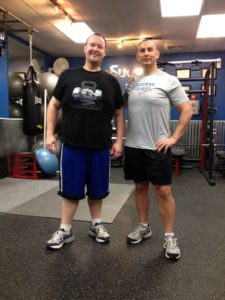
Weight Loss and the Resistant Client
client: Paul | personal trainer: Joe Carson, Wellness Coordinator, Spann Wellness Center | location: Tulsa, Oklahoma
The power of fear. It was early morning, and personal trainer Joe Carson had instructed his client, Paul, to complete a progressive-load “up-down” circuit that included a lat pull-down. The two had worked together for some time, so Carson knew that Paul was strong enough to finish.

Is There a Best Place to Wear a Heart Rate Monitor?
With heart rate monitors, where you place them may determine how accurate they are, according to data published in the Journal of the College of Cardiology (2017; 69 [11], 336).

Exercise and Children: Better Brain Health, Less Obesity, Less Stress
Physically active young people can do better in school and improve their self-expression, self-confidence and social interaction compared with more sedentary children (WHO 2017). Indeed, two studies published in 2017 underscore the value of children getting plenty of exercise.
Let’s take a quick look at this research. Study 1. Fitness and Academic Achievement