

Behavior Change/Health Coaching

Question of the Month: Thinking Beyond Chicken and Beef
It’s good news that more people have an appetite for alternative proteins, as there’s power in plants. A study in The Journal of Nutrition associated higher intakes of plant protein with a more nutritionally adequate diet. What’s more, a Finnish study found that men whose diet favored plant protein had a 35% lower risk of type 2 diabetes than those who ate more animal protein, according to a 2017 study in the British Journal of Nutrition.

Meditation: Part of a Heart-Healthy Lifestyle?
The American Heart Association has released a scientific statement noting that meditation has potential to reduce some heart disease risk factors and may be considered an adjunct to a heart-healthy lifestyle of good nutrition, physical activity and smoking cessation, combined with medical treatment for conditions like high cholesterol or high blood pressure.

Question of the Month
With the American Heart Association’s recent recognition of meditation and mindfulness practices and with meditation studios appearing in Los Angeles and New York City, it’s clear that these activities are going mainstream. Are you or is your facility integrating this trend into programs? For example, are you offering yoga and meditation classes or meditation-only sessions?
Share your responses with executive editor Joy Keller at jkeller@ideafit.com.

Resistance Training for Youth: 10 Tips for Success
Resistance training for youth can be a polarizing topic, mostly because of misconceptions about safety, injury rates and training techniques. Though parents and trainers alike often worry about the hazards of youth resistance training, research shows that it has a host of benefits—if it’s done properly.

All Types of Exercise Prevent Depression
Regular exercise of any intensity for as little as 1 hour per week can prevent depression in people of all ages and genders, according to findings by an international research team led by the Black Dog Institute in Randwick, Australia. The study monitored exercise levels and symptoms of anxiety and depression in 33,908 Norwegian adults for more than 11 years.

Body Image and the Fitness Industry
A look at why the fitness industry does indeed have a body image problem—and what we can do about it, starting now.
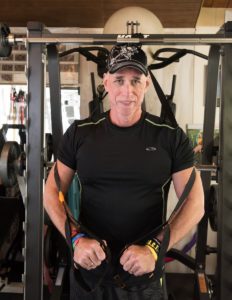
Personal Experience Inspires Client Success
client: John | personal trainer: Tony Phillips, president, Custom Fitness Solutions | location: Cookeville, Tennessee

Olympic Support Coach Talks Winter Games
In February, thousands of athletes from around the world will descend on PyeongChang, South Korea, with dreams of stepping onto a podium. Among them will be members of the U.S. speed skating team, who have received support from the Under Armour Performance Team.
Dan McDonogh, 2012 IDEA Fitness Instructor of the Year and UA senior manager of performance training, knows what it’s like to ready the athletes for competition:

Move 3 for Every 30
With most U.S. adults sitting 9–12 hours daily and the risks of inactivity becoming more apparent, the popular press and the scientific community concur that “sitting is the new smoking.” Indeed, there is mounting evidence linking sedentary lifestyles to cardiovascular diseases and all causes of mortality (Diaz et al. 2017).
Though the threat seems clear, one major question has puzzled researchers: Can people reduce their risks by taking short breaks in otherwise long periods of sitting still?

Your Epidermis Is Showing!
Some anatomy geeks get a kick out of asking unsuspecting people to name the largest system or external organ in the body. The answer: The integumentary system, of course, which includes the skin, hair, nails, and sebaceous and sweat glands (Springhouse 2002). Its main function is to protect the body from “the outside world” (bacteria, for example), but it also eliminates waste products, regulates body temperature and retains body fluids (AAAS 2017).

“How do you handle the situation when clients want to discuss political matters with you?
Handling political discussions during a training session can be tricky. Clients come to sessions stressed-out already, and talking politics does not help reduce their stress level. Living near Washington, D.C., many of my clients are involved in politics or hold positions that are severely affected by the new administration’s direction.

Training an Up-and-Coming Athlete
client: Lauren | personal trainer: Francesca Pucher, co-owner, Fitness 121 | location: Roseland, New Jersey
In search of progress. Lauren was just 13 years old when she first met Francesca Pucher, personal trainer and co-owner of Fitness 121 in Roseland, New Jersey. Lauren’s mom was working with Pucher and asked for some advice on how to help her daughter with her ice skating. She wondered if Lauren’s performance would improve if she incorporated some strength training into her weekly routine.

Getting Better at Recovery
A growing body of research is shedding more light on the importance of resting after exercise—providing vital clues on measuring and enhancing the recovery process. These insights are welcome news to personal trainers and coaches who see the consequences of overtraining and inadequate recovery every day. This column discusses some of the latest research on assessing and managing recovery and advises on tactics that may help your clients recover from exercise.

Exercise for Seniors
Certain types of exercise for seniors can lessen the chance that you develop more severe problems from the physical challenges of aging.

Recovery Tech—An Array of New Products, Services and Centers
New technologies, products and services are boosting the exercise-recovery business. What’s going on here?
The rising popularity of wearable devices is making people much more aware of their performance.
High-intensity interval training remains one of the most popular kinds of exercise.
Everyday exercisers can now afford treatments that were formerly reserved for pro athletes.

“How do you incorporate breathing strategies into clients’ workouts?”
Breathing strategies help keep clients focused on the movement and minimize distractions. When your clients take a deep breath just before a set, they can turn their thoughts inward and focus on proper body alignment, rather than moving the weight. This improves body awareness and posture and creates better engagement of the muscles needed for the lift.

Training a Competitive Equestrian
client: Rikki | personal trainer: Ajia Cherry, founder of Functional Innovative Training | location: Fairport, New York

Fueled to Perform
In the much-hyped Breaking2 event last spring, Nike®-sponsored elite marathoners tried to run the fastest-ever marathon, breaking the 2-hour threshold. Achieving such a feat—a 4:34-per-mile pace for 26.2 miles—would require extraordinary speed and stamina and exquisite attention to fueling and nutrition. Ultimately, Kenyan Eliud Kipchoge finished the Nike event in 2:00:25, a sliver short of his goal but still in record time—at a 4:36 pace!

The Smart Way to Move
Clients and attendees want to see results, and you want this, too. However, you’re with them a limited number of hours per week; you have little control over what they do when they’re not with you. What if you could provide additional tools that would help people reach their physical goals while also helping them make new neural connections?

The Functional Movement Screen and Active Older Clients
Study reviewed: Mitchell, U.H., et al. 2016. Performance on the Functional Movement Screen in older active adults. Journal of Sport and Health Science, 5 (1), 119–25.