

Behavior Change/Health Coaching
The Other 165 Hours
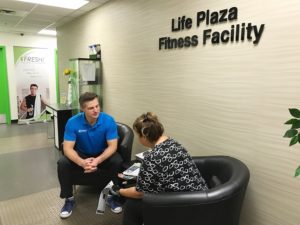
Things aren't always what they seem. Tim Borys, president and CEO of FRESH! Wellness Group, has a simple philosophy when it comes to coaching clients toward self–improvement. He believes that "outer circumstances rarely change until [the client's] inner voice and mindset are transformed," he says. However, too often, indviduals who seek guidance from a personal trainer emphasize external actions—like performing well during training sessions—as the primary roads to change, he adds.
Celebrating 35 Years of Inspiring the World to Fitness
Since its inception in 1982, IDEA Health & Fitness Association has aimed to build a community of like‐minded professionals who are the driving force behind greater health and wellness worldwide.

Coaching Your Fitness Clients: Inside Out
You don't need me to tell you—the research is in! Exercise is a breakthrough medicine. In the long term, it enhances the health of our brains and bodies. It improves neuroplasticity and learning (Hotting & Roder 2013) and helps us avoid, delay or treat many health issues, both physical and mental (CDC 2017). What's more, we don't need research to tell us we feel good and perform well if we exercise—when we move our bodies with enthusiasm and vigor, we get calmer and clearer, our energy increases, and we are more productive.

A Look at Meditation
Ezra Bayda and Elizabeth Hamilton, husband and wife, have been practicing Zen meditation for over 40 years and have taught for the last 20 at the Zen Center of San Diego. They lead retreats across the United States and in Australia and France and have led meditation in hospice venues and a retirement community. Katherine Watson, executive managing editor of IDEA Fitness Journal, interviewed them about the rising interest in meditation.
On-Demand and App-Based Training: Getting Clients via Smartphone
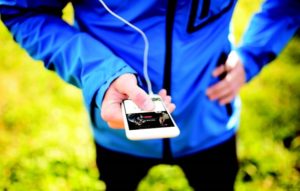
The on–demand economy—featuring Uber–style personal fitness training—is here. While app platforms vary in structure and locale, they share a common thread: on–demand connection with fitness experts.
On–demand mobile commerce attracts more than 22.4 million consumers and $57.6 billion in spending annually, with $8.1 billion going to health and beauty services that include fitness training, Harvard Business Review reported in April 2016.

To Help Clients Succeed, Keep Change Simple
Samuel L. Berry, MS, is a Master Trainer for the American Council on Exercise and for Functional Movement Systems. He serves a wide range of clients and athletes aged 11—81 who are working toward a variety of objectives. In addition to his roles as a trainer and educator, he has contributed to publications for Harvard Medical School, Encyclopedia of Sports Medicine, PTontheNet.com and prominent peer–reviewed publications such as The Journal of Pediatrics.

Walking Is Good for the Heart
Apples may keep the doctor away, but can we say the same for walking? With heart health, the answer could be yes, according to a study conducted by Binghampton University researchers and published in Creative Nursing (2016; 20 [4], 268–75).
Thriving After a Stroke
client: Gary | personal trainer: Tracy Markley, owner, Tracy's Personal Training | location: Florence, Oregon
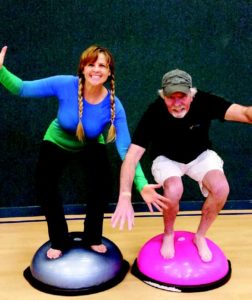
Surviving a stroke. In May 2014, 65–yearold Gary had a stroke so severe his doctors were skeptical he'd survive it. Fortunately they were wrong, but he suffered so much damage that physical therapists were initially convinced he'd be wheelchair–bound for life.

Aging and Cardiovascular Disease: Exercise to the Rescue!
Our species is long–lived compared with other primates. Chimpanzees, for instance, have a life expectancy of about 13 years versus 78.5 years for U.S. babies born in 2009 (Pringle 2013). Why such a big gap? Pringle says vaccines, antibiotics, sanitation, and access to nutritious vegetables and fruits year round give us a huge edge over our great–ape cousins, as does our acquired ability to fight off pathogens and irritants in our environments.

6 Ways to Help Clients Rediscover the Joy in Exercise
Getting people to move more begins with shifting the fitness conversation from tomorrow’s gains to today’s joy, experts say.

Improving Health Behaviors
Laura DeFina, MD, FACP, is president and CEO of The Cooper Institute®, as well as its chief science officer. After practicing general internal medicine and geriatrics, she joined The Cooper Institute in 2009 to pursue her interests in prevention and research related to healthy aging. Since then, she has authored manuscripts on, among other topics, brain health, healthy aging, depression, cardiorespiratory fitness and injury in physically active women.

Behavior Modification Strategies
Behavior modification can be a tricky thing when it’s just you and your client working through challenging issues. But what happens when others are proving to be obstacles to progress? IDEA asked a handful of fitness professionals how they assist or advise clients whose friends and family may be sabotaging their efforts to get healthy.
I often ask clients about their social habits and suggest, for example, that "girls' night out" could be replaced by a fun activity that does not revolve around eating. Discussing strategies with clients in preparation for events like that is often helpful.
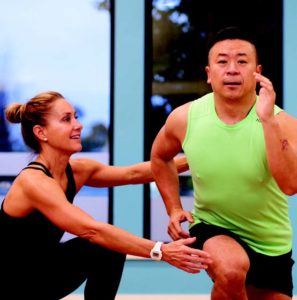
Personal Training and the Power of Listening
client: Christopher | personal trainer: Ginny Pietila, personal trainer and owner, MI Athletic lub | location: Mercer Island, Washington

How to Fortify Your Purpose and Bolster Your Business
It was 2014 and Jill McKay was at a critical juncture. For the past decade, she had thought of herself as "just a mom," yet recently the idea of founding a fitness organization had begun to consume her. The problem? McKay lacked both confidence and the know-how to get started. Soon, however, she'd find her first step—and the catalyst to fulfilling her aspirations—underneath the Christmas tree.

7 Principles for Outstanding Boomer Workouts
Do you teach or train generally healthy, moderate- to high-functioning baby boomers? Or are you thinking of directing more of your efforts to exercisers over 50? If so, be among the first to learn targeted principles you can weave into clients' or class participants' workouts.
Whether you're a small-class leader, a one-on-one trainer or a group fitness instructor, applying seven specific principles will allow you to offer the most effective sessions for midlifers and older boomers.

Can We Get All of Our Nutrients From Food?
You’ve probably come across this argument from nutrition gurus: Modern diets just don’t have enough of the nutrients we need from food.
A Simple, Attainable Action Plan
Jinger S. Gottschall, PhD, earned her doctoral degree in integrative physiology from the University of Colorado, Boulder, and furthered her academic career as a postdoctoral fellow in neurophysiology at the Emory University School of Medicine. She is currently an associate professor at Pennsylvania State University, University Park, with a research focus on the effectiveness of various exercise regimes.

Clinch Your Coaching Style
You look across the hall at Popular Instructor’s class and marvel at how she packs the house day after day, week after week. You’ve studied her style and tried your best to emulate her music, cuing, choreography—even the way she dresses—but your numbers are shrinking instead of growing. What are you doing wrong?

Cross-Training for the Career Win
A seasoned high school soccer player who has excellent shooting, passing, dribbling and heading skills walks into your office looking for a personal trainer to help her boost her game. To reach the next level—say, collegiate-quality—making her ball skills even better may not be what’s most important. To further excel, she will need to hold her own at control, speed, agility and strength. If she improves these abilities and combines them with her already exceptional ball skills, she’ll have the tools to become a strong, well-rounded college recruit.
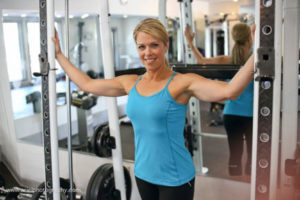
How This Trainer Helped Her Sister Lose 16 Pounds—And Keep It Off
Learn how she used an investigator’s approach to help her sister lose weight.