

Communication

How to Improve Function in Obese Adults
Mobility can be an issue for adults with obesity, and exercise can help. But is there a preferred method for improving functional capacity in this population? Researchers may have the answer.

How to Take the Stress Out of Performance Reviews
It’s annual review time again, and you feel the tension in the group fitness studio. Regardless of experience level, instructors tend to become anxious around “judgment day.” It’s a nerve-racking experience to have a supervisor watching your every move and jotting down notes.
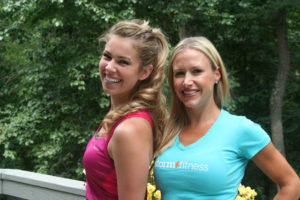
Foundations of New-Client Training
Knowing the client. When Jessica Storm, owner of Storm Fitness, meets with a new client, the assessment process begins immediately—often without the client realizing it. Storm first assesses emotional readiness. “You need to know where clients are starting from and get a clear understanding of how they could be motivated so that you can guide them in the appropriate direction,” she explains. Storm conducts this assessment through casual conversation—usually via telephone initially and in the first in-person meeting.

How do you establish relationships with and get referrals from medical professionals?
In a recent “Tricks of the Trade” column, IDEA asked some of its members how they establish relationships with and get referrals from medical professionals. Here are a few of their answers. How do you establish relationships with and get referrals from medical professionals? Share your answers in the comment box below.

How to Attract Clients With Obesity
The fitness industry is, by its own admission, good at “getting fit people fitter.” But with marketing materials rife with lithe, blond 20-somethings in revealing, brand-name yoga gear, it’s not surprising that people who are overweight and deconditioned find it hard to buy into the very fitness services that could help them shed pounds for good.

Toxic Talk in the Workplace
Imagine that your beloved group exercise director has just given her notice. She is a well-respected, long-term employee, and now you have to hire someone new. Group exercise staff members are shocked by the news, and they start talking—to each other, to members, to friends and to anyone else who will listen.
Getting Clients Through Training Plateaus
IDEA asked some of it’s members how they go about helping clients through their training plateaus. Here are a few of their responses:
Clients who have hit a plateau may need some additional tweaking of their program or lifestyle to get them to progress toward their goals. In my studio, we focus on the trifecta for success: nutrition, stress management and sleep.

Battling Big Media
The frustrating thing about these headlines is that, to the letter, they are not untrue. To date, there have not been any large, randomized studies that have shown that reducing sodium intake to 1,500 milligrams per day (as is advised for certain special populations) has a positive outcome. But it is clear that the majority of Americans are getting far more than the 2,300 mg per day that has been found to correspond with certain disease risk factors.
Question Of The Month
Are you using texting as a behavioral or weight loss intervention with your clients? What types of messages do you send, and how successful have you been?
Please share your ideas and experiences with editor in chief Sandy Todd Webster at swebster@ideafit.com.

Text Clients Toward Weight Loss
Not everyone uses text messages, but for those who do, fitness professionals can harness the power of technology to help clients get healthier, say researchers at Duke University.
Scientists followed 50 obese women who received either a daily text for weight loss intervention or used more traditional methodology, such as writ- ten food journals or computer-tracked journaling. Over 6 months, the 26 subjects in the texting group lost an aver- age of 3 pounds, whereas the 24 who journaled more traditionally actually gained 21?2 pounds.
Phone Etiquette for a New Age
Proper phone etiquette is essential in a health club environment. Many people prefer to call ahead to ask simple questions, rather than physically coming in. It’s their way of getting a “feel” for your facility. As a manager/owner, you want that introductory phone call to translate into a new membership. However, phone communication has degraded among young adults working the front desk, and it’s easy to see why.
“Do you email a newsletter to your clients? What content do you include?”
We send a newsletter every month to clients and others who have chosen to subscribe. We also send a follow-up email. The newsletter is a lot of work; the follow-up is not. The newsletter consists of about four articles covering latest news, fitness, food and wellness. We do our best to make sure each article relates in some way to services we provide.
Blogging for Financial Success
Blogging can provide a host of benefits for personal trainers and athletic coaches. It is a simple way to position yourself as an expert, and it’s an inexpensive means to boost your brand identity. You can also boost your income by using your blog to generate saleable content for booklets, minibooks, articles, manuals, eBooks and printed books. Apply these 15 simple recommendations, and build a blog that leads to business and financial success.

Do Fitness Pros Understand Clients With Obesity?
??In 1988, Joan Darragh tipped the scales at 288 pounds. During a trip to Japan, she had a defining moment. “I was in a bar, and I sat on a stool built for the slighter Asian frame,” says the New York City resident. “Suddenly, the bolts on my metal stool started to pop.” She tried to pretend it wasn’t her stool making that noise, but she still kept one foot on the floor.

Help Your Clients to Achieve Greatness
?You have been recruited to change a life. A young man is out of shape and headed toward a life of obesity and health complications. But he desperately wants to change. Perhaps you saw him on television during the 2012 Summer Olympics. He appeared on a Nike® commercial shot in a rural area near London, Ohio.
Mobilize Your Personal Training Staff
The fiscal year is coming to a close, and you have a chance not only for a successful final push but also to connect with your personal trainers in a way that inspires them. Use the following tips to build a cohesive team, empower your trainers and, ultimately, sell sessions.

How to Create Outstanding Outcomes
Part of your role as a group fitness instructor is to help students reach their fitness goals. This is not always an easy task. Each person has different objectives, as well as unique obstacles to overcome. If you can understand some of these factors, you’ll be in a better position to meet participants’ needs, and you’ll be a more effective teacher, coach, motivator and leader.
Managing Multiple Locations
Have you ever noticed that the most successful facilities are full of enthusiastic employees who radiate happiness? How does that happen? It starts from the top down, with leadership.
5 Tips for Successful Online Communication
Amanda Vogel Interview.m4v

First-Session Success
“I’m terrified of change, even if it will improve my life.”
“I hate asking for help or admitting that I do not know something.”
“I avoid environments that are unfamiliar or that make me feel out of place.”
“I don’t believe that my own personal shortcomings are a source of my problems.”
“I will defend what I believe, even though it may not be right.”
For many people, those statements are true.