

Chronic Diseases

A New Way to Combat High Blood Pressure During Menopause
Researchers have linked menopause with arterial stiffness and high blood pressure. A recent study of Korean women, led by The North American Menopause Society, suggests that taking the stairs is a good way to manage those conditions.

The Best Exercise for Alzheimer’s Disease
If you were asked to choose among cardiovascular exercise, resistance training and a combination of both to help people with Alzheimer’s disease, what choice would you make?
Researchers from the University of Connecticut wanted to understand the effects of exercise—if any—on cognitive decline in those at risk of or diagnosed with Alzheimer’s. The scientists performed a meta-analysis of 19 studies (23 exercise interventions) featuring 1,145 adults aged 77 ± 7.5 years.

Strength Training May Increase Life Span
Here’s more motivation for clients to add strength exercises to their fitness programs: New research shows that strength training plays an important role in reducing risk of premature death from all causes and, specifically, from cancer—and when it comes to cancer, strength work may be even more beneficial to health than aerobic training.

Exercise’s Impact on Cancer
There are three ways to look at battling cancer. For those who don’t have it, lowering risk is the primary goal. For those who’ve had it, successfully recovering and, of course, reducing the chances of recurrence are of utmost importance. For those who currently have it, the priorities are getting rid of it and minimizing the harmful effects that both the disease and the treatment have on the body. Exercise has been shown to help with all three.

What Fitness Pros Need to Know About New Blood Pressure Guidelines
New guidelines on high blood pressure made headlines late last year because they suggest that nearly half of all Americans have hypertension—up from about one-third under previous guidelines. This is big news for fitness professionals because regular exercise is an excellent tool for regulating blood pressure. In this issue, we’ll review what you need to know about the new blood pressure guidelines.

Pillars of Functional Training for Active Aging
Healthy aging is more than the absence of disease, according to the World Health Organization (WHO): “For most older people, the maintenance of functional ability has the highest importance” (WHO 2015). Colin Milner, founder and CEO of the International Council on Active Aging in Vancouver, British Columbia, echoes these comments. “When looking at the healthy aging market today, the focus is all about function,” he says.

130/80 = High Blood Pressure
For the first time since 2003, the American College of Cardiology and the American Heart Association have produced a substantial report updating blood pressure recommendations. People with a reading of 130/80 are now classified as having high blood pressure. This is down from 140/90.
According to the ACC, this means 46% of U.S. adults will now be categorized as having hypertension.
Those in the “hypertensive crisis” category require medication intervention and immediate hospitalization if there is organ damage, according to the report.
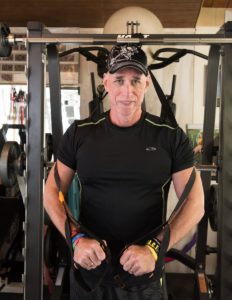
When the Client Is You
client: Frank | personal trainer: Frank McKenna, MEd, owner, Beach Better Bodies | location: Virginia Beach, Virginia
A dire situation. In the summer of 2016, personal trainer Frank McKenna received news he never expected to hear. At age 56, he had recently completed his own physical transformation and was arguably in tiptop shape, so when his doctor told him he had stage 4 lung cancer, he was stunned.

Strength Training and Type 2 Diabetes
A regular exercise program can help people with type 2 diabetes to manage blood sugar levels and maintain or improve fitness levels and overall health.

Some Cancers Are a Weighty Issue
About 40% of cancer cases are related to overweight and obesity, according to a new report from the Centers for Disease Control and Prevention.

Mindfulness, Stress and Blood-Sugar Regulation
A Penn State University study found that women with overweight or obesity had significantly lower levels of stress and fasting glucose after participating in a mindfulness-based stress reduction [MBSR] program. Researchers evaluated the effects of MBSR on cardiometabolic outcomes in 86 women with overweight or obesity. The 8-week MBSR program—which consists of group training in mindfulness, stress reduction, mindful movement and meditation—includes weekly 2.5-hour sessions, one 6-hour retreat and a recommendation of daily home practice.

Alzheimer’s and the Joy of Exercise
Today, approximately 5.5 million adults in the United States have Alzheimer’s disease (AD). By the year 2030, people aged 65 or older will make up 20% of the country’s total population, and the number of adults with AD is projected to reach 8.4 million (Alzheimer’s Association 2017a).

CrossFit® Benefits People With Type 2 Diabetes
A common characteristic among people with type 2 diabetes is dysfunction of beta cells, which are responsible for storing and releasing insulin. New research suggests that high-intensity training workouts may help to restore beta-cell function.

“What are your suggestions for working with clients who have exercise-induced asthma?”
Asthma is nothing to ignore or minimize in your clients. Even if asthmatic clients haven't had an episode in a long time, you need to keep asthma at the forefront of your mind throughout your programming and during their sessions.

Exercise Lowers Breast Cancer Return Risk
Thirty percent of women who overcome breast cancer experience a recurrence (www.breastcancer.org). Recently, scientists reviewed 67 studies to determine whether lifestyle choices—like physical activity, alcohol intake, diet and smoking—had links to recurrence. The goal was to help women make changes in lifestyle that might prevent the disease from returning.
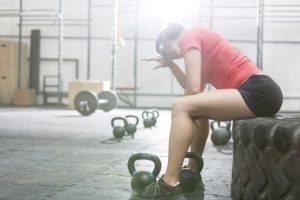
Getting the Facts on Fatigue
Fatigue is a crucial concept for exercisers because it represents the point where they fail to complete a set or feel too exhausted to continue a long-distance run or other endeavor. Fatigue fascinates researchers because it reflects mental, chemical and mechanical processes that affect muscle performance. Indeed, the physiology of fatigue recently inspired the journal Medicine & Science in Sports & Exercise to devote a special section to the topic.
I'll review highlights from the journal's special section in a question-and-answer format:
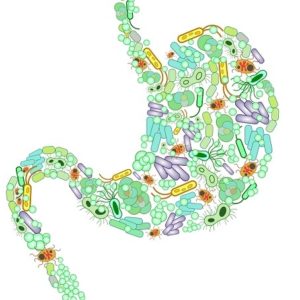
Does Exercise Benefit Digestive Health?
Gut microbiota has been a hot topic recently, and for good reason, as it is a key indicator of health. Gut microbiota contains trillions of micro-organisms, including at least 1,000 species of known bacteria, with more than 3 million genes (Gut Microbiota for Health 2016). There are many benefits to having a healthy gut, including but not limited to
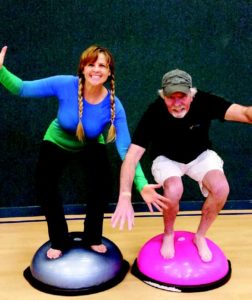
Thriving After a Stroke
client: Gary | personal trainer: Tracy Markley, owner, Tracy's Personal Training | location: Florence, Oregon
Surviving a stroke. In May 2014, 65–yearold Gary had a stroke so severe his doctors were skeptical he'd survive it. Fortunately they were wrong, but he suffered so much damage that physical therapists were initially convinced he'd be wheelchair–bound for life.
Aging and Cardiovascular Disease: Exercise to the Rescue!
Our species is long–lived compared with other primates. Chimpanzees, for instance, have a life expectancy of about 13 years versus 78.5 years for U.S. babies born in 2009 (Pringle 2013). Why such a big gap? Pringle says vaccines, antibiotics, sanitation, and access to nutritious vegetables and fruits year round give us a huge edge over our great–ape cousins, as does our acquired ability to fight off pathogens and irritants in our environments.

Obesity and Cancer Tie in Survey as Top Health Threat
Americans seem to understand the personal health risks of obesity, but widespread confusion persists about the causes and treatments of the disease, says a new survey from the American Society for Metabolic and Bariatric Surgery (ASMBS) and the independent research organization NORC at the University of Chicago.