

IDEA
Tag Archives

Intermittent Fasting and Training Adaptation
Intermittent fasting remains a popular dietary approach, often used for weight management and metabolic health. However, its interaction with training is less clear. Some individuals report improved adherence, while others experience reduced energy during workouts. Training quality may be influenced by timing, especially for higher-intensity sessions. Clients may need to align eating windows with training…

Sodium Intake and Sweat Loss
Sodium needs can vary widely, particularly among individuals who sweat heavily or train in hot environments. While general guidelines often emphasize limiting sodium intake, athletes and active individuals may require more to maintain fluid balance. Failing to replace sodium losses can contribute to fatigue, cramping and decreased performance. At the same time, excessive intake without…

Plant-Based Diets and Protein Quality
Plant-based diets continue to gain popularity, raising questions about protein quality and adequacy. While plant proteins can support muscle maintenance and growth, they may require more careful planning to ensure sufficient intake of essential amino acids. Combining different protein sources and increasing total intake can help address these concerns. For many clients, this is less…

Caffeine Use and Training Consistency
Caffeine is commonly used to enhance performance, particularly in endurance and high-intensity training. While it can improve alertness and reduce perceived effort, habitual use may reduce its effectiveness over time. This raises questions about how often it should be used. Some athletes reserve caffeine for key sessions or competitions to maintain its impact. Others use…

Reversing Out of Dieting: Programming for Clients Increasing Calories After Fat Loss
Fat loss interventions are typically characterized by a high degree of structure, with caloric intake deliberately constrained, training variables carefully managed and progress evaluated against clearly defined outcomes. Once that phase concludes, however, the same level of structure is rarely maintained. Caloric intake increases, dietary restrictions are relaxed and training often continues without meaningful adjustment, as though the physiological conditions…

An AI Prompt-Writing Clinic for Fitness Professionals to Turn Blank Pages to Business Assets
Why Most AI Outputs Fall Flat AI tools are easy to access, but harder to use well. Most fitness professionals try them once or twice, get mixed results and move on. The problem usually is not the tool, it is how the request is written. When the prompt is vague, the output follows suit. Broad…

Hydration for Summer Training: Beyond Water and Into Performance
Why Hydration Changes in the Heat Hydration is often treated as a simple variable. Drink enough water, avoid dehydration and performance should hold. In cooler conditions, that approach usually works, however in the heat it starts to fall apart. As temperatures rise, the body leans more heavily on sweating to regulate temperature. Fluid loss increases,…

Aging Isn’t Linear: How Capacity Changes Across the Lifespan
Why the Linear Model Falls Short Aging is often framed as a steady, predictable decline. Strength decreases over time, recovery slows, performance tapers in a gradual, almost uniform way. It is a clean model, but it does not match what most clients experience. In practice, capacity rarely moves in a straight line, it shifts. There…

Hack vs Hype: Is Stacking Your Recovery Methods Strategic Integration or Expensive Redundancy?
Why “Stacking” Has Become Popular Recovery has become its own category. What used to revolve around sleep, nutrition and basic rest now includes a growing list of tools, devices and protocols aimed at accelerating progress. Red light therapy, wearable trackers, recovery supplements, compression systems and contrast treatments are rarely presented as standalone options. More often,…

Strength Training Outdoors Is Gaining Popularity
With longer days and warmer weather, more people are taking their workouts outside—and strength training is no exception. Parks, beaches and open spaces provide opportunities to use body weight, resistance bands or portable equipment. Outdoor training can also increase motivation, reduce perceived effort and add variety to your routine. From a programming perspective, the fundamentals…
Protein Timing Is Back—But With a More Practical Approach
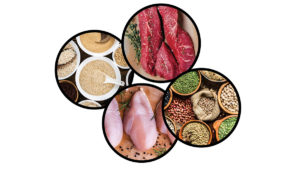
Protein has always been essential for muscle repair and recovery, but the conversation around when to consume it is evolving. Rather than focusing only on post-workout shakes, current guidance emphasizes distributing protein intake more evenly throughout the day. This supports muscle protein synthesis and helps maintain lean mass—especially for active individuals. For many people, this…

Hydration Isn’t Just About Water Anymore
Summer heat brings a renewed focus on hydration, but the conversation has evolved. It’s no longer just about drinking more water—it’s about hydrating effectively. When you sweat, you lose not only fluid but also electrolytes like sodium. Replacing both can help maintain energy, performance and overall well-being—especially during long outdoor workouts or travel. This doesn’t…

Why Zone 2 Cardio Is Having a Moment This Summer
If your workouts have felt overly intense or hard to sustain, you’re not alone. This summer, more people are shifting toward Zone 2 cardio—a lower-intensity approach that supports endurance, fat metabolism and recovery. Zone 2 refers to a heart rate range where you can still hold a conversation while exercising. Think brisk walking, easy cycling…

Testosterone Optimization in 2026 Focuses on Lifestyle Precision Over Quick Fixes
Interest in testosterone health has surged in recent years, but the conversation is shifting. Rather than focusing narrowly on supplements or quick fixes, current best practice emphasizes lifestyle-driven testosterone optimization. This is a multidimensional approach grounded in training, recovery, nutrition and metabolic health. Why Testosterone Still Matters Testosterone plays a central role in muscle protein…

Editor’s Letter: This Week at IDEA World: Connection, Learning, and Global Growth
This week, our community comes together at IDEA World. Across disciplines, roles, and regions, fitness professionals are gathering in National Harbor, Maryland for one of the most meaningful moments of the year — the 2026 NIRSA + IDEA World Conference & Expo. And if you’re nearby, there’s still time to be part of it. IDEA…

The Case for Flexible Program Design
The Illusion of Control in Program Design Strength training culture has long prized precision. Percentage charts, loading tables, volume prescriptions and mesocycle templates offer the appearance of scientific certainty. A program is written, sets and repetitions are assigned and progression is mapped in advance. If the client follows the plan, improvement is expected to follow.…

Training the Mind Through the Body
The Mind–Body Divide That Never Truly Existed For much of modern fitness culture, the body and mind have been treated as separate domains. Strength training was treated as physical work, therapy as mental work and stress management was often separated from performance enhancement altogether. This division was always artificial, because physiology does not respect psychological…

The Hidden Biology of Strength
Skeletal muscle has traditionally been defined by what it allows the body to do. It produces force, enables locomotion, stabilizes joints and supports posture. In fitness settings, conversation often centers on size, symmetry or performance output, while clinical discussions frequently reduce muscle to strength scores or mobility measures. This view, however, is incomplete. Over the…

The Importance of Muscular Power in Healthy Aging
Why Power Deserves Its Own Conversation Muscular power is the ability to generate force rapidly. Mechanically, it reflects force multiplied by velocity. In practical terms, it determines how quickly the body can respond to a demand. Strength answers the question of how much force can be produced, while power answers how fast that force can…

Snacking Patterns May Influence Energy Intake
Snacking behavior has become increasingly common, particularly in environments with constant food availability. Researchers are studying whether snack timing, composition and portion size influence overall daily caloric intake. Evidence suggests snacks that contain protein, fiber and healthy fats may promote satiety more effectively than highly refined carbohydrate options. Snack quality may therefore matter more than…
ad placeholder
ad placeholder