


Too Much Sitting Accelerates Aging, Dementia Risk
Scientists have linked extended bouts of sitting with increased risk of heart disease; certain types of cancers; pain and injury; early mortality; and more. Two new studies add to the long list of potential risks associated with sitting too long.
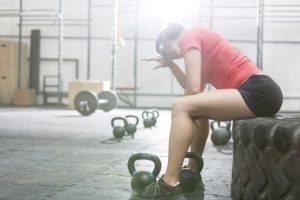
Getting the Facts on Fatigue
Fatigue is a crucial concept for exercisers because it represents the point where they fail to complete a set or feel too exhausted to continue a long-distance run or other endeavor. Fatigue fascinates researchers because it reflects mental, chemical and mechanical processes that affect muscle performance. Indeed, the physiology of fatigue recently inspired the journal Medicine & Science in Sports & Exercise to devote a special section to the topic.
I'll review highlights from the journal's special section in a question-and-answer format:

Training the Pelvic Core
"I wish someone had told me this could happen to my body after having a baby!" . . . "Why did my doctor tell me I could return to exercise at my 6–week checkup?"

Heart Disease and Women in Their 50s
For women younger than 65 years old, depression is emerging as a significant risk factor for coronary artery disease (CAD). Researchers from Reading Hospital and Medical Center in West Reading, Pennsylvania, noted the distinction by age in a study presented at the 2016 Annual Meeting of the North American Menopause Society (NAMS) in Orlando, in October. The study included 1,084 women with a mean age of 54.8 years at the beginning; for 10 years, investigators collected data on heart disease and established risk factors in these women.

Yoga Guidelines for People With Glaucoma
People with glaucoma, the leading cause of irreversible blindness in America, may require specific modifications when practicing yoga. As many as 3 million Americans have glaucoma, but only half of them know they have it, according to the Glaucoma Research Foundation.

Pilates For Postmenopausal Women?
Can Pilates mat exercises help early postmenopausal women to gain strength and flexibility and reduce menopausal symptoms? Korea University researchers wanted to find out, as little research exists on this group.
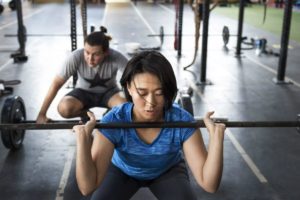
Weightlifting Helps Breast Cancer Survivors
According to Lynn Panton, PhD, professor of exercise science at Florida State University, breast cancer survivors are often discouraged from lifting weights after treatment, for fear it could cause lymphedema, or swelling of the arms and/or legs. Panton, however, facilitated a study that suggests otherwise.

Americans Spend Billions on Complementary Care
The market for services such as yoga therapy, meditation and other mind-body methods of complementary care, as well as complementary health products, continues to grow, according to survey data published by the Centers for Disease Control and Prevention.

Improving Health Behaviors
Laura DeFina, MD, FACP, is president and CEO of The Cooper Institute®, as well as its chief science officer. After practicing general internal medicine and geriatrics, she joined The Cooper Institute in 2009 to pursue her interests in prevention and research related to healthy aging. Since then, she has authored manuscripts on, among other topics, brain health, healthy aging, depression, cardiorespiratory fitness and injury in physically active women.

Menopause Symptoms: Can Yoga Help?
"Joanne," aged 51, presents with hot flashes and vaginal atrophy. She feels depressed, anxious, irritable, fatigued and not as confident in herself as she once was. Somehow she feels out of control. Her body is behaving unpredictably: She doesn't know when her next hot flash is coming or how to control the fat that is shifting up toward her waist.

Alcohol and the Snack Attack
Ladies, ever had a case of
the munchies after drinking a cocktail or a glass of wine? This “ape?ritif effect” is well known, but now science can explain it.
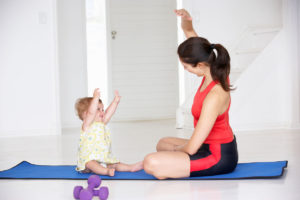
Meeting the Wellness Needs of Mothers
As a fitness or wellness professional, you are dedicated to making a difference on this planet. Training clients who are mothers is one of the most life-affirming roles you can have, because your influence and guidance may have a multigenerational impact.

Functional Training for Pregnancy
Are you pregnant? Did you know that a woman’s body will change more in 9 months of pregnancy than a man’s will in his lifetime—and that you need an exercise program to match the transfor- mation? So says maternal exercise expert Farel Hruska, national fitness director of FIT4MOM® (a brand that includes Stroller Strides®) in San Diego. “A mom- to-be will need to master strength, agility, balance, speed, acceleration, deceleration, directional change and rotation . . . all with a load that increases every day,” she explains.
“What do you need to consider when training perimenopausal, menopausal or postmenopausal women?”
Perimenopause presents an array of challenges for women, including mood swings, depression, irritability and sleep disturbances. Pilates is an excellent way to improve a woman’s mood and ability to sleep, as well as increase her energy. The breathing techniques used in Pilates calm and relax the mind. The weight gain around a woman’s midsection, which often accompanies menopause, can be reduced with Pilates.
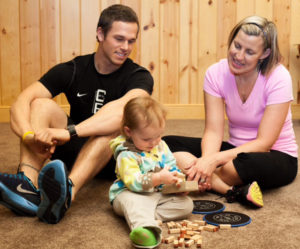
Pre- and Postnatal Training
Fit for her family. Personal trainer Matt Browne was first introduced to Michelle by a mutual friend in 2012. The two shared a hometown connection and immediately traded anecdotes about growing up in the small river town of Winona, Minnesota.
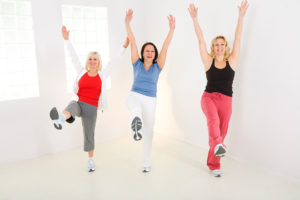
The Fountain of Youth for Older Women?
An examination of the scientific literature on exercise sheds light on how regular physical activity impacts physical and mental decline and early mortality among postmenopausal women. The researchers also identify which types of exercise may be best for this growing population.
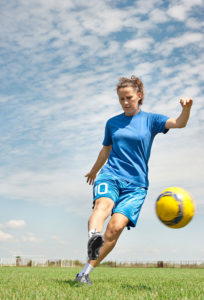
Females, Football and Fitness
The 2014 World Cup is now just a memory; however, researchers have discovered that playing soccer (or football) can provide significant health benefits for women aged 35 and older with mild hypertension.
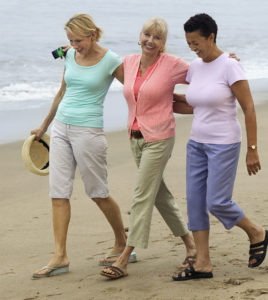
Exercise Levels and Stroke Risk in Women
According to the National Stroke Association, 425,000 women in the United States suffer a stroke each year. To ward off potential stroke risk, many experts encourage women to exercise regularly. But how much exercise is enough to minimize the possibility of experiencing a stroke? The answer may surprise you.
According to researchers from the Beckman Research Institute at the City of Hope in Duarte, California, moderate-intensity exercise—such as a brisk walk— can cut stroke risk by 20%.
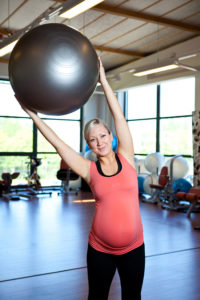
Functional Fitness for Pregnancy
A woman’s body will change more in 9 months of pregnancy than a man’s will in his lifetime—and she needs an exercise program to match the transformation. So says maternal exercise expert Farel Hruska, national fitness director of FIT4MOM® (formerly Stroller Strides®) in San Diego. “The biomechanics of motherhood are unique and specific,” Hruska explains. “A mom-to-be will need to master strength, agility, balance, speed, acceleration, deceleration, directional change and rotation . . . all with load that increases every day.”
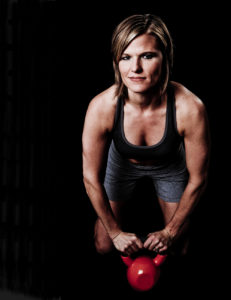
Women, Strength Training and Diabetes
Here’s more motivation to get your female clients interested in lifting weights: Strength training can help to ward off diabetes.
The researchers, from the Harvard School of Public Health in Boston and the University of Southern Denmark, analyzed data from 99,316 female participants in the Nurses’ Health Study and the Nurses’ Health Study II. The women, aged 36–81, did not present with diabetes, cancer or cardiovascular disease at the beginning of the 8-year study.