

Functional Aging/Older Adults
Seniors’ Fear of Falling: How You Can Help
With the Baby Boomer population aging, movement professionals have to become more prepared to meet the needs of older adults. And while it may be tempting to think seniors need less when it comes to program development, clients of advanced age actually need more.
6 Older Adult Training Trends You Will Find at This Year’s IDEA World Fitness Convention™
The U.S. population is aging, which makes now the perfect time for fitness professionals to learn more about training older adults. According to the U.S. Census Bureau, by 2050, one in every five Americans will be considered a senior. The U.S. Census Bureau also predicts that between now and 2030, the 65 and older population will grow an average of 2.8% annually.

Applying the PERMA Model
PERMA-based fitness training can pack a positive punch for IDEA fitness professionals looking to contribute to the well-being of our fast-growing population of active older adults.
What Is PERMA?
PERMA is devoted to developing social and mental strength, which can be very helpful in motivating older exercisers. The acronym was coined by Martin Seligman, considered the father of modern positive psychology, in Flourish:
Pilates: Keep Older Adults Injury Free
Pilates is a powerful tool for countering the aging process, but it must be taught and practiced safely. Here, three Pilates experts and educators share their experience and recommendations on how to work with mature clients: Lisa Graham owns Agile Monkey in Santa Cruz, California, and is a Balanced Body® faculty member; Rael Isacowitz, MA, is the founder and owner of Basi Pilates®; and PJ O’Clair owns clubXcel and Northeast Pilates, a STOTT PILATES® Licensed Training Center.
Biomechanics & Physiology
Functional Strategies for Older Adults
Exercise for older adults is one of the hottest specialties in fitness today. How do you assess function levels and develop safe, challenging programs? We asked instructors to tell us about their strategies for senior clients.

Suspension Exercise for Older Adults
Suspension exercise (SE) is a popular way to get fit for many people, and it’s no secret as to why. This method of exercise, where an apparatus attached to a single overhead anchor point supports the hands or feet, offers numerous benefits. Due to its popularity and the results people see from performing SE, programming has evolved to a point where fitness professionals are introducing it to their older-adult clients in the 65–80 and older age range.

Addressing the Fear of Falling in Seniors
With the Baby Boomer population aging, movement professionals have to become more prepared to meet the needs of older adults. And while it may be tempting to think seniors need less when it comes to program development, clients of advanced age actually need more.
It’s not enough to modify the intensity or safety of their fitness programs. It’s also essential to understand how the mindset that older clients bring to a session—in this case a fear of falling—can influence their exercise needs.
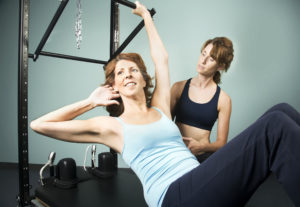
Pilates Safety Concerns for Older Adults
The Graying of America is a reality. The U.S. Census projects that nearly 1 in 5 of the nation’s residents will be 65 or older by 2030 (AOA 2011). As…

More Evidence That Physical Activity Lessens Cognitive Decline
New research, published in Neurology (2012; [78], 1323–29), adds to the growing evidence that physical activity can reduce cognitive decline and slow progression of Alzheimer’s disease. The significance of this…
Effective Verbal Feedback for Older Clients
Senior exercisers learn differently than younger ones do. They also process information differently from younger exercisers, and they react differently to the same information. This means trainers need to know
whether to give feedback, and how to give it;
when to give feedback—whether during a movement or once it’s completed; and
what exactly to focus on and what to say.
Giving effective verbal feedback during exercise—knowing what to say and when to say it—is essential to the fitness success of older clients.
Are You a Role Model for Your Older-Adult Clients?
Editor’s note: In the April 2012 issue, Mind-Body-Spirit News section, we asked readers what mind-body programming they were offering specifically for older adults. Here is one reader’s response:
Older Adults Log More Physical Activity
When comparing physical activity levels of younger people to those of older people, it’s often assumed that the younger group wins out. This belief turns out to be incorrect, at least according to a recent survey by GlaxoSmithKline (GSK)—a research-based pharmaceutical and healthcare company headquartered in London.

Active-Aging Stretches
People invest a lot of money in the search for eternal youth. But one of the most effective, inexpensive and pain-free ways to look and feel younger is to exercise and perform daily stretches that ward off kyphosis (rounding of the thoracic spine, resulting in a hunched shape); that keep the spine mobile; that lengthen the quadriceps to help sustain a tall, lifted posture; and that maintain a healthy range of motion in the hips.
Swimming Associated With Lower Blood Pressure in Older Adults
Want to help your pre- or borderline hypertensive clients improve their health? Tell them to take a swim. Regular swimming is a popular form of exercise for people seeking low-impact options. Researchers now suggest that it may also help reduce blood pressure and improve vascular function among older adults. In a study published in The American Journal of Cardiology (doi: 10.1016/j.amjcard.2011.11.029), 43 adults with prehypertension or stage 1 hypertension who were not using medication were separated into a swim group and a gentle relaxation exercise group for 12 weeks.
Is Exergaming Better for Older Adults Than Traditional Exercise?
Video games may be primarily the domain of the younger set, but scientists are suggesting that older adults go virtual to help preserve brain function. Published in the American Journal of Preventive Medicine (2012; 42 [2], 109–19), a recent study of 102 participants aged 55 and above, found that exergaming may be more effective than traditional exercise at improving cognitive function. The participants were separated into two groups: a cybercycle group and a recumbent cycle control.

91-Year-Old Yoga Instructor Sets World Record
While B.K.S. Iyengar may still be teaching at 93, Guinness World Records has awarded the distinction of “oldest yoga instructor’ to Bernice Bates, a 91-year-old who instructs yoga at the Mainlands Retirement Community Center in Pinellas Park, Florida. Bates has been practicing and teaching hatha yoga since about 1960, according to Today.com. She currently offers a once-weekly hourlong yoga class that includes 10–12 poses and ends with relaxation. Personally, she practices several postures before getting out of bed every morning.
Tufts Unveils MyPlate for Older Adults
You already know that the older adults you work with have unique physical activity needs, but do you know that their nutrition needs are just as singular?
Medicare to Add Obesity Counseling Coverage
A press release from the Centers for Medicare & Medicaid Services (CMS) reported that more than 30% of men and women who receive Medicare are considered obese. Medicare will begin offering those individuals obesity screening and counseling as part of a preventive services package under the Affordable Care Act. Primary care physicians administer the screening and then refer eligible individuals for counseling. A referred individual will receive once-
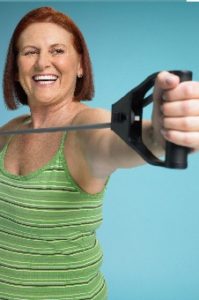
Functional Training for Mature Adults
I want to express my gratitude for the thoughtful and thorough review of training for seniors in “The Significant 7: Principles of Functional Training for Mature Adults” (January 2012) by Cody Sipe, PhD, and Dan Ritchie, PhD. They nailed some of the salient features of errant training concepts and methods that I have seen by trainers who just don’t understand the needs of the elderly.