
Active Design: How Built Environments Shape Movement Habits
Why the spaces people live, work, and move through matter as much as motivation when it comes to physical activity and health.

Physical activity does not occur in isolation. It is shaped, enabled, or constrained by the environments people move through every day. Sidewalks, staircases, parks, bike lanes, transit stops, and building layouts quietly influence whether movement feels convenient, safe, and integrated into daily life or effortful and avoidable.
Active design refers to the intentional shaping of built environments to encourage movement as part of normal routines. Rather than relying on structured exercise alone, active design embeds opportunities for walking, climbing, carrying, and transitioning into the spaces where people live, work, and gather. For fitness professionals, understanding how environments shape movement habits expands the lens of health beyond individual motivation and highlights the role of access, design, and sustainability in physical activity patterns.
This article explores how walkability, access, and environmental design influence movement behaviors, and how these factors intersect with health equity and long-term participation in physical activity.
What Active Design Means in Practice
Active design encompasses architectural, urban planning, and infrastructure choices that make movement a natural part of daily life. This includes features such as connected sidewalks, visible and inviting staircases, accessible green spaces, mixed-use neighborhoods, and safe routes for walking and cycling.
Unlike fitness programs, active design does not prescribe movement. Instead, it shapes default behaviors. When stairs are easy to find and pleasant to use, people are more likely to choose them. When destinations are within walking distance, walking becomes practical rather than aspirational. When outdoor spaces feel safe and maintained, people are more likely to spend time moving within them.
From a public health perspective, these design choices influence population-level activity patterns. From a fitness professional’s perspective, they help explain why some clients accumulate movement naturally throughout the day while others must work harder to create opportunities for activity.
Walkability as a Driver of Daily Movement
Walkability refers to how conducive an area is to walking as a mode of transportation or recreation. Factors such as sidewalk continuity, street connectivity, lighting, traffic calming, and proximity to destinations all affect whether walking feels viable.
Research consistently shows that individuals living in walkable neighborhoods tend to accumulate more daily physical activity, often without intentional “exercise.” Walking to transit stops, shops, or social destinations contributes meaningfully to overall movement volume.
Walkability also influences who moves and how often. Communities with limited sidewalks, high-speed traffic, or poor maintenance create barriers that disproportionately affect older adults, individuals with mobility limitations, and those without access to private transportation. In this way, walkability is not only a design consideration, but an equity issue.
Access to Green and Open Spaces
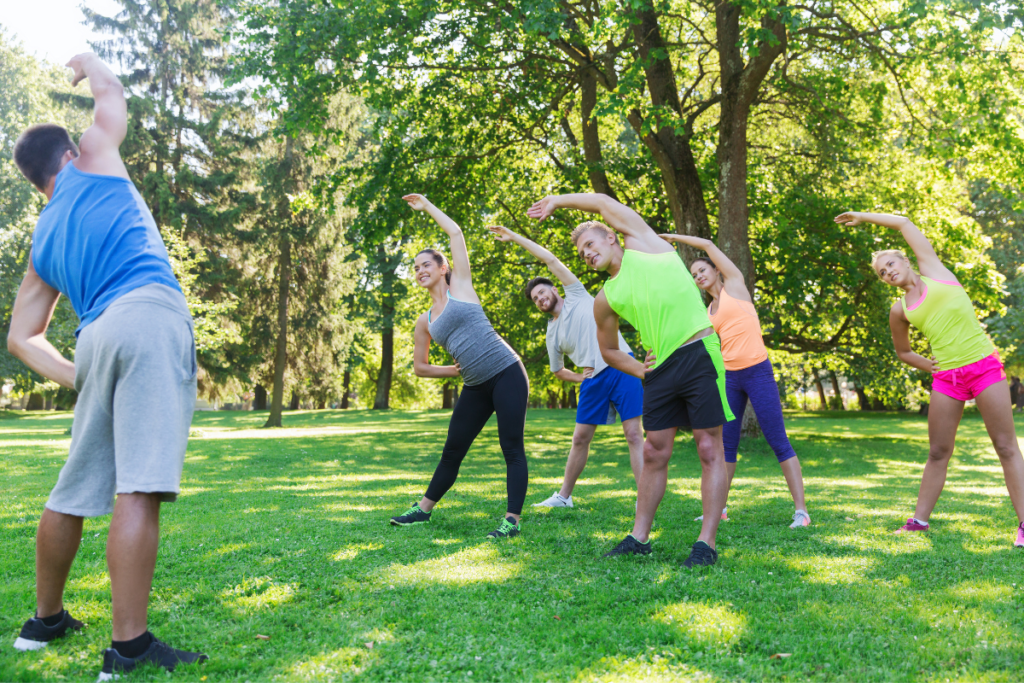
Access to parks, trails, and open spaces plays a critical role in outdoor physical activity. Green spaces provide venues for walking, informal play, group classes, and unstructured movement. Their presence, proximity, and perceived safety influence whether they are used consistently.
Well-designed outdoor spaces encourage a range of movement intensities and activities, from leisurely walking to more vigorous play. They also support social interaction, which can reinforce regular use and community engagement.
However, access is uneven. Many communities lack safe, well-maintained outdoor spaces, limiting opportunities for outdoor movement. Fitness professionals working in these areas may need to consider how environmental constraints affect clients’ ability to be active outside of structured sessions.
Built Environments and Health Equity
The relationship between environment and movement highlights broader questions of health equity. Neighborhoods shaped by disinvestment, zoning decisions, or historical inequities often have fewer sidewalks, limited green space, and greater exposure to traffic and pollution. These factors reduce opportunities for safe, enjoyable movement.
Active design principles aim to address these disparities by prioritizing inclusive, accessible environments. Features such as curb cuts, benches, shade, and safe crossings support participation across ages and abilities. When environments accommodate a wider range of users, movement becomes more equitable.
For fitness professionals, recognizing these structural influences helps contextualize client behavior. Limited activity may reflect environmental barriers rather than lack of motivation or commitment.
Sustainability and Movement-Friendly Design
Sustainability and physical activity are closely linked in active design. Walkable communities reduce reliance on motorized transportation, lowering emissions while increasing daily movement. Green infrastructure, such as tree-lined streets and parks, supports both environmental resilience and human health.
Design choices that prioritize people over vehicles encourage slower traffic, safer streets, and greater use of outdoor spaces. These environments support long-term movement habits by making activity part of daily living rather than an added task.
How Fitness Professionals Can Engage With Active Design
Fitness professionals do not control urban planning decisions, but they can engage with active design concepts in meaningful ways. Awareness of local environments allows professionals to suggest realistic, context-aware movement opportunities, such as walking routes, park-based sessions, or stair use within buildings.
Outdoor sessions can be designed to take advantage of existing infrastructure, reinforcing clients’ connection to their environment. Conversations about movement can expand beyond gym-based exercise to include how daily surroundings support or limit activity.
Importantly, these discussions should remain descriptive rather than prescriptive. Fitness professionals can help clients notice opportunities for movement without positioning environmental constraints as personal failures.
Implications for Fitness Practice
Active design reframes physical activity as a shared responsibility between individuals and the environments they inhabit. Built environments shape habits, influence access, and determine whether movement feels feasible or forced.
For fitness professionals, this perspective broadens the scope of movement support. Understanding how walkability, access, and design influence behavior allows for more empathetic coaching, more realistic goal setting, and greater appreciation of sustainability’s role in health.
Movement-friendly environments do not replace structured exercise, but they complement it. When activity is woven into daily life through thoughtful design, fitness becomes less about overcoming barriers and more about responding to opportunity.
References
Active Living Research. Built Environment Approaches to Increasing Physical Activity. Active Living Research, https://activelivingresearch.org/.
Centers for Disease Control and Prevention. Healthy Places: Built Environment and Health. CDC, https://www.cdc.gov/healthyplaces/healthtopics/built-environment.htm.
Design for Active Living. Active Design and Community Health. Design for Active Living, https://designforactiveliving.org/.
Harvard T.H. Chan School of Public Health. The Built Environment and Health. Harvard T.H. Chan School of Public Health, https://www.hsph.harvard.edu/topics/built-environment/.
Sallis, James F., et al. “Physical Activity in Relation to Urban Environments in 14 Cities Worldwide.” The Lancet, vol. 387, no. 10034, 2016, pp. 2207–2217.
Transportation Research Board. Does the Built Environment Influence Physical Activity? Examining the Evidence. National Academies of Sciences, Engineering, and Medicine, https://www.nationalacademies.org/.
Urban Land Institute. Building Healthy Places Initiative. Urban Land Institute, https://uli.org/programs/healthy-places/.
World Health Organization. Global Action Plan on Physical Activity 2018–2030: More Active People for a Healthier World. World Health Organization, 2018, https://www.who.int/publications/i/item/9789241514187.