

Training Science
Physical inactivity is a leading contributor to many health-related problems. Too often, the solution is to become more active, but many people don’t know where to start or what to do, and they simply start exercising. The data suggests, however, that many times this sudden increase in exercise leads to injury and pain, resulting in…
Clients often present with chronic tightness, discomfort and the inability to perform at the level they want. Suboptimal breathing—and strengthening programs that ignore breath—may be to blame. During this session, you’ll discover how breath directly impacts posture, ROM and stability. Additionally, we’ll explore real-world strategies for seamlessly integrating breathing techniques into your client’s warmups, strength…
What do we want from our body? To be strong, fit and—most importantly—injury-free. If you’re injured, you can’t train to your maximum ability. That’s why we need to help our clients develop resilient bodies with the ability to spring back after being stressed. We’ll delve into creating a more resilient body through proper movement, exercise…
Despite their best efforts—and our influence—clients’ attempts to adopt new behaviors that support their goals often fall short. Is it a lack of willpower, or perhaps they don’t “want it enough?” The reality is that it all starts in the brain. In this innovative seminar, you’ll discover the ways the brain is designed to keep…
There is so much posted on social media about ways to boost metabolism that it can be hard to separate fact from fiction. In this session, we’ll discuss the myths surrounding metabolism and provide scientifically supported facts that allow you to educate your client on safe and effective weight loss practices.
Beyond the muscles we consider our core, there is an inherent, dual, neuromyofascial core system that functions to stabilize, support and protect our spine and organs so we move with efficiency and specificity. This lecture breaks down the system into simplified models to explain how to approach neck and lower-back pain and improve performance while…
Movement quality precedes all else. The primary goal is to restore effective and efficient movement to prepare the body for the demands of training, practicing and competing. In this session, you’ll learn the authentic systems and principles that drive global human function. Then, discover how to implement various techniques to enhance movement quality for global…
Time under tension is an important consideration for any resistance training program. This dynamic session will go deep on time under tension, repetition tempo and metabolic stress and explore how they relate to traditional resistance training adaptations (e.g., endurance, hypertrophy and strength). In the second half of the presentation, you’ll learn several evidence-based practical applications…
Understanding the difference in weight loss and fat loss programming—and knowing what your clients need—is important in delivering high-level training experiences. First, you’ll learn the benefits and potential negative effects of each. Then, this session will provide insight into how to assess client needs, goals and abilities and develop appropriate and effective programs for both…
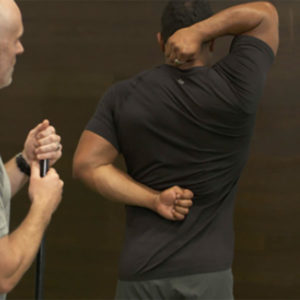
In this practical application session, you’ll gain the knowledge, skills and abilities to incorporate percussive therapy into client scenarios. We connect the dots—from the science to the specific need to the proper approach. You’ll walk away with effective techniques that you can integrate into your programming for optimal client performance.
Fascia science has evolved rapidly over the last several years. Review the latest insights into how fascia influences movement and learn exercises and strategies for bringing fascia to life for your clients. In this workshop, we’ll focus on understanding the structure and function of fascia as it relates to gliding, elastic recoil and movement continuity.…
Almost half of Americans will have balance problems at some point in their lives. How do we address balance training within program design? What are the best ways to incorporate balance training into your sessions? You’ll get the answers to these questions and learn how to balance your programming with different training modalities.
Stretching is important for everyone. In this dynamic workshop, you’ll get a deep understanding of how to maximize your stretching routines. We’ll cover how stretching impacts the body on a cellular and microscopic level and how that applies to the physics of human movement, mobility and structural integrity of the musculoskeletal system. Then, you’ll experience…
Join founding member of the Fascia Research Society, Sue Hitzmann, MS, for an in-depth look at this dynamic collagen matrix and how the research applies to functional/loading/explosive exercises and sports-specific training, as well as how fascia is involved in immune responses, hormonal balance, aging, pain and your overall wellbeing.
Let’s take a dive under the surface to get an in-depth understanding of muscles, starting at the molecular level. We’ll cover the latest research in muscle physiology and best practices for optimally training different muscle fibers. You’ll then put theory into practice to experience these different forms of training for yourself. Leave this session with…

You can only give your all to your clients when you’re functioning at your best. In this session, we’ll explore specific and realistic ways to elevate your game. It all begins with self-care, taking the necessary steps to be present, engaged and still able to give your clients what they need. We’ll dive into the…
The cardiovascular system is complex in how it responds to acute and chronic exercise, and while valuable, using a heart rate monitor to support client training plans can be a daunting task. This lecture will cover cardiovascular adaptations associated with current training trends, differences in individual heart rate response based on multiple and potentially combined…
Only one in four older adults participate in regular physical activity. How do we attract and communicate to older adults in a virtual world? Understanding how to effect behavior change is the first step to helping older adults become more active. This session will discuss different methods of communication to talk to this population and…
Gain the practical advice, tools and science-based information you need to make nutrition goals a reality. This informative and timely session will cover the foundation of establishing energy needs, macronutrient calculations, and building a better plate for health and performance, with time to address your nutrition FAQs. Learn how to navigate nutrition across virtual and…
Fascia science has been evolving rapidly over the last several years. Review the latest insights into how fascia influences movement and learn exercises and strategies for bringing fascia to life for your clients. In this workshop, we will focus on understanding the structure and function of fascia as it relates to gliding, elastic recoil and…