


Len Kravitz, PhD
Len Kravitz, PhD
Article Archive

The more we move, the better we live. Even a few minutes of exercise is better than sitting still.
These are just two of the conclusions in the recent report from the 2018 Physical Activity Guidelines Advisory Committee, whose recommendations form a sound foundation for integrating exercise into our daily lives.

The dynamic motions of sport require peak power—that is, the most strength a muscular contraction can muster in one of these quick bursts. Sporting athletes depend on peak power for jumping, running, throwing, striking, swinging and kicking. Scientists prefer the term “neuromuscular power” (to just “power” itself) because neural factors—including motor unit recruitment, muscle fiber firing frequency and synchronization of a muscle’s contractile forces—are involved.

To help clients with power training, you need to understand the fundamentals of neuromuscular power development.

Exercise has proven benefits for improving physical health. But what about mental health? For starters, active people are nearly 45% less likely to have depressive symptoms than inactive people (Booth, Roberts & Laye 2012). But a deeper look at the connections between exercise and mental health raises complicated questions:

STUDY REVIEWED: Chekroud, S.R., et al. 2018. Association between physical exercise and mental health in 1.2 million individuals in the USA between 2011 and 2015: A cross-sectional study. Lancet Psychiatry, 5 (9), 739–46.
Exercise has proven benefits for improving physical health. But what about mental health? For starters, active people are nearly 45% less likely to have depressive symptoms than inactive people (Booth, Roberts & Laye 2012). But a deeper look at the connections between exercise and mental health raises complicated questions:

Study reviewed: Kyröläinen, H., et al. 2017. Effects of combined strength and endurance training on physical performance and biomarkers of healthy young women. The Journal of Strength and Conditioning Research, 32 (6), 1554–61.

A preparticipation health screening helps trainers and prospective clients safely launch into an exercise program. When the American College of Sports Medicine updated its pre-exercise screening guidelines 3 years ago, it made one major shift: It stopped recommending the use of a tool to assess cardiovascular disease risk.
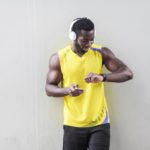
How accurate are the latest wearable heart rate trackers?
That’s an important question amid the flourishing demand for wearable fitness devices and wrist-worn heart rate monitors. Approximately 1 in 6 consumers in the U.S. uses some type of wearable technology, such as a fitness band or a smartwatch (Piwek et al. 2016). Industry research from 5 years ago predicted sales of 110 million wearable devices by 2018, but shipments of 115.4 million in 2017 have already outpaced that projection (Piwek et al. 2016; IDC 2018).
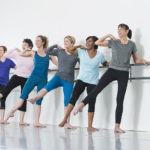
Fitness pros have a unique opportunity to take a leadership role by guiding their female clients toward a healthier, movement-oriented lifestyle. This women’s health research update discusses contemporary scientific findings you can use to educate your clients and plan up-to-date programs.
Two recent studies reveal that high-intensity interval training has the ability to produce high-impact fitness gains in a short time frame.

Slow walking speed has been linked to a greater risk of mortality in older adults, while brisk walking has been linked to better health.

Research shows there’s a time and place for both full and partial range of motion in resistance training program design.
Some training systems purposely use partial ROM for various exercises. Moreover, certain surgeries and orthopedic injuries require partial-ROM movements during rehabilitation (Pinto et al. 2012). It seems natural for personal trainers to wonder which is superior: full ROM or partial ROM? ,/p>
Two studies comparing the benefits of partial ROM and full ROM give a clearer view of the landscape.

New guidelines on high blood pressure made headlines late last year because they suggest that nearly half of all Americans have hypertension—up from about one-third under previous guidelines. This is big news for fitness professionals because regular exercise is an excellent tool for regulating blood pressure. In this issue, we’ll review what you need to know about the new blood pressure guidelines.

For the first time ever, overeating is a larger problem than starvation among the world’s overall population (Buchanan & Sheffield 2017). Losing weight—and, perhaps more importantly, not regaining it—is a challenge facing millions of people worldwide. According to the World Health Organization (WHO), global obesity rates have nearly tripled since 1975. Further, 1.9 billion adults, 18 years and older, were overweight in 2016. Of these people, more than 650 million were obese (WHO 2017).

With most U.S. adults sitting 9–12 hours daily and the risks of inactivity becoming more apparent, the popular press and the scientific community concur that “sitting is the new smoking.” Indeed, there is mounting evidence linking sedentary lifestyles to cardiovascular diseases and all causes of mortality (Diaz et al. 2017).
Though the threat seems clear, one major question has puzzled researchers: Can people reduce their risks by taking short breaks in otherwise long periods of sitting still?

A growing body of research is shedding more light on the importance of resting after exercise—providing vital clues on measuring and enhancing the recovery process. These insights are welcome news to personal trainers and coaches who see the consequences of overtraining and inadequate recovery every day. This column discusses some of the latest research on assessing and managing recovery and advises on tactics that may help your clients recover from exercise.

Physically active young people can do better in school and improve their self-expression, self-confidence and social interaction compared with more sedentary children (WHO 2017). Indeed, two studies published in 2017 underscore the value of children getting plenty of exercise.
Let’s take a quick look at this research. Study 1. Fitness and Academic Achievement

Study reviewed: Bartolomei, S., et al. 2015. Block vs. weekly undulating periodized resistance training programs in women. Journal of Strength and Conditioning Research, 29 (10), 2679—87.
If your clientele includes women looking to boost their muscular strength within a specific time frame, creating periodized weight–training programs for them is a great idea. The question is: How should you structure the program? Bartolomei and colleagues' study published in 2015 offers guidance on two possibilities.

Fatigue is a crucial concept for exercisers because it represents the point where they fail to complete a set or feel too exhausted to continue a long-distance run or other endeavor. Fatigue fascinates researchers because it reflects mental, chemical and mechanical processes that affect muscle performance. Indeed, the physiology of fatigue recently inspired the journal Medicine & Science in Sports & Exercise to devote a special section to the topic.
I'll review highlights from the journal's special section in a question-and-answer format:

Acute injury treatments often use ice packs, ice massage, whirlpools, heat packs or infrared lamps.