


Fred Hoffman, MEd
Fred Hoffman, MEd
Article Archive
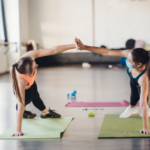
These four considerations will help your business deliver exceptional customer service, retain clients, and succeed during turbulent times.

What has changed with customer service in the last decade, and certainly in the last five years? The intersection of customer service and technology. Nowadays, clients interact more with devices, apps and platforms than they do with a live person. In many instances, these online interactions make for rapid, efficient service.

Outstanding customer service has always been the number-one way to attract and retain customers, clients and members. In recent years, the notion of great customer service has changed as a result of high expectations from informed consumers. This switch has occurred in large part because people can “connect” with a company easily and quickly through a multitude of channels, both offline and online.

Circuit training remains a popular activity, which is not surprising since it provides an integrated and accessible full-body workout. Not only can you combine cardio and strength moves in one class, but you can offer a wide variety of easily modifiable moves, accommodating participants of all abilities.

Sun salutations integrate strength, endurance, flexibility, controlled breathing and mindfulness. This cycle of postures is traditionally used in many yoga classes to warm up the body, as the sequence addresses all major joints and muscle groups while increasing blood flow and circulation. However, it also helps to release stress on the spine and promote relaxation, a perfect combination for a cool–down!

Mobile apps for nutrition, weight loss and fitness put health management into the palms of your clients’ hands, so clients will probably ask you to help them pick the best apps for enabling results. If you plan to recommend good fitness apps to your clients or class participants—or if you already do—you’ll want to consider user-friendliness and whether certain clients will actually use the apps you suggest (see the sidebar).

Measuring your heart rate? Or need a reminder to stay hydrated? There’s a smartphone app for that. Track your run, find healthy recipes or analyze your client’s walking gait? There are apps for that, too!
With innovation and technology in the fitness and wellness industries growing extremely fast, there seems to be a mobile app for everything these days. A recent report found that nearly one-third of U.S. smartphone owners—about 46 million unique users—accessed apps in the fitness and health category in January 2014 (Nielsen 2014).

Step training has been a staple in the fitness industry for a quarter of a century. Although participation started to wane a few years ago, it has resurged thanks in part to the fusion of traditional and newer classes. Whether choreographed, stylized or athletic in nature, step training remains a great form of exercise.

During the past decade, the term functional training has been used to describe programs that mirror everyday activities. Functional exercises are sometimes referred to as multiplanar movements that require coordination of two or more limbs, muscle groups, joints or areas of the body. There is another simpler way to define functional movement: pushing, pulling, bending, twisting, squatting and lunging! Look closely at these gross motor patterns that humans perform daily and you see an easy formula and library of movement patterns for a strength training class.

As IDEA Health & Fitness Association celebrates its 30th anniversary, what better moment could there be to look at step, an activity that revitalized the fitness industry? Launched in 1989 by Reebok, with creator Gin Miller at the helm, step continues to be a popular group exercise activity. The step platform is also a widely used piece of studio equipment.

Circuit training is one of the group offerings that has shown the most growth in recent years, with 77% of fitness facilities offering it in 2010, compared with 69% in 2002 (Schroeder & Dolan 201). Today, this popular activity is positioned for continued growth. Circuit training’s success can most likely be attributed to its structure and dynamics. The format allows participants to experience a large variety of exercises and equipment at whatever intensity the students choose. They compete only with themselves, and they don’t have to be in sync with others.

The past few years have been challenging for the fitness industry. With the economic downturn and the emergence of low-cost fitness centers, members are increasingly sensitive to costs and aware of services, programs and quality. Retention has become more and more challenging. Even previously loyal customers are likely to leave if another facility better meets…
In recent years the popularity of functional exercise and core training has grown dramatically. The belief that you’ll engage your core when standing, running, balancing and/or exercising on an unstable surface—and that this is more functional than working on a stable surface—has encouraged the use of equipment that challenges stability, particularly in the standing position. Even though it is possible to stabilize without properly engaging the core, a growing number of people are now training on unstable surfaces.
Two decades after its introduction, step training remains a viable cardiovascular activity. Fitness centers worldwide continue to offer step on their schedules, it’s still a big draw at industry conventions, and thousands of videos posted on YouTube testify that it is thriving.
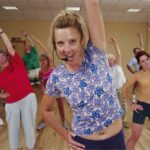
Most people have been lucky enough to
have teachers who left a lasting impression on their lives. Think about one of your favorite mentors or
instructors. What made him or her so special? And what can you do to create the
same experience in your own classes? You may presume …
According to the 2005 IDEA Fitness Programs & Equipment Survey, 56% of respondents offer circuit classes, while 63% offer core conditioning. “Core Circuit” provides a great way to reap the benefits of both activities in a single session. This class uses closed-chained…
img src=”/fil…
Once upon a time, group fitness instructors started their strength training classes with a relatively static warm-up that consisted of single-joint movements, such as head circles, shoulder rolls backwards and forwards, and hip swings side to side. As the industry progressed, warm-ups became more varied and we branched out—maybe too far out! Today’s warm-up options range from no warm-up at all to 10-minute, low-impact cardio warm-ups, with many variations in between.