Artificial Intelligence in the Fitness Industry: Perceptions, Use and Future Directions


Artificial intelligence and digital technologies are increasingly influencing the health, fitness and wellness industries. Advances in wearable sensors, mobile applications and machine learning algorithms allow large volumes of health and behavioral data to be collected and analyzed in real time. These technologies have created new opportunities for personalized exercise programming, remote coaching, and data-driven performance monitoring.
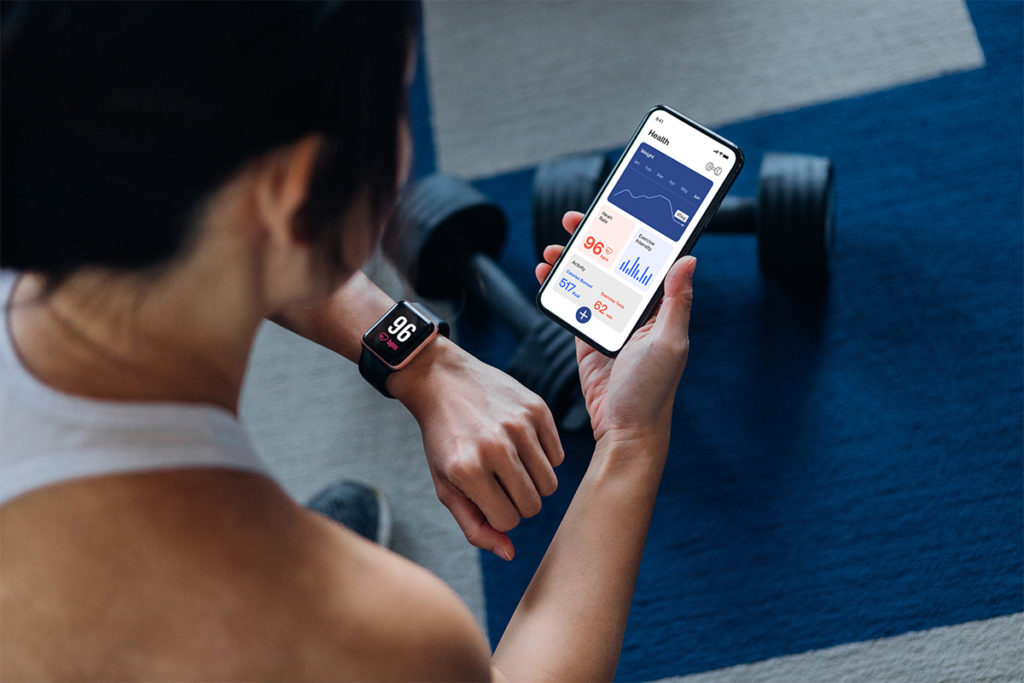
Wearable fitness technologies are among the most visible applications of AI within the fitness industry. Devices that monitor heart rate, activity levels, sleep patterns and physiological recovery have become widely adopted by consumers. These technologies use machine learning algorithms to identify patterns in user behavior and provide feedback intended to support behavior change and improve health outcomes. Research suggests that wearable technologies can increase physical activity levels and support adherence to exercise programs when combined with coaching or behavioral support strategies (Parmenter, Diehl & Scott 2021).
Artificial intelligence is also being integrated into digital coaching platforms that generate automated exercise recommendations based on user data. These systems may analyze variables such as activity levels, training history, recovery indicators and biometric data to adjust exercise prescriptions. While such systems offer the potential for scalable and personalized programming, experts emphasize that AI tools function most effectively as decision-support systems rather than replacements for human expertise (Davenport & Ronanki 2018).
However, the rapid growth of AI technologies has also raised ethical and professional concerns. Issues related to data privacy, algorithmic bias and the reliability of AI-generated recommendations have been widely discussed in the healthcare and digital health literature (Luxton 2014; World Health Organization 2021). Because many AI systems rely on large datasets and automated decision-making processes, transparency in data usage and algorithm design has become an important ethical consideration.
Another concern involves the potential impact of AI technologies on professional roles within health and fitness fields. While some observers speculate that automation may reduce the need for certain professional services, others argue that AI will more likely shift the role of professionals toward interpretation, coaching and behavior change support (Topol 2019). In this model, technology provides data insights while human professionals deliver motivation, contextual understanding, and individualized guidance.
Despite the rapid expansion of AI technologies in health and wellness, relatively little research has examined how fitness professionals themselves perceive these tools. Understanding practitioner perspectives is important for guiding professional education, industry standards and responsible technology adoption. The present survey was designed to explore fitness professionals’ awareness, use, concerns and expectations regarding artificial intelligence in the fitness industry.
Methods
In January 2026, a cross-sectional survey was developed to explore fitness professionals’ familiarity with AI, current usage patterns, perceived barriers, ethical concerns and expectations for the future of AI in the industry. Participants were recruited through professional networks including IDEA Health and Fitness Association, KIPS Education and social media platforms. The survey was taken offline on February 13, 2026. As of that date, 74 professionals had responded to the questionnaire.
Participant Demographics
The participant demographics reflect a highly experienced, practitioner-driven fitness workforce, with most respondents working directly with clients as personal trainers (28.4%) or group exercise instructors (24.3%). A notable proportion (33.8%) are self-employed or independent contractors, underscoring the industry’s strong freelance and entrepreneurial nature. Participants report a wide range of weekly client interactions, generally indicating moderate to high engagement levels. Importantly, this is a veteran group, with more than two-thirds (66.2%) having over 15 years of experience in the industry.
The respondents are predominantly female (78.4%) and skews older, with over 80% aged 45 and above. Educational levels are notably high, as more than three-quarters hold at least a bachelor’s degree and over one-third have earned graduate degrees. Most respondents (94.6%) reported holding at least one fitness certification. The most frequently referenced organizations were ACE, ACSM, NASM and AFAA, indicating strong alignment with nationally recognized professional certification bodies in the fitness industry. Collectively, these characteristics suggest a mature, well-educated workforce with substantial industry tenure, offering a perspective shaped by long-term professional experience in fitness and wellness settings.


Awareness and Utilization of Artificial Intelligence (AI) in the Fitness Industry
The results show that most fitness professionals feel comfortable using general technology like apps and wearables, with the majority reporting they are somewhat or extremely comfortable. However, when it comes to artificial intelligence (AI), familiarity is more mixed. Many respondents say they are only slightly or moderately familiar with AI and most feel only somewhat prepared to adapt to AI-driven changes in the industry. This is reflected in how often AI tools are actually used—about half report never or rarely using them. Among those who do use AI tools, the most common tools are smart wearables and chatbots or virtual coaching platforms, while more advanced technologies like performance analysis systems or virtual reality are used much less often. Overall, while technology use is common, AI is still emerging in everyday fitness practice.
In practice, AI is most frequently used to support program design, with about half of respondents reporting occasional use in this area. Its use in client communication, data analysis, marketing and writing is more inconsistent, often falling into the rarely or sometimes categories. AI appears to be most consistently integrated for saving time and managing day-to-day tasks, where a greater proportion of professionals report more frequent use compared to other applications.


Perceptions and Attitudes Toward AI
Most fitness professionals perceive AI-based features as having modest value to clients, with the majority rating them as slightly to moderately valuable rather than highly valuable. At the same time, perceptions of AI’s role in professional practice are generally positive but mixed. Many respondents agree that AI can support decision-making, enhance service quality and help them stay current with fitness trends, as well as enable more personalized, data-driven programming. However, there is less confidence in its ability to improve client motivation or safety and opinions are divided regarding its impact on job security and the potential loss of human connection. While many believe AI will significantly change the industry in the coming years and express some level of excitement, there is also a clear need for additional education and training, as most respondents indicate they require more support to effectively integrate AI into their practice.


Adoption Challenges and Barriers to AI Integration
The results highlight several key barriers that limit the adoption of AI in fitness practice, with concerns about accuracy and reliability emerging as the most common issue. Many professionals also report a lack of knowledge or training, along with privacy and data security concerns, as significant obstacles. Additional challenges include ethical considerations, limited time to learn new tools and a perceived lack of client interest or understanding. Organizational support and cost appear to be less prominent, but still relevant, factors influencing adoption.
These concerns are reinforced by the challenges professionals face when actively using AI tools, particularly around the accuracy and potential bias of recommendations, as well as privacy issues related to client data. Difficulty integrating AI into existing services and limited client familiarity further complicate implementation. Despite these barriers, most respondents report relatively low levels of concern about AI replacing aspects of their roles, with the majority indicating they are not at all or only slightly concerned. This suggests that while there are clear challenges to adoption, AI is still largely viewed as a tool to support, rather than replace, fitness professionals.


Industry Impact and Future Outlook
The findings suggest that fitness professionals expect artificial intelligence (AI) to have a meaningful impact on the industry, with the majority anticipating moderate to major influence and a smaller group viewing it as potentially transformative. AI is expected to have the greatest impact on areas such as exercise programming, client assessment and tracking and personalized nutrition, along with marketing and operational functions like scheduling. In contrast, fewer respondents see AI playing a major role in group instruction or injury prevention. When considering its effect on the profession, many believe AI will increase demand for more tech-savvy professionals, while others anticipate a shift toward coaching and behavior change, rather than a full replacement of trainers.
Despite these expected changes, human interaction remains highly valued, with the vast majority rating it as very or extremely important even as AI advances. At the same time, respondents indicate that AI will become increasingly necessary to remain competitive, with most viewing it as at least moderately important for future success. Perceptions of AI’s impact on certification and credentialing are more mixed, generally falling in the minimal to moderate range. Overall, the results point to a future where AI plays a growing supportive role in the industry, while human connection and professional expertise continue to be central to fitness practice.


Overall, the outcomes of this survey indicate a highly experienced and well-educated fitness workforce that is grounded in traditional, client-centered practice while beginning to navigate the integration of emerging technologies. Most professionals are comfortable using general digital tools, yet their familiarity with artificial intelligence (AI) remains limite and adoption is still in its early stages. AI is currently used in selective and practical ways—primarily to support program design and streamline daily tasks—rather than being fully embedded across all areas of practice. This suggests that while the foundation for technology use is strong, there is still a gap between general digital competence and meaningful AI integration.
Perceptions of AI are cautiously optimistic. Many professionals recognize its potential to enhance decision-making, improve service quality and support more personalized, data-driven approaches. At the same time, there are clear concerns about accuracy, bias, privacy and the possible impact on human connection, which remains a core value in the fitness profession. The strong consensus around the need for ethical guidelines, transparency and client consent highlights the importance of responsible implementation as AI becomes more prevalent. Notably, the widespread acknowledgment of needing more education and training points to a critical opportunity for professional development and industry leadership.
Looking ahead, fitness professionals anticipate that AI will play a meaningful, though largely supportive, role in shaping the future of the industry. It is expected to influence key areas such as programming, client assessment and personalization, while increasing demand for more tech-savvy professionals. However, there is little indication that AI will replace the human element that defines effective coaching and training. Instead, the future appears to be one of integration, where AI enhances efficiency and insight, while human expertise, relationship-building and behavior change remain central. Successfully navigating this balance will be essential for professionals seeking to remain competitive and deliver high-quality, client-centered services in an evolving fitness landscape.
What Fitness Professionals Should Know About AI
Artificial intelligence is rapidly becoming integrated into fitness technology, but it is important to understand what AI can and cannot do.
AI can:
- Analyze large amounts of training and biometric data
• Track patterns in sleep, heart rate and activity
• Provide automated workout suggestions
• Help monitor training load and recovery
• Support personalized program adjustments
AI cannot replace:
- Human coaching relationships
• Behavioral change support
• Exercise technique instruction
• Emotional intelligence and empathy
• Contextual decision-making about injuries or limitations
AI tools are most effective when used as decision-support systems, helping fitness professionals interpret data while maintaining responsibility for program design and client safety.
Five Ways Fitness Professionals Can Begin Using AI Today
Fitness professionals do not need advanced technical expertise to begin integrating AI tools into their work. Practical entry points include:
- Use wearable data to guide programming
Devices that track heart rate variability, sleep and recovery can help trainers adjust training loads. - Explore AI-assisted program design tools
Some platforms can help generate program templates that trainers can then customize. - Improve client engagement with automated tracking
Apps that analyze client data can provide progress feedback and motivation. - Use AI to support administrative tasks
Scheduling tools, chatbots and management software can reduce administrative workload. - Stay informed about emerging technologies
Continuing education on fitness technology and digital health will help professionals remain competitive in the evolving fitness landscape.
The key is to view AI as a supportive tool that enhances professional expertise rather than replacing it.
Ethical Considerations When Using AI in Fitness
As AI technologies expand in the fitness industry, ethical use becomes increasingly important. Professionals should consider the following guidelines:
- Protect client privacy
Ensure that personal health data collected through apps or wearables is handled securely. - Maintain transparency
Clients should understand how their data is being used and how AI tools generate recommendations. - Verify AI recommendations
Fitness professionals remain responsible for evaluating exercise programming and safety. - Obtain informed consent.
Clients should be aware when AI tools are being used as part of training services. - Continue professional development
Understanding both the capabilities and limitations of AI technologies is essential for responsible practice. Professional judgment must always remain central to fitness coaching.
Bio:
Dr. Jan Schroeder, Ph.D., ACSM-CES, ACE-GXI, AFAA-GXI, is a Professor of Kinesiology at California State University, Long Beach, where she has been instrumental in developing and leading a science-based Bachelor of Science degree in Fitness that integrates exercise science, personal training, group fitness and fitness management, along with extensive internship experiences. Her work has helped grow one of the nation’s largest undergraduate fitness programs, preparing thousands of students for careers in the health and fitness industry, particularly within diverse and underserved communities. Dr. Schroeder, the 2021 IDEA Leader of the Year, is recognized for her expertise in group exercise, program development and professional standards, and her current work focuses on the evolving role of technology, including artificial intelligence, in enhancing fitness practice while maintaining the importance of human connection.
References
Davenport, T. H., & Ronanki, R. (2018). Artificial intelligence for the real world. Harvard Business Review, 96(1), 108–116.
Luxton, D. D. (2014). Recommendations for the ethical use and design of artificial intelligent care providers. Artificial Intelligence in Medicine, 62(1), 1–10. https://doi.org/10.1016/j.artmed.2014.06.004
Parmenter, B. J., Diehl, L. A., & Scott, J. M. (2021). Wearable technologies: Facilitating physical activity and reducing sedentary behavior in clinical populations. Progress in Cardiovascular Diseases, 64, 43–50. https://doi.org/10.1016/j.pcad.2020.12.005
Topol, E. (2019). Deep medicine: How artificial intelligence can make healthcare human again. Basic Books.
World Health Organization. (2021). Ethics and governance of artificial intelligence for health: WHO guidance. World Health Organization.

Jan Schroeder, PhD
Jan Schroeder, PhD, is a professor and past chair of the department of kinesiology at Long Beach State University. She coordinates and teaches in the fitness and integrated training undergraduate program and has written 60+ articles on exercise physiology/fitness. She is also a certified group exercise instructor who teaches weekly in the private sector. Schroeder is the recipient of the 2021 IDEA Fitness Leader of the Year Award.