
Take a Stand
Get participants off the floor and activate their cores with multijoint, multiplanar moves.
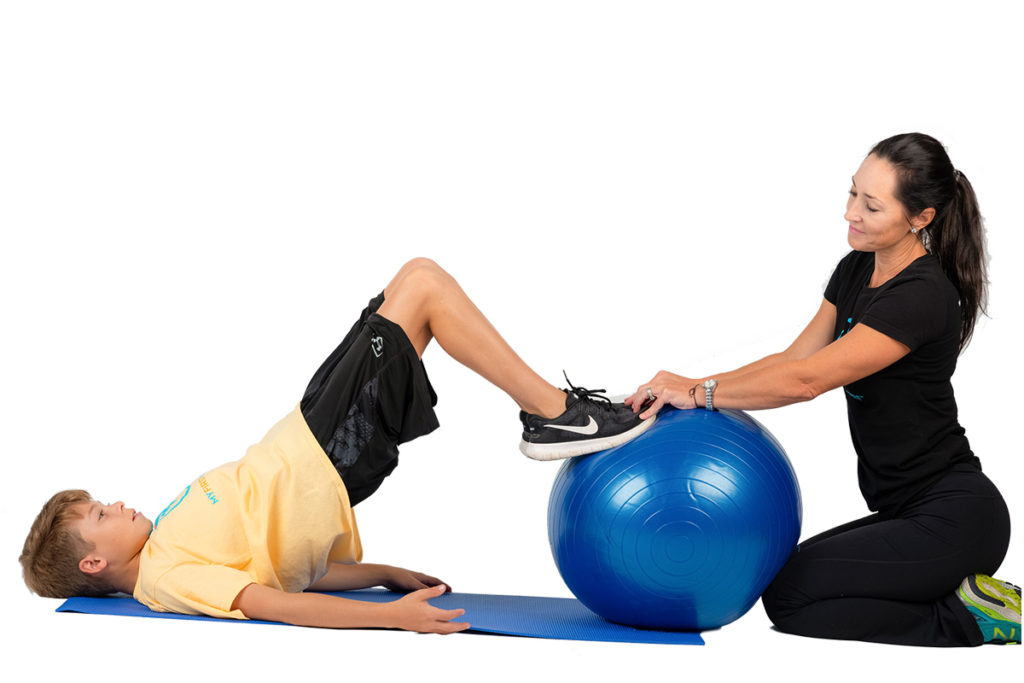
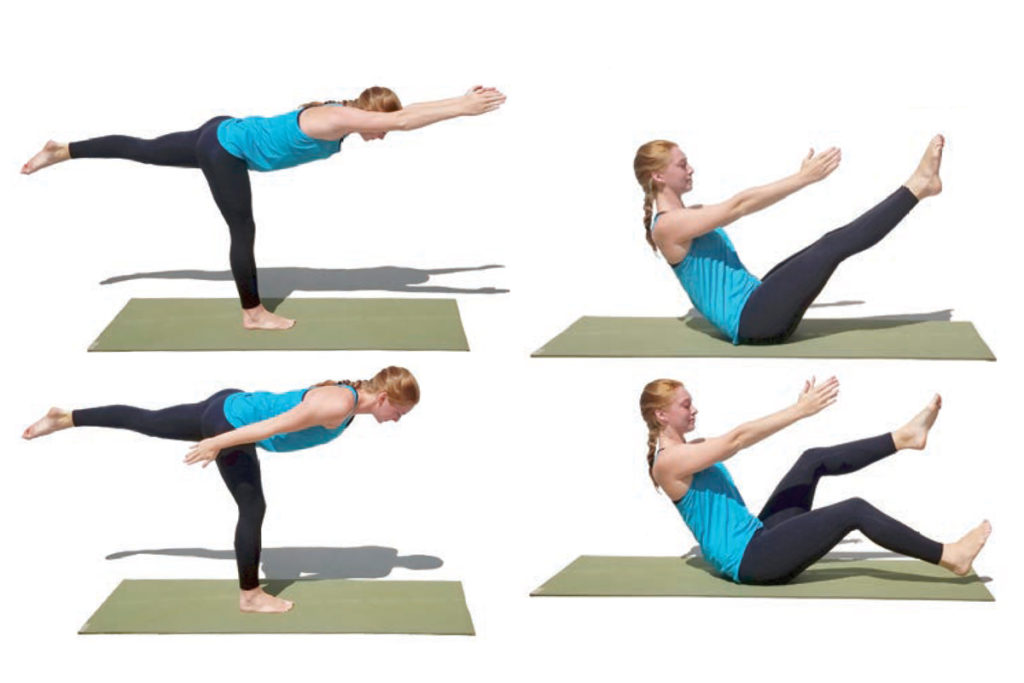
Why do we usually train the core from the floor? Most people don’t spend the majority of their days on the floor, nor is it common to get injured from lying down or watching television. Injuries typically happen from improper technique, lack of body awareness and limited movement. Standing upright for core training allows you to move your body in all planes of motion and enhances core and spinal stabilization and balance.
It’s time to take a stand. Get participants on their feet and out of the computer-typing, freeway-driving position they find themselves in way too often. Encourage weight-bearing, multijoint movements that require more work and recruit more muscles, both of which may aid in fat loss—a goal that’s at the forefront of many participants’ minds.
The following multijoint, multiplanar moves provide a full-body workout while emphasizing core musculature. Modify these exercises to fit your audience. Have participants perform the moves two to three times each for about 30 seconds to 1 minute, or until fatigued.

Equipment: resistance band
Preparation: Place right (R) foot in middle of resistance band (one handle will be on ground). Hold handle in left (L) hand and stand upright, feet shoulder-width apart.
Execution: Lower body into squat, rotate torso to R knee and internally rotate L knee and ball of foot. As you stand, pull band up and across chest (as if starting a lawnmower) to L shoulder, and extend band so arm is straight above your head, creating diagonal line of energy from foot to tip of hand. Bring hand back to shoulder height and repeat. Switch sides.
Regression: Move into shallow squat.
Progression: Lessen slack in resistance band.

Equipment: dumbbells
Preparation: With dumbbells in hand, thumbs facing up, lower into squat.
Execution: Lift dumbbells to shoulder height; pull navel toward spine. Once at shoulder height, pull dumbbells to rib cage, elbows pointing back. Stay in squat, and punch both dumbbells forward; pause with arms straight in front (hold 1–3 seconds). Lower dumbbells to starting position.
Regression: Punch in standing position.
Progression: Use heavier weight and/or punch twice before lowering dumbbells.

Equipment: medicine ball
Preparation: Hold medicine ball in middle of chest. Balance on R leg.
Execution: Step back with L leg into lunge and simultaneously rotate torso and medicine ball R in diagonal chop or paddle. As you complete movement, lift L leg to starting balance position and return ball to middle of chest. Repeat on same leg; switch sides.
Regression: Keep ball close to chest, and place foot on ground instead of balancing.
Progression: Extend arms straight.

Equipment: medicine ball
Preparation: Hold medicine ball overhead. Engage core to prevent arching in low back.
Execution: Exhaling, squat while throwing or slamming ball to ground. Catch ball as it bounces up; lift it overhead and repeat.
Regression: Move into shallow squat.
Progression: Use heavier medicine ball and/or increase tempo.