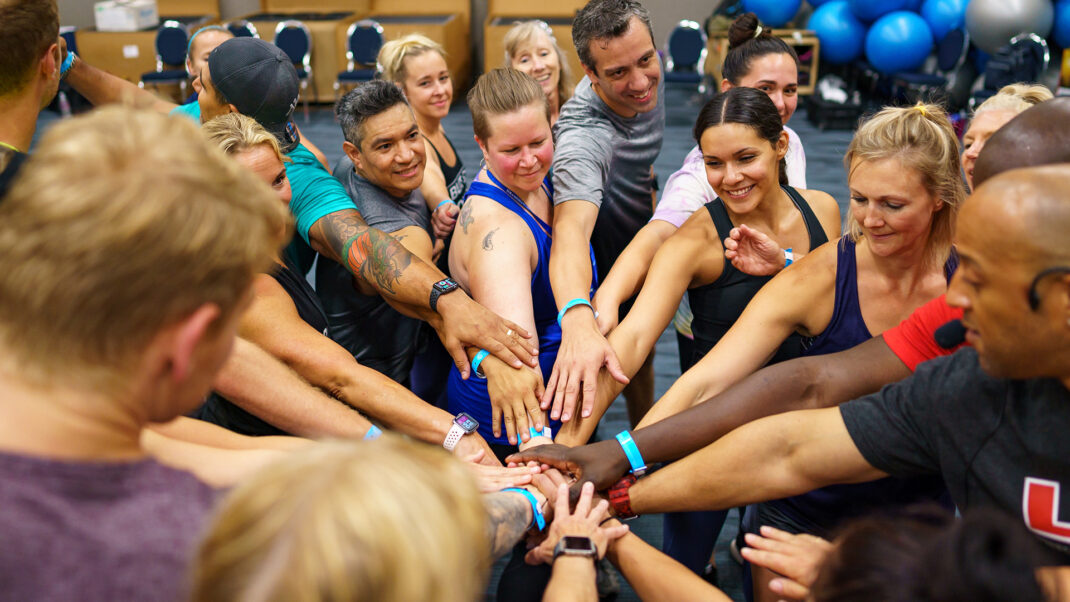

Group Fitness and the Stages of Behavior Change
You started teaching to help others get fit and healthy—but how much can you really help?

The next time you teach a group fitness class (live or virtual), pause and reflect on the faces in front of you. Maybe you’ve taken it for granted that these people have set aside time to move and have fun with you. The truth is, deciding to join a fitness facility and work out with strangers is a scary step for many people. While most of your students have already made the decision, it’s still important to acknowledge how these seemingly small choices translate into big life changes—and you’re a part of that paradigm shift!
When you started teaching, you wanted to inspire others and positively influence their lives. You were passionate about reaching out to those who felt stuck, who struggled to get in shape and change their lives, and who perhaps hadn’t set foot in the gym in a while—or ever. However, the likelihood of someone actually attending one of your classes depends on several factors, including where that person is within the transtheoretical model of behavior change (TTM) and how many barriers stand in the way. Learn how to notice the stages and inspire participants from where they are in the process.
Transformation Starts Here
The attendees in your 6 a.m. cycling class have overcome many obstacles in their personal lives to commit to your ride. Have you stopped to think about the hoops people jump through to show up? For example:
- classes that require preregistration
- a members-only facility
- a confusing location within the facility
- an out-of-date website
- classes that list ability tiers
- classes that have a perceived prerequisite or that seem difficult, confusing or intimidating
- fee-based classes
- super-trendy “experiences”
So what can you do? This is where the TTM enters the picture. While it’s most often used in personal training and coaching dynamics, the TTM can also be applied to group fitness. Let’s use an “attendee avatar” as an example. Fifty-five-year-old Leslie, a recent empty-nester, used to be fairly active but hasn’t had a committed fitness routine in over a decade. The following stages of behavior change mark mini milestones on her journey to your total-body boot camp class (University of Rhode Island 2020).
- Precontemplation. Leslie knows she needs to make changes but can’t seem to find the motivation or interest.
- Contemplation. Leslie realizes a change is in order, she’s aware of the benefits (such as weight loss and a sense of community), and she’s considering a shift.
- Preparation. Leslie makes plans to attend a class with her next-door neighbor.
- Action. Not only does Leslie go to the class with her friend, as planned, but she gets hooked on boot camp, signs up as a member, and consistently attends class at least twice a week for a few (< 6) months.
- Maintenance. Leslie has been attending your boot camp class consistently for 6 months or longer and has even added yoga and cycling classes to her schedule.
These components are no doubt important—and we’ll explore how to help students in each stage—but first let’s look at the other three areas that researcher James O. Prochaska, PhD, created to help individuals modify behaviors such as smoking (Aveyard et al. 2009). His TTM model has since been applied to a variety of activities, including fitness (Middelkamp 2017).
Decisional Balance
According to the University of Rhode Island Cancer Research Prevention Center, decisional balance refers to a pros-and-cons “balance sheet” (University of Rhode Island 2020; Janis & Mann 1977). For a high-quality fitness class, the risk–reward ratio will most often lean toward the pro column, but there are still cons to consider. It’s worth noting and respecting that students have to carve time from busy schedules, change clothes and pay for the class, for example. They might even need to rearrange timing, find child care and skip other engagements. Even when stay-at-home orders are in place, time management is still an issue and should be acknowledged. This is where gratitude plays a role. When you acknowledge participants’ efforts, you validate their pros-and-cons comparison, even when they make that list in their subconscious mind.
Processes of Change
The 10 processes of change are “covert and overt activities that people use to progress through the stages” (Prochaska 1997). Prochaska asserted that TTM research shows behavior change interventions are more effective when matched to each individual’s current stage.
In brief, the processes of change are strategies that help people transform—and those strategies include consciousness-raising, counterconditioning, environmental reevaluation and self-liberation, among others (University of Rhode Island 2020). (See “The Transtheoretical Model of Behavior Change: Four Key Variables,” below, for more.) Each of these processes can be applied to the decision to join a group fitness class. Consider how you can help support people along the way.
Self-Efficacy
Self-efficacy refers to how much an individual believes he or she is capable of performing the actions or behaviors needed to create specific results and overcome barriers (Bandura 1977). Self-efficacy is one of the most studied areas of behavior change and has four of its own subcategories, which, in order, are
- past experience doing the same behavior;
- observation of others per-forming the behavior;
- verbal persuasion; and
- physical and emotional responses (Bandura 1997).
All four of these apply to group fitness; however, note that physical and emotional responses are last on the list. Often, we expect students to feel great after class or get the physical results they want, and we presume that’s what will bring them back for more. But if you look back at the stages of behavior change, being able to rely on a student to stick with class because she feels good about it would mean she is already in at least stage 3 (preparation) and, more likely, stage 4 (action) or 5 (maintenance). This is not always the case.
You can help boost self-efficacy among students. You might not be able to control whether a student has taken a class in the past, but you can repeat a sequence or foreshadow moves, both of which address past experience. When you demonstrate a kickboxing combination and mirror the class, you meet the student’s need to observe others performing the same behavior.
If you do more than give cues and rote directions—if you also encourage and compliment people and call them out by name—then you provide verbal persuasion. And if you create a fun and welcoming environment, coupled with an appropriately challenging class, you automatically address physical and emotional responses. In fact, group fitness has a leg up on other forms of exercise when it comes to physical and emotional responses, since it has been found to reduce stress and improve quality of life more than exercising solo (Yorks, Frothingham & Schuenke 2017). The group atmosphere has a certain magic that draws students into the studio.
“When I first walked into a group fitness class, I was used to working out alone, with headphones, running or walking on the treadmill,” says Ashley Pitt, group fitness instructor in Walnut Creek, California, and creator of the blog A Lady Goes West. “I didn’t realize that people could have fun while exercising and still get an effective workout. I was so excited and surprised to see that there were so many people of all levels trying hard, connecting and doing movements that they probably wouldn’t do alone. Group fitness offered me a fun outlet after work each day, so that I didn’t dread my workouts. Instead, I looked forward to every class.”
On the other hand, even the perception of fun or a desire to belong to a group might not be enough for someone who is in the precontemplation phase. Don’t let this stop you from trying to help, even before this person steps into your class. Treat each stage of behavior change like the crucial stage that it is, even when the individual hasn’t taken any physical steps toward class. The following section shares some tips on how to do that.
See also: Behavior Change: What the Research Tells Us
Precontemplation Stage: Entertain

Someone in the precontemplation stage may very well be sparked by an Instagram post that highlights a fun, accessible choreography block.
“I think, in this stage, it’s all about piquing their interest,” says Colleen Freese, Savvier Fitness master trainer at HIGH Fitness in Seattle. Freese encourages people to create a fear-of-missing-out (FOMO) effect through word of mouth and social media. “Make people wonder what your classes are about.”
Perhaps even more important (as people find their way back to gyms and studios after COVID-19), social media posts may encourage someone to join your class who otherwise may not have considered group fitness—or fitness at all, for that matter. “Create interest with your marketing,” says Madalene Aponte, STRONG by Zumba® master trainer, from Puyallup, Washington. Aponte says she’s encountered women who are comfortable with their weight and, therefore, see no need to exercise. But then they see a group dancing to their favorite artist in a video, and they decide to “check it out just because they love the music.”
Maybe someone is fine with her current physical state—or maybe she isn’t but doesn’t know where to start. Remember, those in the precontemplation phase are often unaware of the benefits your class offers, so educate people through thoughtful, entertaining posts. Cait Giacino, personal trainer and group fitness instructor from New Brunswick, New Jersey, says this is also a great opportunity to ask about and address any barriers that might prevent someone from attending—or working out in general. For example, a quarantine situation is an obvious barrier to attending a traditional group exercise class. However, thanks to technology, live classes are still an option via many different platforms. Someone in the precontemplation stage may very well be sparked by an Instagram post that highlights a fun, accessible choreography block.
Contemplation Stage: Educate
Once students enter the contemplation stage, you can educate them beyond the benefits. Feel free to get more specific, since they’re starting to consider a change and may be “shopping around,” whether they realize it or not.
“It’s important to share information with students in the contemplation phase,” says Giacino. “Show them how they can work classes into their schedules and recommend options based on their fitness level and interests. Let them know it’s possible to make this change and that you can help!”
A person in this stage is teeter-tottering between moving forward and staying put; it’s therefore important to encourage that momentum. “Moral and social support does wonders,” says Aponte, who suggests a student might just need “one conversation at the locker room with the instructor or a friend to invite them to class.”
This is also a good time to highlight the inclusivity of your group fitness program. “In this stage I think it’s important to detail all of the various classes and options you offer,” says Freese. “It’s so important to show people that you have something for everyone, no matter their age, fitness ability, gender, shape, size or experience. And it’s vital to create a nonjudgmental environment where people feel safe, supported and cared for.”
Part of creating that nonjudgmental atmosphere is putting yourself in the shoes of that student who is walking—or considering walking—into class for the first time. “It’s super-important for group fitness instructors to understand that people are nervous about going into the group fitness room, and they also have no idea how much fun they can have,” says Pitt. “In the contemplation phase, we can talk to people who are always looking into the room. [We can] engage them, see if they have any questions, and encourage current participants to invite friends who’ve never been. In short, we can be incredibly welcoming, open to and transparent with new people. Never treat the class like it’s full of regulars, and always give intro advice as needed. Invite new people to watch the class from the window a few times before coming in.”
Preparation Stage: Motivate
Once students have peeked in the window a few times, audited the Zoom class or checked out the online class schedule, they just might move on to the preparation stage, in which they make plans and take more action. Aponte says that, by this point, many students have worked out at home or tried an online class. Now, they’re ready to take the next step, but support is key.
“Many [students] start a new group exercise program and quit because they’re discouraged after the first class,” says Aponte. You can help by warmly welcoming newcomers and continuing to educate students. Offer helpful, logistical tips that make it easier for them to attend class, building on the foundation you created when you shared the benefits of group fitness.
“It’s so important to make yourself available to answer questions about what they might expect, what to wear, etc.,” says Freese.
Pitt says instructors should also guide students on class frequency and variety. “In the preparation phase, I think it’s great to give students an idea of what a good group fitness routine looks like, so they know how often to attend, how to vary their class load, etc. Make an announcement before or after class, or make a sign or marketing materials for new members. Let people know you want them to come back.”
This stage is great for highlighting the community aspect of group fitness, says Giacino. After all, that’s one of the main reasons your new student joined the online platform or walked through the door in the first place. Encourage connection and camaraderie.
See also: Training Happy for Positive Behavioral Change
Action Stage: Influence

Put yourself in the student’s shoes again and remember back to that moment when you decided to go to a class.
When new students become regulars, they move into the action stage. “It’s so important to acknowledge their efforts,” says Freese. “Use their name before, during and after class, when possible, and let them know how much you appreciate them! It’s also a great idea to create a community. They’ll keep coming back if they know others care about whether they’re there or not.” This applies to both live and virtual experiences.
One way Freese encourages participation is by asking students to give a simple smile and wave to one another as they wait for class to start. This requires no touch and no talking, so it’s usually unthreatening for students who are nervous or shy and for people in the earlier phases of behavior change. Regulars and/or more outgoing students will often build on this small suggestion.
At this point, “engagement for retention is huge,” says Aponte, who encourages accountability. She recommends tracking attendance and checking on participation. Other ways to engage include “inviting someone to move a little closer to the front of the room or challenging a regular participant to try a harder option (a few pushups on the toes instead of the knees), etc.,” says Pitt. However, you should “only do this once you’ve gotten to know that participant,” she adds.
Put yourself in the student’s shoes again and remember back to that moment when you decided to go to a class. Maybe there wasn’t one memorable event, but you did choose to return. Freese says she took her first group fitness classes to get in shape for her wedding, and then to lose baby weight, but she stuck with it when it became much more than just exercise. “When [group fitness] became a part of my everyday life is when it started to carry over into other elements of my health,” says Freese. “I started eating better, cooking for my family more and encouraging them to up their activities as well.”
Freese recalls that while the “endorphins, calorie burn, music and instructor” initially drew her in, it eventually became about the people, whom she bonded with. “The accountability was something I’d never found before—a support system. That kept me coming back.”
Maintenance Stage: Support
When participants reach this stage, they’re enjoying your class. At this point, they have probably experienced results, may no longer feel like beginners and are starting to feel (or already feel) like part of the community.
“I like to call my maintenance students my ‘front-row divas,’” says Giacino. “These people are consistent and are rocking each and every class. Instructors can’t take them for granted! Even students who are in the maintenance phase can fall off.”
Giacino says instructors must continue to encourage these students, discuss their short- and long-term goals, and continue to use their names during class.
“Keep things fun and exciting,” says Freese. “Check in with your regulars and ask how they’re doing in life and on their fitness journeys. Ask for feedback! If they’re this loyal to you and your classes, they’re more likely to be honest about what they’re loving, what’s working, and maybe even what they’re not loving or would like to see from you.” She also recommends periodically reminding them how much value they hold in your class community and in the future of the class. “When people feel valued, they become more invested,” she says.
When students make the transition from attending a class to investing in that class—not just with their money but also with their time and hearts—it opens the door to a lot of change.
“I think group fitness instructors can absolutely inspire a real change in students,” says Giacino. “Group fitness is about community and feeling like you’re a part of something greater than just a workout. I have seen introverted students who used to stay in the back make friendships with other participants and make their way to the front row. It’s our duty to never lose sight of the group aspect. Yes, each individual is important, but everyone sweating and working hard together is what makes class special and meaningful.”
Supporting Real Change
During the early stages of COVID-19, as people came to grips with staying at home and were confronted with their personal fitness realities, it’s likely that many started reflecting on what was most important to them, and physical fitness may have risen to the top as a new or resurrected priority. It’s possible quite a few people moved from precontemplation to contemplation; now is a great time to support that momentum.
Group fitness instructors who are “educating and motivating students to alter unhealthy habits and offering fun and motivating options in a social activity that allows people to reach their fitness goals and make friends [help people to make] real change,” says Giacino.
See also: How to Keep Attendees in Class
The Transtheoretical Model of Behavior Change: Four Key Variables
1. Stages of Change
- Precontemplation: Individuals may need to change, but they have no interest in doing it.
- Contemplation: They know they should change, and they understand the benefits of making changes. They are starting to shift.
- Preparation: They are making plans to change.
- Action: They have made a behavior change and are consistently performing actions to support the new behavior, but they have not yet sustained it for 6 months.
- Maintenance: They have performed the behavior consistently for 6 months or longer.
2. Decisional Balance
- pros-and-cons comparison
- focus on risk–reward ratio
Visit uri.edu/cprc/exercise-decisional-balance/ for a sample balance sheet to share with participants.
Sources: University of Rhode Island 2020; Janis & Mann 1977.
3. Processes of Change
(in no particular order)
- consciousness-raising
- counterconditioning
- dramatic relief
- environmental reevaluation
- helping relationships
- reinforcement management
- self-liberation
- self-reevaluation
- social liberation
- stimulus control
Source: University of Rhode Island 2020.
4. Self-Efficacy
(in order of effectiveness)
- past experience
- vicarious experience (observation of others)
- verbal persuasion
- physical and emotional responses
Source: Bandura 1977.
PRO TIP: Cait Giacino
Some of the reasons students quit coming to class are out of your control, but if you do what you can to retain them and focus on community, you’ll create fewer barriers for them. “I started taking group classes as a college freshman,” says Cait Giacino, a personal trainer and group fitness instructor from New Brunswick, New Jersey. “I was a high school athlete, so sports always kept me in shape. When sports left the picture, I needed to find a way to move my body. I loved group fitness because it always gave me that feeling of being on a team.”
References
Aveyard, P., et al. 2009. The effect of transtheoretical model based interventions on smoking cessation. Social Science & Medicine, 68 (3), 397–403.
Bandura, A. 1977. Self-efficacy: Toward a unifying theory of behavioral change. Psychological Review, 84 (2), 191–215.
Bandura, A. 1997. Self-Efficacy: The Exercise of Control. New York: Freeman.
Middelkamp, J. 2017. The transtheoretical model of behaviour change and strategies for fitness professionals to increase exercise behavior. European Journal for Exercise Professionals, 1, 40-46.
Janis, I.L., & Mann, L. 1977. Decision Making: A Psychological Analysis of Conflict, Choice, and Commitment. New York: The Free Press.
Prochaska, J.O., & Velicer, W.F. 1997. The transtheoretical model of health behavior change. The American Journal of Health Promotion, 12 (1), 38–48.
University of Rhode Island. 2020. About TTM. Cancer Prevention Research Center. Accessed Mar. 17, 2020: uri.edu/cprc/about-ttm/.
Yorks, D.M., Frothingham, C.A., & Schuenke, M.D. 2017. Effects of group fitness classes on stress and quality of life of medical students. The Journal of the American Osteopathic Association, 117, e17–e25.

Andrea Blair Cirignano
Andrea is a yoga and group fitness instructor and former group fitness supervisor in the Seattle area. She earned her bachelor's degree in journalism from the Edward R. Murrow College of Communication at Washington State University and writes health and fitness articles for a variety of publications.